
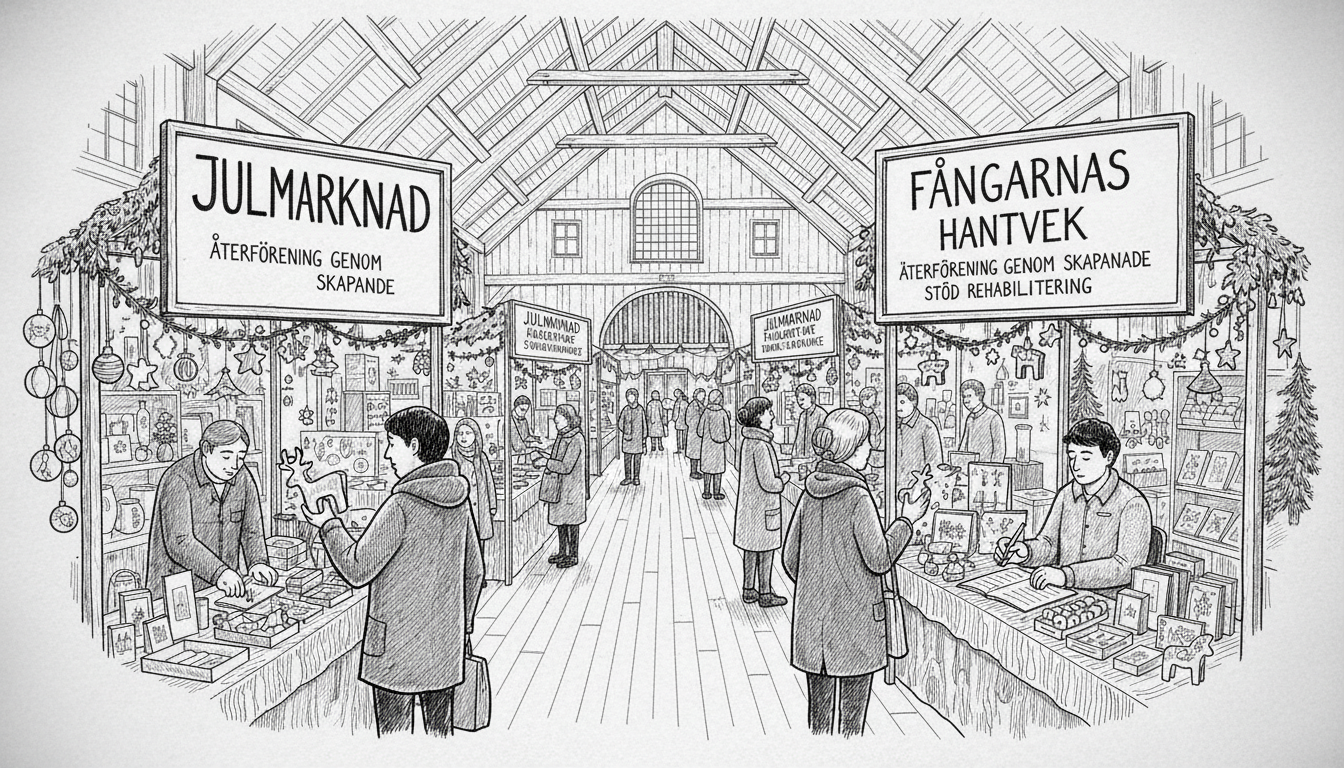
A Swedish prison is celebrating the holiday season with an unusual twist. Tygelsjö Prison in southern Sweden opened its first Christmas market featuring crafts made by inmates. The market showcases handmade items created within the prison walls, offering a glimpse into rehabilitation efforts during the festive season.
Inmates at the security class 3 facility produced garden decorations and home furnishings using various materials. They worked with metal, textiles, wood, and concrete to create unique pieces. The prison's mechanical workshop contributed leftover materials that were transformed into beautiful candle holders and other decorative items.
Ann Malmquist, the production manager, explained their creative process. 'We collaborate with the mechanical workshop,' she said in a statement. 'We use their leftover materials and create beautiful candle holders from them.' This approach demonstrates how Swedish correctional facilities focus on sustainability and skill development.
The prison currently houses 125 inmates. Mats Herrmann, a criminal justice inspector, expressed hope that this wouldn't be the last such event. 'It's the first time the Christmas market has been arranged,' he noted, adding they hope to continue the tradition. All proceeds from sales return to the prison's operations and rehabilitation programs.
This initiative reflects broader Swedish society trends in criminal justice reform. Sweden has long emphasized rehabilitation over pure punishment. The country's approach focuses on preparing inmates for successful reintegration into society. Programs like this Christmas market provide practical skills while building confidence and work ethics.
For international observers, this event offers interesting insights into Swedish culture and social values. The combination of traditional Christmas celebrations with progressive correctional methods shows how Sweden balances tradition with innovation. The market represents more than just holiday shopping—it's about second chances and human dignity.
Such events align with Stockholm's reputation for social innovation, though this particular market occurs further south. They demonstrate how Swedish institutions incorporate cultural traditions into rehabilitation efforts. The Christmas market model could inspire similar programs in other correctional facilities worldwide.
What makes this story particularly compelling is its timing during the holiday season. While Swedes across the country visit traditional Christmas markets in places like Stockholm's Old Town, this prison market offers a different perspective. It shows how even institutions focused on security can embrace Swedish traditions and community spirit.
The success of this first Christmas market at Tygelsjö Prison suggests we might see more such initiatives. They represent a practical approach to rehabilitation that benefits both inmates and the broader community. The program demonstrates how creative solutions can address complex social challenges while maintaining security standards.