
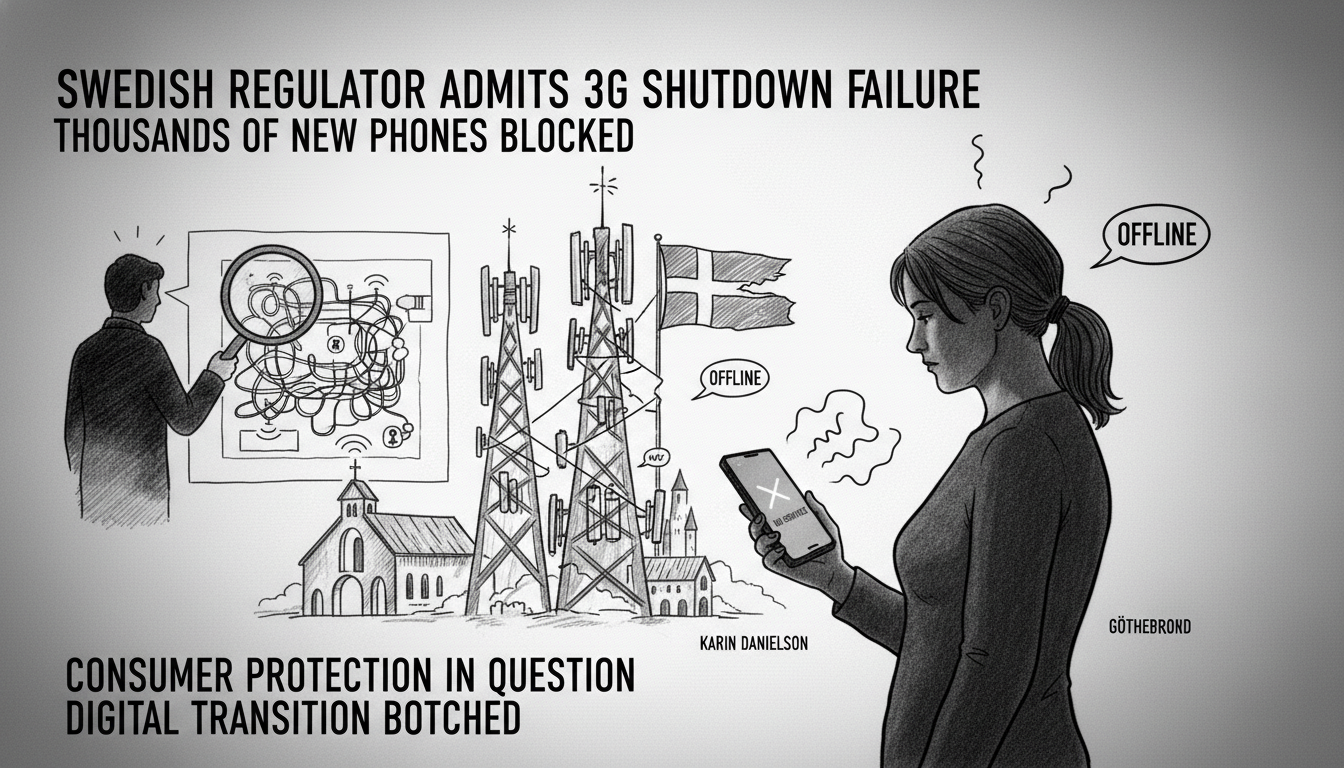
Imagine buying a new phone, only to have it stop working two weeks later. That is the reality for Karin Danielsson in Gothenburg and thousands of others across Sweden. A major technical oversight during the national shutdown of older mobile networks has left consumers frustrated and authorities admitting to serious missteps.
The Swedish Post and Telecom Authority recently ordered operators Tre, Telenor, and Tele2 to block certain 4G phone models. The phones have a critical flaw. They route emergency calls to 112 through the now-defunct 3G networks. This means calls for help might not connect. The regulator issued the order on November 21, and the block took effect just ten days later on December 1.
Jonas Wessel from the telecom authority acknowledged the poor handling. He said it was unfortunate they had to make a last-minute decision and issue a direct order to block the phones. That is not their usual way of working. He expressed hope for better planning and communication with operators in the future.
This situation highlights a broader issue in Swedish society trends around digital transition. All operators except Telia have now shut down their older 2G and 3G networks. This move is part of a global shift to free up spectrum for faster 5G services. Yet, the human cost of this technological progress is clear. Hundreds of angry emails have poured in from people critical of how the change was managed.
Many feel the expert authority should have known about this problem. A similar issue occurred in Australia over a year ago when they shut down their 3G network. Wessel agreed they should have had that global awareness. He also pointed to a shared responsibility. The operators did not provide this information in their meetings and had not communicated it to their customers either.
For international readers and expats, this is a stark lesson in navigating Swedish consumer protections. Many are now asking about the three-year statutory warranty under Swedish consumer law. They want to know if it applies in this situation. A legal expert from the Swedish Consumer Agency has addressed these questions, confirming that consumers likely have strong rights to a remedy from the retailer.
This incident is more than a technical glitch. It is a story about trust, communication, and the pace of change in our connected lives. It shows what can happen when complex system upgrades are not communicated clearly to the public. The fallout will likely prompt a review of how such major infrastructure changes are planned and rolled out in the future. For now, the focus is on ensuring no one is left without a lifeline in an emergency.