
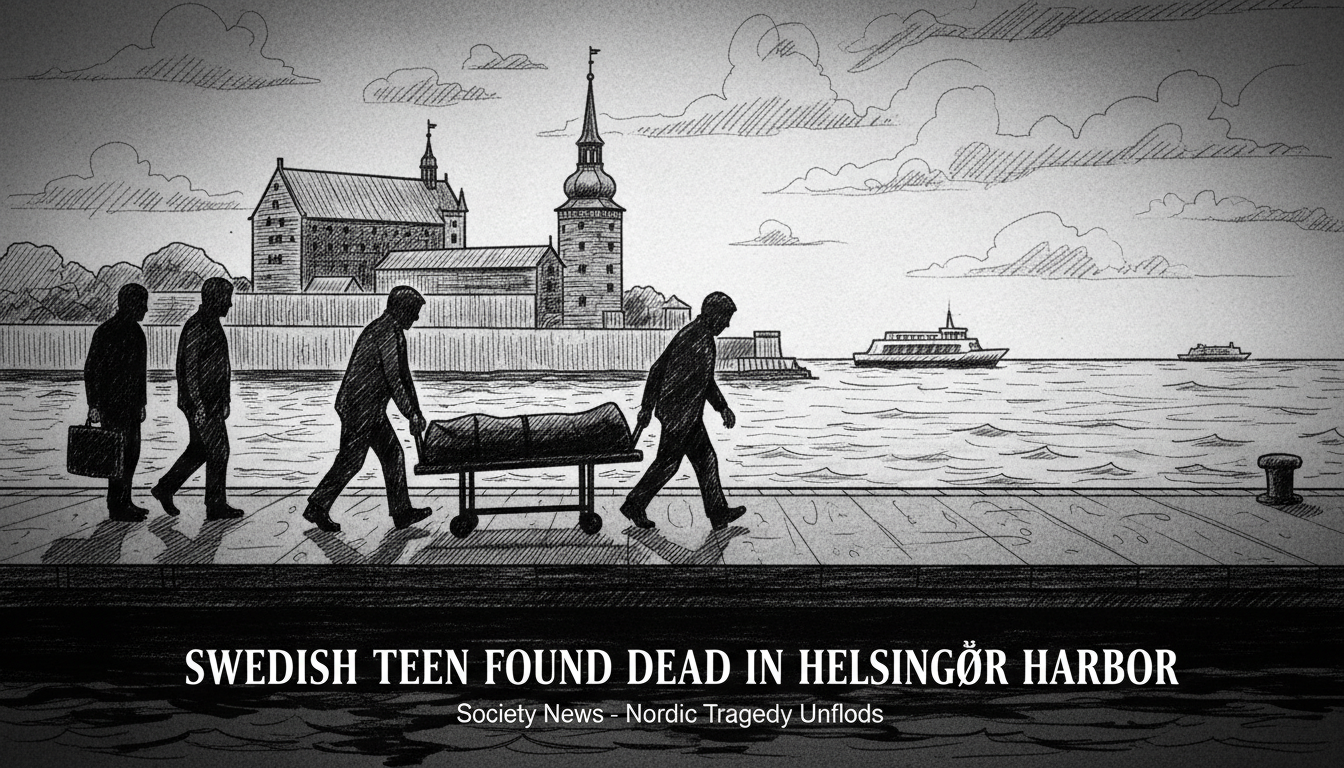
Denmark's Helsingør harbor became the site of a tragedy this week as a 16-year-old Swedish boy was found dead after a two-day search. Police divers recovered the teenager's body from the harbor bottom on Thursday afternoon, ending an extensive operation that began when his jacket was discovered floating in the water. Surveillance footage reviewed by investigators shows the boy falling into the water near the harbor around 12:45 AM on Wednesday. The incident has cast a pall over the historic port city, known for its close ties to Sweden just across the Øresund strait.
A Night Out Ends in Tragedy
The teenager was visiting Helsingør, known internationally as Elsinore, with friends on Tuesday night. The group had been in the city center before the incident occurred at the harbor's edge. Police have stated there are no indications of criminal activity behind the fall. "We can see from surveillance at the harbor that he fell into the harbor around quarter to one on the night of the 31st," said David Buch, duty officer with North Zealand Police. The boy's disappearance triggered a major search involving police divers, water search dogs, and other resources. The operation paused overnight Wednesday as darkness fell but resumed at first light Thursday morning, culminating in the grim discovery at 4 PM.
The Complex Reality of Harbor Rescues
Search and recovery operations in active harbor environments like Helsingør's present unique challenges. Experts note that currents, often intensified by ferry traffic and ship movements, can quickly displace a person in the water. Visibility is typically extremely low, complicating dive efforts. Harbors also contain numerous underwater obstructions and varying depths. "These are among the most difficult environments for search teams," a former Danish naval rescue coordinator, who asked not to be named, told Nordics Today. "The combination of maritime activity, cold water, and structural complexity means time is of the essence, and success is never guaranteed." The discovery of the boy's jacket on Wednesday morning provided a critical clue, narrowing the search area for the dive teams.
A Community Connected by Water
The tragedy underscores the intimate connection—and the peril—of the water that both separates and links Denmark and Sweden. Helsingør has for centuries been a gateway between the two nations, famously hosting the Kronborg Castle of Shakespeare's Hamlet. Today, it remains a busy ferry port with constant traffic to Helsingborg, Sweden, just 4 kilometers away. The incident has resonated on both sides of the sound. "It's a terrible reminder that the water which is part of our daily life and our shared identity can also be dangerously unforgiving," said Lars Jensen, a local councilman in Helsingør. The boy's family in Sweden has been notified by police, initiating a cross-border wave of grief.
Examining Safety at the Water's Edge
While police have ruled out foul play, the death will likely prompt local authorities to review safety measures along the harbor front. Many Danish harbors have varying levels of barriers, lighting, and safety equipment. Helsingør's harbor is a working port with public access, a combination that requires careful risk management. Municipalities in Denmark often conduct periodic safety audits of public waterfront areas, balancing open access with necessary precautions. This incident may accelerate such a review in Helsingør. It also highlights the broader conversation about youth safety during night-time social activities in coastal towns.
The Human Impact Behind the Headline
Beyond the police statements and operational details lies a profound human loss. A 16-year-old boy on a night out with friends met a sudden and fatal accident. His death leaves a family shattered and a circle of friends traumatized. In Denmark and Sweden, support systems, including municipal victim support services and school psychologists, are typically mobilized in the wake of such events to assist those affected. The tragedy serves as a somber reminder of how quickly a routine evening can turn catastrophic. It also illustrates the relentless work of emergency responders who face the difficult task of these searches, hoping for a rescue but often confronting a recovery.
A Grim Resolution and Lingering Questions
The discovery of the boy's body provides a resolution, however painful, to the intense two-day search. For the police, the focus now shifts to completing the investigation and preparing a report for the coroner. For the family, the agonizing uncertainty is over, replaced by the deep sorrow of loss. For the community of Helsingør and the boy's hometown in Sweden, the process of mourning begins. As the ferries continue to shuttle between the two countries, the shared waters of the Øresund tell a new, sad story. How can communities better protect young people enjoying their waterfronts? What additional measures, from education to physical barriers, might prevent such accidents in the future? These questions linger in the harbor's twilight, unanswered in the wake of a life cut short.