
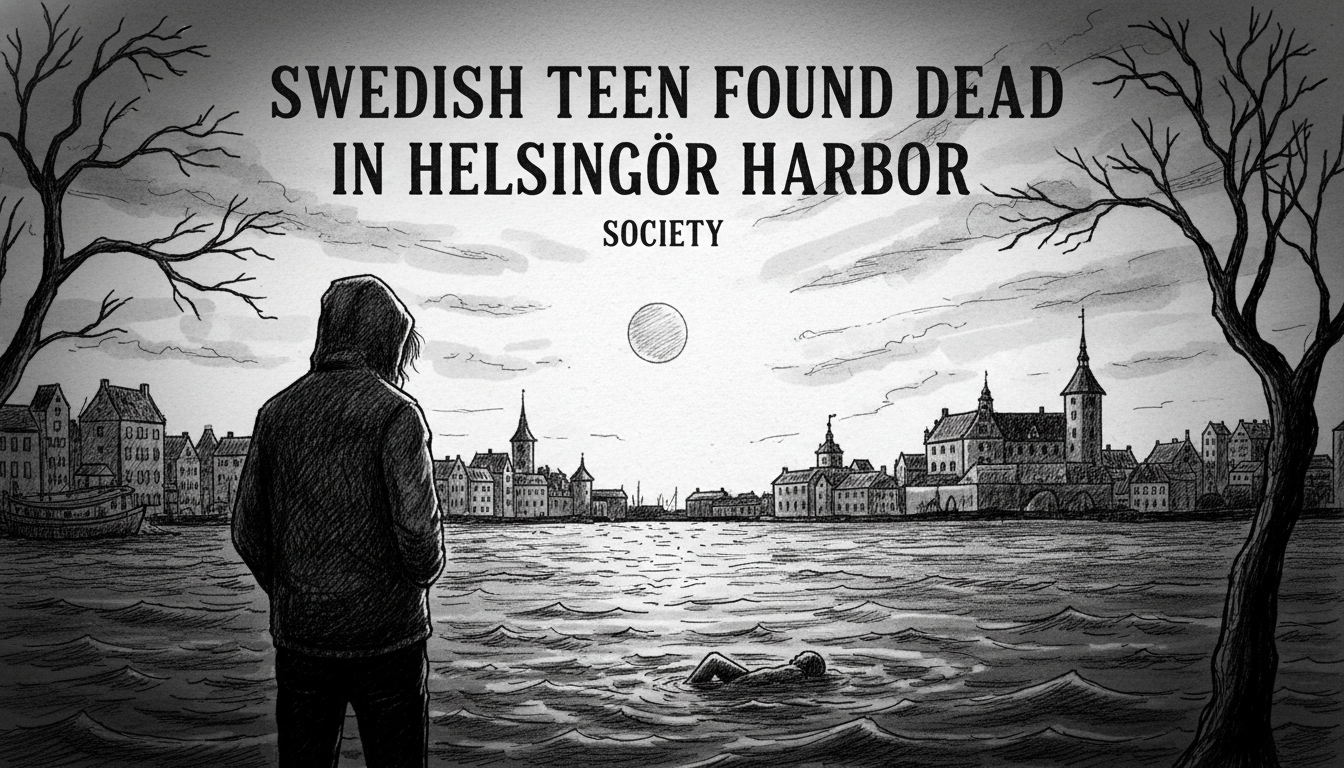
A 16-year-old Swedish boy has been found dead in the waters of Helsingør Harbor after a large-scale search operation. Police divers located the teenager on the harbor floor Thursday afternoon, following his disappearance in the early hours of Wednesday morning. Surveillance footage reviewed by authorities shows the boy falling into the water near the historic Kronborg Castle around 12:45 AM. The tragic discovery ends an intensive search that involved water rescue dogs and diving teams scouring the challenging harbor conditions.
"We can see from surveillance at the harbor that he falls into the harbor around quarter to one on the night of the 31st," said David Buch, duty officer with North Zealand Police. Police confirm there are no indications of criminal activity behind the incident. The boy's jacket was initially found floating in the water Wednesday morning, triggering the major search effort that paused overnight before resuming at first light Thursday. His family in Sweden has been notified of the devastating outcome.
A Night Out Turns Tragic
The teenager had been visiting the Danish city of Helsingør with friends on Tuesday night. The group was enjoying the coastal city's atmosphere before the tragic accident occurred. Helsingør, known internationally for Kronborg Castle—the setting of Shakespeare's Hamlet—sits at the narrowest point of the Øresund strait separating Denmark and Sweden. The proximity makes it a common destination for Swedish visitors, with ferries running constantly between Helsingør and the Swedish city of Helsingborg just 4 kilometers away. This easy access underscores the close daily connections between the two nations, making the loss resonate on both sides of the water.
Police have not released the boy's name, respecting the family's privacy during their grief. The investigation now focuses on piecing together the final moments before the fall. Officers are interviewing the friends who were with him that night to understand the sequence of events. While the surveillance footage provides crucial evidence, authorities continue to examine all circumstances surrounding the incident. The harbor area, particularly near where the boy fell, features a combination of public walkways, commercial docking areas, and historic fortifications.
The Complexities of Harbor Rescues
Search operations in harbor environments present unique and difficult challenges for rescue teams. The water in ports like Helsingør's often has extremely low visibility, sometimes measured in just centimeters. Divers must work essentially blind, navigating by touch in cold, dark conditions complicated by underwater structures and potential debris. Strong currents can also run through harbor channels, moving objects from their initial entry point. These factors significantly complicate recovery efforts and extend search timelines.
"Water search dogs are invaluable in these situations," explained a former Danish Navy rescue diver familiar with Øresund operations. "They can detect scent rising from underwater, helping to narrow a search grid for divers." The police deployment included these specialized canine units alongside the dive team. The decision to pause the search overnight Wednesday was standard procedure, as darkness renders surface spotting impossible and increases risks for divers without adding effectiveness. The operation resumed at dawn Thursday with full resources until the discovery was made.
Helsingør Harbor itself has both a commercial ferry terminal and a recreational marina. The area is generally well-lit and monitored, but the water's edge remains an inherent risk, especially at night. Local authorities have periodically reviewed safety measures along the harbor front, balancing public access with necessary precautions. This incident will likely prompt renewed examination of those measures, particularly in areas frequented by evening and night-time visitors.
A Community in Mourning
The tragedy has cast a pall over the coastal community. Helsingør, with a population of around 47,000, is a tight-knit city where news travels quickly. The sight of police vehicles, rescue boats, and dive teams concentrated at the harbor for two days signaled a serious incident to residents. Many expressed shock and sadness upon learning the victim was a young visitor from neighboring Sweden. The connection between Helsingør and Sweden is not merely geographical but deeply social and economic, with thousands crossing the strait daily for work, education, and leisure.
"It's a heartbreaking reminder of how quickly a night out can turn to tragedy," said a local café owner near the harbor. "Our thoughts are entirely with his family and friends." The incident underscores the vulnerability of young people in unfamiliar environments, even those considered safe and well-trafficked. While police have ruled out foul play, the sudden loss highlights the ever-present dangers associated with waterways, especially after dark and potentially after social gatherings.
Grief counseling services are being offered to the boy's friends who were present that night, as they grapple with the trauma of the event and the loss of their companion. Schools and youth organizations in the surrounding region may also use this moment to reinforce safety messages about water and nighttime activities. The psychological impact on first responders, particularly the divers who made the recovery, is also acknowledged by police, with support mechanisms available to them.
Safety and Prevention in Historic Ports
This incident raises quiet but persistent questions about safety protocols in historic European port cities. Helsingør's harbor is part of the city's cultural and economic lifeblood, not a cordoned-off area. Its charm lies in its accessibility—the proximity of water, historic ships, and castle views to public pathways. Implementing intrusive safety features could damage the aesthetic and open character that defines it. Yet every tragic accident prompts a reassessment of this balance.
Comparative data from other Danish harbors shows that fatal falls, while rare, are not unprecedented. A study by the Danish Maritime Authority noted that most harbor accidents involve professionals working on vessels, not members of the public. When public incidents do occur, they often involve alcohol, darkness, and proximity to an unprotected edge. Some cities have installed more prominent warning signage, improved lighting in key areas, or even considered temporary barriers during major evening events. The conversation is complex, weighing absolute safety against preserving the character and utility of public waterfronts.
Local politicians in Helsingør will likely face questions in the coming weeks about whether existing measures are sufficient. Any proposed changes will involve multiple stakeholders, including the port authority, tourism officials, and heritage conservationists, given Kronborg Castle's UNESCO status. The primary focus for now remains on supporting the grieving family and concluding the police investigation with sensitivity.
A Stark Reminder Across the Sound
The Øresund Strait is a symbol of connection, but it is also a powerful natural force. For centuries, it has claimed lives through accidents, warfare, and misadventure. Modern safety standards on ferries and bridges have drastically reduced tragedies, but the water itself remains unforgiving. This incident serves as a somber reminder to all who live near and enjoy the strait, regardless of nationality. The water is cold, the currents can be deceptively strong, and a fall can happen in an instant.
As the Swedish family begins the agonizing process of repatriating their son, the communities of Helsingør and his hometown are linked in shared sorrow. The ease of crossing between Denmark and Sweden means the pain does not stop at the border. It flows across the water, just as the daily life of the region does. The final police report will provide official closure on the circumstances, but for the family and friends of the 16-year-old boy, the questions of 'what if' will linger far longer. Their loss is a stark testament to how a single moment can forever alter countless lives, leaving a quiet scar on two communities united by a narrow strip of sea.