
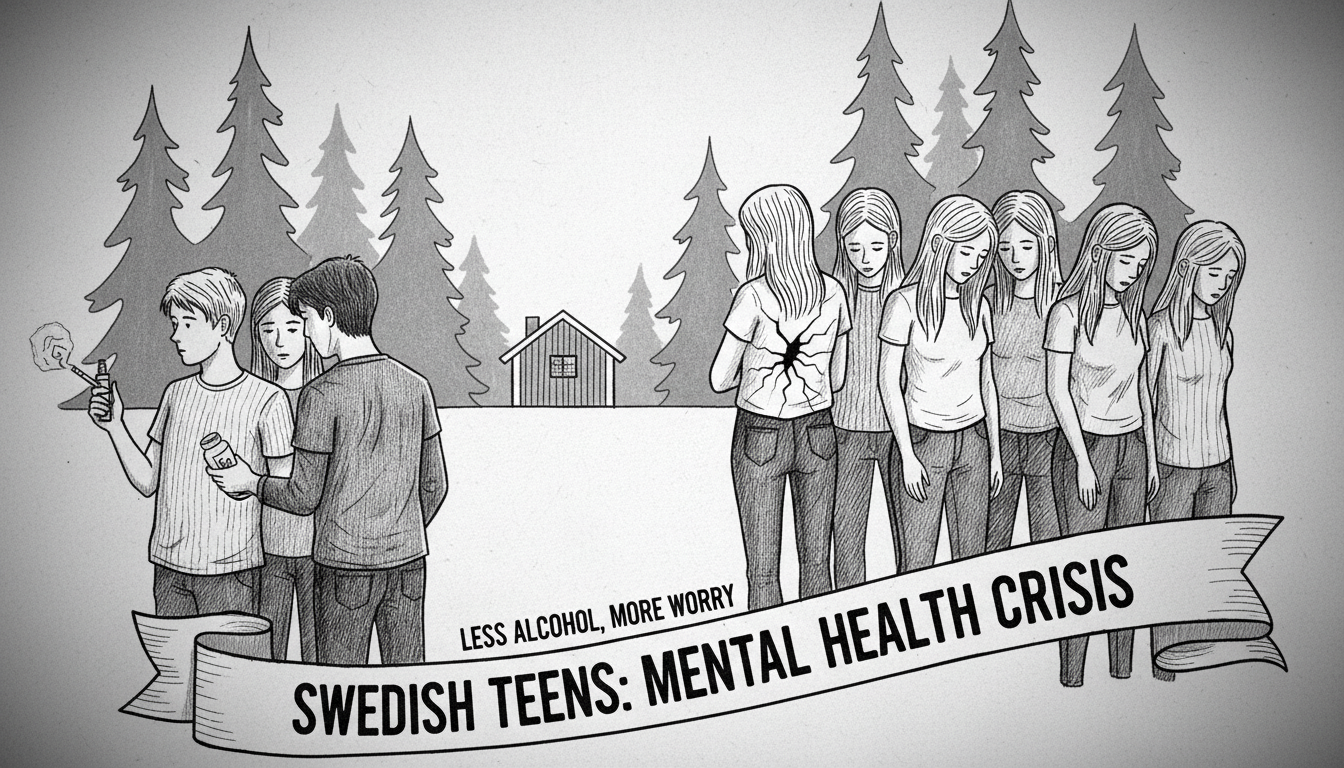
Swedish teenagers drink less alcohol than their European peers. A major school survey reveals this positive trend. The ESPAD study has tracked substance use among 15-16 year olds since 1995. It shows Swedish youth consumption falls below both Nordic and European averages.
Young people across Europe are drinking less alcohol overall. They also smoke less tobacco and use less cannabis. This represents a continuing downward trend in traditional substance use.
But new concerns are emerging across the continent. E-cigarette use is rising among European youth. So is gambling and non-medical use of medications. These behaviors show particular increase among girls.
Sweden stands out for its troubling mental health gap. Swedish girls report much poorer mental health than boys. The ESPAD study now includes mental health measurements for the first time. It uses standards developed by the World Health Organization.
Scores above 50 indicate good mental health on this 100-point scale. Swedish boys score 78 points on average. Swedish girls score only 48 points. This 30-point gap is the largest among all surveyed countries.
Every European country shows girls reporting worse mental health than boys. But Sweden's disparity is particularly striking. This suggests Swedish society faces unique challenges in supporting adolescent mental health.
Why do Swedish teens drink less than their European counterparts? Sweden has strict alcohol policies that limit availability. The country maintains a state monopoly on alcohol sales through Systembolaget stores. These stores have limited hours and high prices. They also require customers to be 20 years old to purchase alcohol.
Swedish schools typically provide comprehensive substance education. Parents generally enforce stricter rules about teenage drinking. The legal drinking age in restaurants and bars is 18. But home consumption patterns differ from other European countries.
What explains the mental health gap between Swedish boys and girls? Research suggests multiple factors may contribute. Social media use affects girls and boys differently. Academic pressure manifests in distinct ways. Body image concerns often impact girls more severely.
Sweden has invested heavily in youth mental health services in recent years. But these services appear insufficient to address the growing crisis. Long waiting times for psychological care remain common. Many teenagers struggle to access timely support.
The ESPAD survey covers 35 European countries. It provides crucial data for policymakers across the continent. The consistent methodology allows for reliable comparisons between nations and over time.
Sweden's substance use trends reflect broader European patterns. Young people are moving away from traditional alcohol and tobacco. But they're embracing new substances and behaviors with unknown long-term effects.
E-cigarettes represent a particular concern for health officials. These devices often contain high nicotine concentrations. Their long-term health impacts remain poorly understood. Flavored products appeal strongly to young users.
The non-medical use of medications raises additional concerns. Teenagers sometimes misuse prescription drugs for studying or mood alteration. This practice carries significant health risks without medical supervision.
Sweden must address both its success in reducing alcohol consumption and its failure in supporting mental health. The country cannot celebrate one achievement while ignoring the other. Young people need comprehensive support for both physical and psychological wellbeing.
International readers might find Sweden's alcohol policies unusual. The state monopoly system differs dramatically from most other countries. But these policies appear effective in limiting youth access to alcohol.
The mental health crisis among Swedish girls demands immediate attention. A 30-point gap between genders cannot be ignored. Sweden prides itself on gender equality, but this data reveals a serious inequality in wellbeing.
Future policies must address both substance use and mental health as interconnected issues. Teenagers who struggle mentally may turn to substances for relief. Those who use substances may develop mental health problems. A holistic approach offers the best chance for meaningful improvement.
The next ESPAD survey in 2027 will show whether current trends continue. Will the mental health gap narrow? Will new substance use patterns emerge? These questions remain unanswered for now.
Sweden faces a clear challenge in supporting its young women. The country has successfully reduced underage drinking. Now it must apply similar determination to addressing the mental health crisis.