
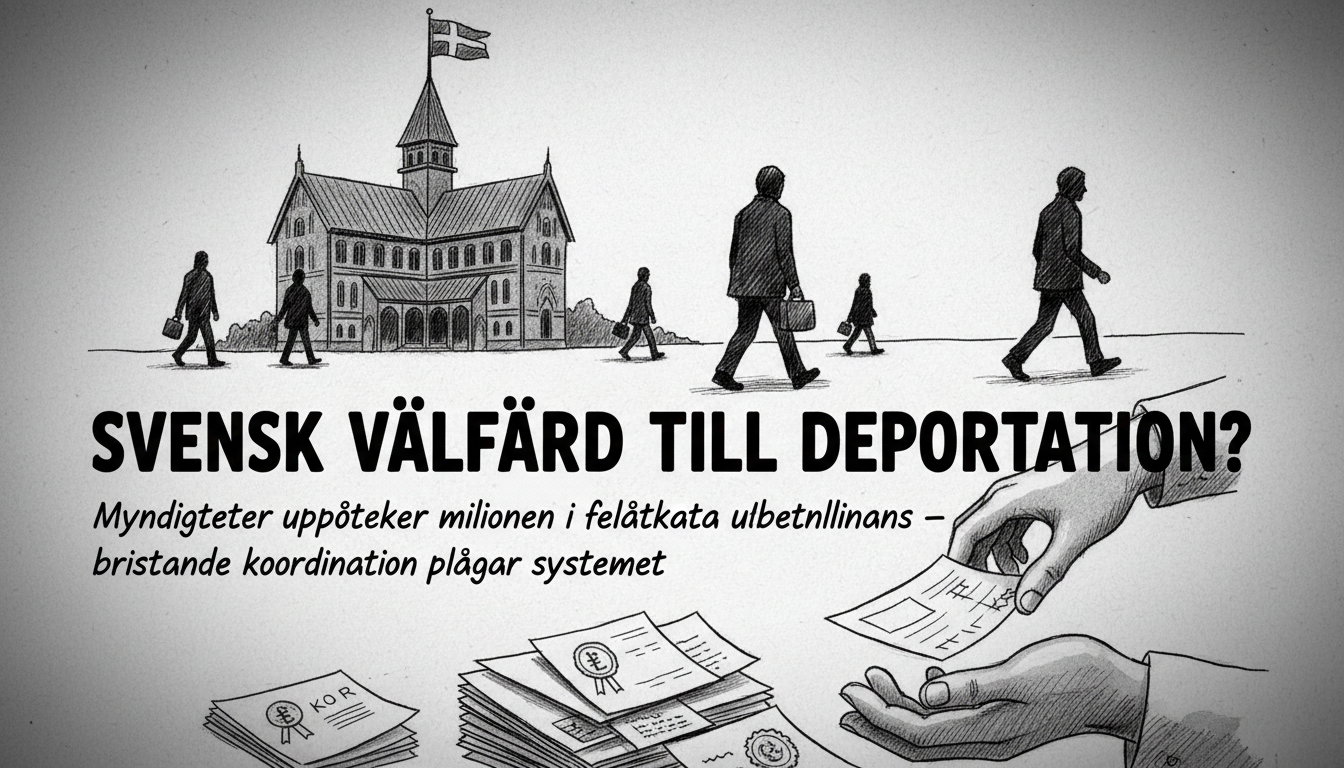
Swedish authorities paid millions in benefits to people without legal residency status this year. The Payment Authority analysis reveals approximately 40 million kronor went to individuals who shouldn't have received support. This situation raises questions about Sweden's welfare system controls and immigration management.
These incorrect payments included unemployment benefits, child allowances, parental leave payments, and activity support. The findings come from cross-referencing data across multiple government agencies. Border police frequently notice these payments when preparing deportations.
Per Eleblad, the Payment Authority's director general, addressed the issue directly. He said in a statement that they will review all benefits where they suspect payments to ineligible individuals. The agency plans to implement permanent controls to prevent future incorrect payments.
This isn't the first time such issues have emerged. Previous calculations from the National Audit Office showed much larger sums paid to people whose residence permits had expired. Between 2014 and 2020, state agencies paid about 313 million kronor while municipalities paid approximately 122 million kronor.
The current 40 million kronor breakdown shows specific allocation patterns. Unemployment funds distributed 17 million kronor to 300 people. Activity support accounted for 9 million kronor to 220 individuals. Child benefits and parental payments totaled 8 million kronor reaching 1,200 people.
Sweden's welfare system traditionally operates on high trust and extensive documentation. This approach generally works well for the majority of residents. Yet these cases highlight challenges in coordinating between migration authorities and benefit agencies.
International readers might wonder how this happens in Sweden's famously organized society. The answer lies in the complexity of modern governance systems. Different agencies maintain separate databases that don't always communicate perfectly. People's circumstances change faster than systems can update.
The actual total is likely higher than reported. Authorities couldn't verify payments to people with coordination numbers rather than personal identity numbers. This gap suggests the problem might be more extensive than current data shows.
For Stockholm residents, this news connects to broader discussions about migration and welfare. The city's diverse neighborhoods like Södermalm and suburbs like Tensta have different perspectives on these matters. Sweden's approach to immigration continues evolving as society addresses these practical challenges.
What does this mean for Sweden's famous welfare model? The system remains fundamentally sound but requires ongoing adjustments. Better coordination between agencies appears necessary. Swedish society values both generous welfare and proper administration of public funds.
The authorities now face the practical task of improving system controls while maintaining efficient service delivery. This balance matters for both Swedish taxpayers and legitimate benefit recipients who depend on these supports.