
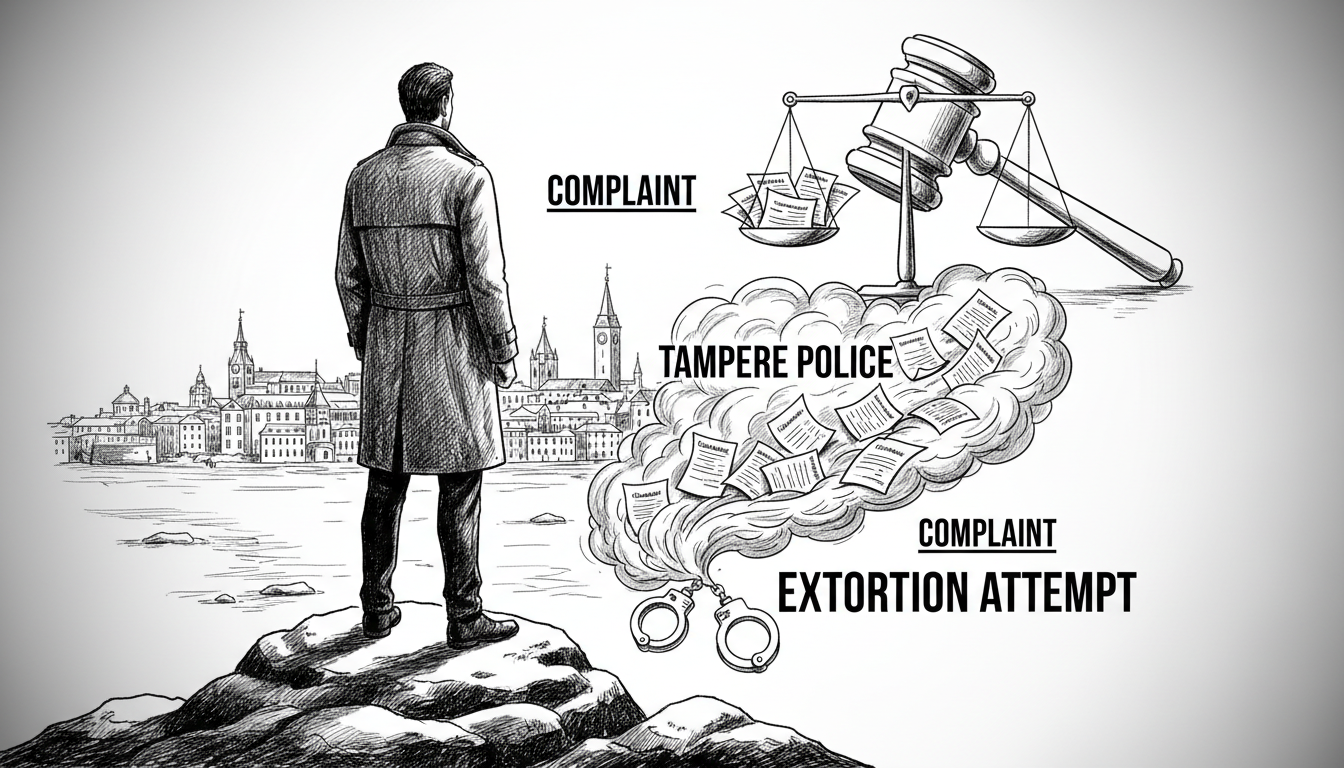
Police in the Pirkanmaa region of Finland have launched a preliminary investigation into a Tampere man, widely described as a 'serial complainant,' on suspicion of attempted extortion. The probe follows a criminal complaint filed by the City of Tampere, which alleges the man's actions, stemming from a protracted land dispute, crossed the line from legal petitioning into criminal coercion. The case presents a complex legal test between the fundamental right to challenge municipal decisions and the potential for abuse of administrative processes.
Criminal Inspector Pasi Nieminen confirmed the investigation centers on the crime of attempted extortion under Finnish law. He was careful to distinguish the core issue. 'The criminal suspicion does not concern the act of complaining itself, which is a civic right,' Nieminen stated in an official briefing. He clarified the police are examining a broader pattern of conduct where serial complaints formed one part of an alleged attempt to force the city to relinquish a financial asset. The inspector declined to provide specific details on the suspected criminal acts, citing an ongoing investigation and a policy of limited disclosure at this stage.
The dispute originates from a land plot the man reportedly won in a city lottery but was never granted by Tampere authorities. Following this, he initiated dozens and dozens of administrative appeals and complaints against various city decisions. This prolonged campaign prompted the municipality to seek police intervention. The man has publicly denied any criminal wrongdoing, maintaining his actions were a legitimate exercise of his legal rights to contest the city's conduct.
This case sits at a critical juncture in Finnish administrative law and civic engagement. Finland's system allows and encourages citizens to appeal municipal decisions, a cornerstone of transparent governance. However, municipal resources are finite. A sustained campaign of appeals from a single individual can strain local bureaucracy, raising questions about the line between diligent oversight and systematic harassment. The police investigation will need to establish clear evidence that the man's intent was to unlawfully pressure the city for financial gain, rather than to seek legal redress.
The outcome could influence how Finnish municipalities handle persistent complainants in the future. A decision to prosecute might deter frivolous or malicious appeals but could also have a chilling effect on legitimate civic oversight. Conversely, if the police find no grounds for charges, it may leave cities feeling powerless against individuals who weaponize appeal processes. The Tampere case is being watched closely by local governments across Finland, as it may set a precedent for balancing open democracy with administrative efficiency. The investigation remains in its early phases, with no timeline yet for potential charges.