
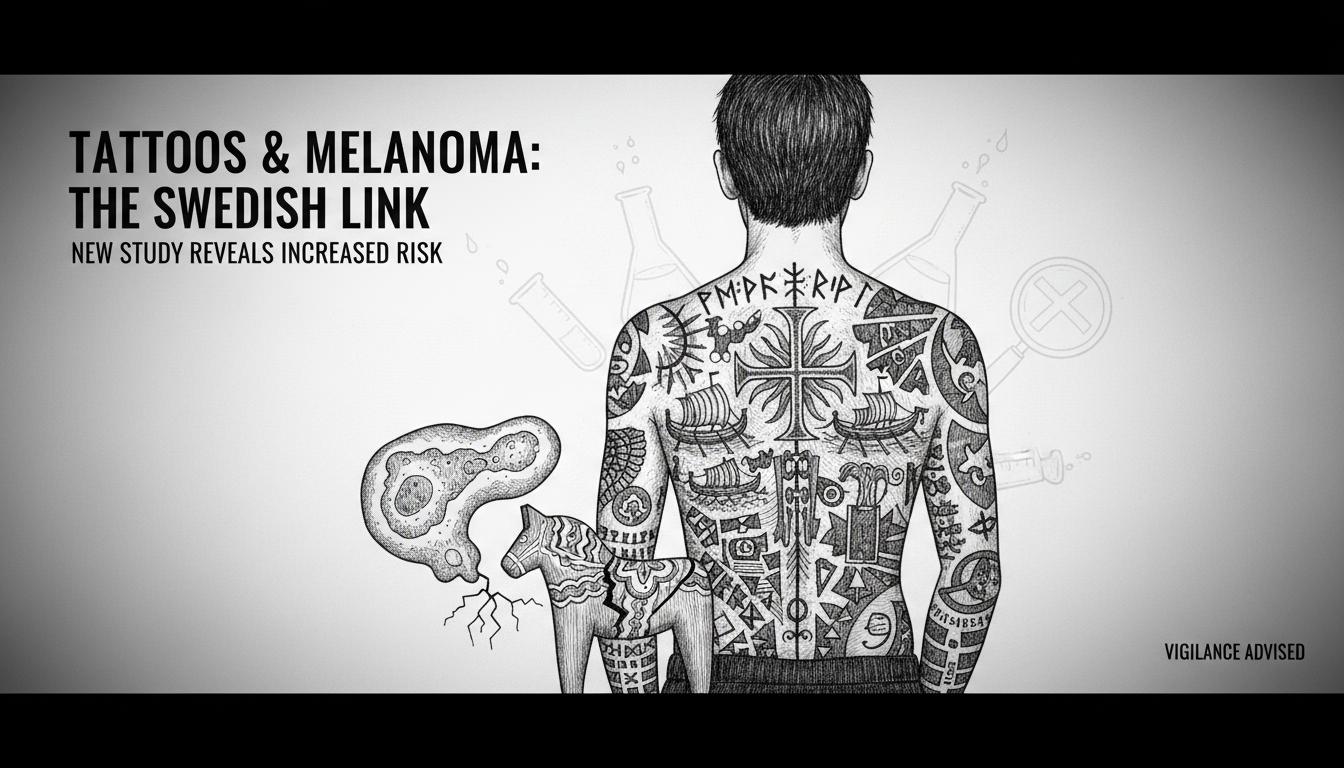
Walking through Stockholm's trendy Södermalm district, you see them everywhere. Tattoos have become as much a part of Swedish culture as fika and midsummer celebrations. But new research from Lund University reveals a concerning connection between body art and health risks that's making Swedes think twice before getting inked.
Researchers found people with tattoos face a 29 percent higher risk of developing melanoma, the most serious form of skin cancer. Approximately one in five Swedes now sports tattoos, making this finding particularly relevant for Swedish society.
Epidemiology researcher Christel Nielsen led the groundbreaking study. She emphasizes this isn't about discouraging tattoos but making them safer. 'Tattoos are here to stay,' Nielsen said in a statement. 'They're incredibly important for personal identity. That's why the research community needs to take a comprehensive approach to safety.'
The study examined nearly 12,000 people aged 20 to 60 who were diagnosed with melanoma. Researchers compared them with three people of the same age without cancer, carefully accounting for factors like sun exposure habits. This meticulous approach gives the findings substantial weight in medical circles.
What makes this research particularly compelling is where the melanomas appeared. Only 30 percent of tattooed people with melanoma developed the cancer on the same body part as their tattoos. This suggests the risk might involve the immune system's response rather than just the tattooed area itself.
Nielsen suspects the issue might relate to how tattoo ink affects our body's defenses. 'We believe it's something happening with the immune system rather than the tattoo itself creating the increased risk,' she explained. This insight opens new avenues for understanding how foreign substances in our bodies might trigger health issues.
For Stockholm's vibrant tattoo community, from the artists in Vasastan to the clients in Östermalm, the message isn't to avoid tattoos altogether. Instead, researchers recommend extra vigilance about skin changes. Watch for new spots or existing moles that change color or grow larger, whether they're tattooed areas or not.
Sweden sees about 4,500 melanoma diagnoses annually, with 500 people dying from the disease each year. While previous studies explored possible connections between tattoos and lymphoma, this research specifically targeted melanoma risk.
The timing coincides with increased European Union regulation of tattoo ink chemicals. Over the past decade, authorities have focused on limiting concentrations of harmful substances in tattoo pigments. This research represents the next logical step in understanding long-term health impacts.
Nielsen's team now plans to investigate whether tattoos affect autoimmune conditions like thyroid disease or psoriasis. This broader approach could reveal more about how tattoo ink interacts with our immune systems over time.
For Swedes considering new ink during upcoming cultural events like Stockholm Culture Festival or contemplating their next tattoo in Gamla Stan's parlors, the study offers practical advice. Be observant about skin changes, get regular checkups, and remember that tattoo aftercare involves lifelong skin monitoring.
As Nielsen wisely notes, the risk didn't suddenly increase because of this study. The danger existed before researchers identified it. Now tattoo enthusiasts can make informed decisions about their body art while taking appropriate health precautions.