
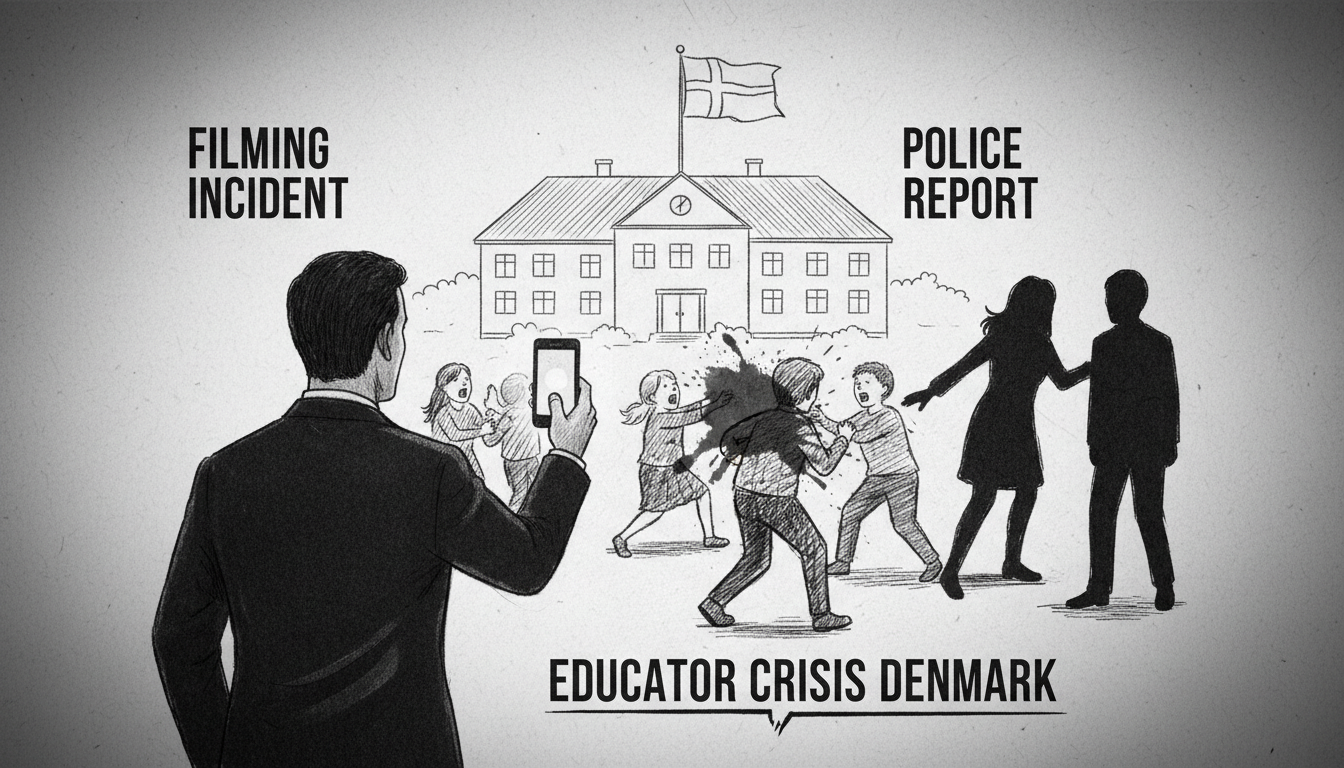
A Danish teacher's decision to film a chaotic classroom confrontation has exposed deep tensions within the country's education and welfare systems. Paul Hansen, a teacher with 23 years of experience, recorded four young students refusing to leave a classroom, a move he says was necessary for self-defense. The video later became crucial evidence when two parents reported him to police for alleged violence, accusations he was fully cleared of after a six-week investigation. His story is not isolated, reflecting a broader trend in Danish society where educators feel increasingly vulnerable.
Teacher unions report a steady rise in cases where educators face accusations from students and parents. A recent survey indicates 58 percent of public school teachers observe more violent incidents compared to five years ago. The legal chief for the Danish Union of Teachers notes such cases now emerge on a weekly, if not monthly, basis. While most police investigations are dropped, the process leaves lasting scars. The accused teacher's life often grinds to a halt during the lengthy investigation, and many never return to the classroom.
This situation points to a collision of expectations within Copenhagen integration and broader Danish social policy. School researchers suggest a clash between traditional school authority and modern parenting styles where children expect more autonomy. The Danish welfare system, often praised for its support, appears to falter in protecting its frontline professionals. Teachers like Hansen describe a lack of institutional backing, feeling abandoned by their municipality and school leadership after an accusation is made, regardless of the outcome.
In Hansen's case, the local municipality of Fredensborg declined to comment on specifics, stating only that such matters are complex and require balanced consideration of all factors. For the teacher, this bureaucratic response felt inadequate. He believes the system failed him by not offering immediate legal support or considering moving the involved students. He has now left his public school position, seeking work where he does not fear sudden police reports. His departure represents a loss for the Danish education system, a quiet crisis of experienced professionals opting out.
The incident raises hard questions about Denmark immigration policy and integration successes, as classrooms become microcosms of wider societal shifts. It also challenges the core of the Danish welfare model, which relies on high trust and social cohesion. When teachers must film students to feel safe, that trust is broken. The case underscores a need for clearer protocols and stronger support for educators caught between maintaining order and protecting their own livelihoods. The human cost is clear, as a dedicated professional exits a system he loved, his career upended by an event that official records say never happened.