
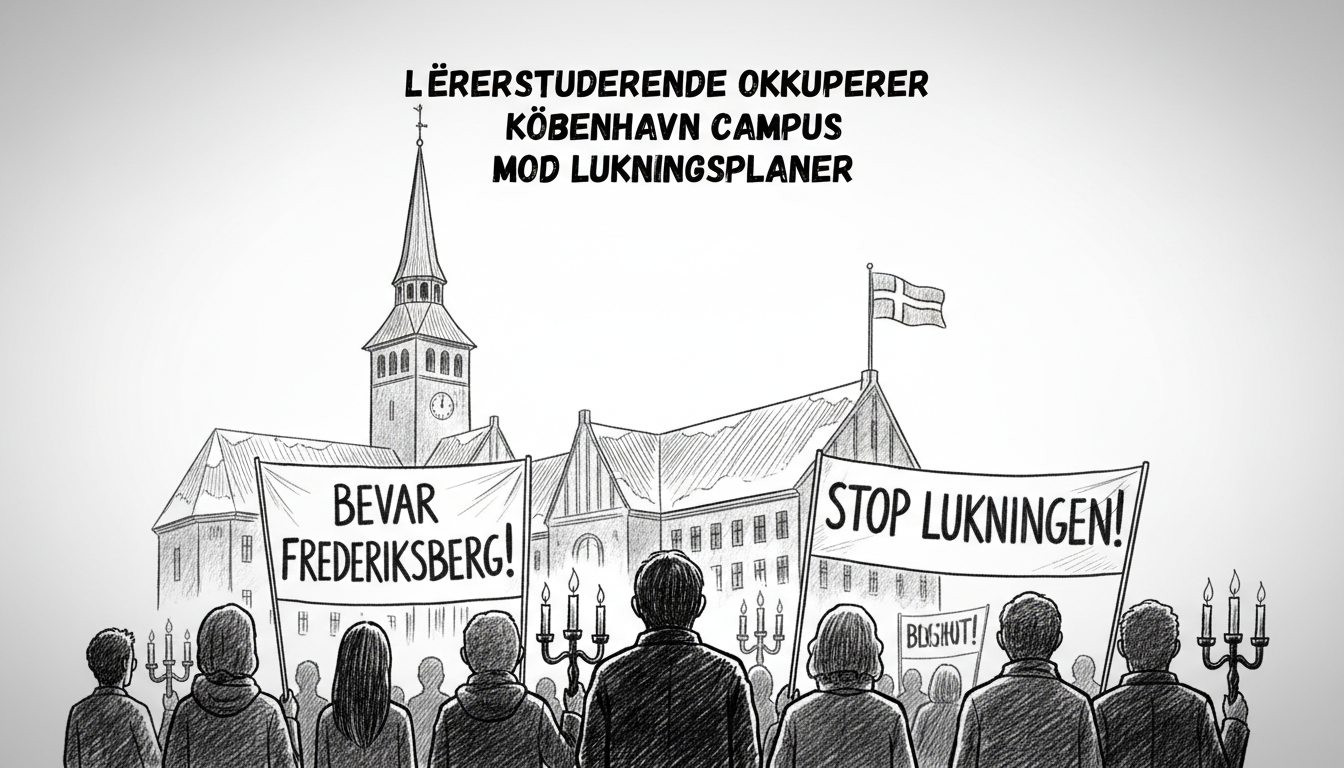
Education students at Frederiksberg's teacher training program will occupy their campus for five days starting Monday. They protest Copenhagen University College's plan to close their campus due to declining enrollment numbers. The students shared a message explaining their drastic action. They believe massive public attention represents their only chance to save their educational home. Their occupation aims to secure many future teaching years at the same location despite sacrificing one week of classes.
Campus Nyelandsvej would merge with Copenhagen's other teacher education program under the proposal. All teaching activities would consolidate at Campus Vesterbro in the Vesterbro district. This reflects broader challenges facing Danish teacher education programs nationwide. Student numbers at Copenhagen University College dropped over 27 percent across seven years. The Frederiksberg campus alone witnessed nearly 40 percent fewer students during this period.
Danish welfare system reforms often consolidate resources during demographic shifts. The planned closure requires approval from the university college's board before advancing to the regional council. A decisive board meeting will occur in December. This situation mirrors similar consolidations happening across Nordic higher education institutions. Many face declining enrollment while maintaining quality education standards.
Copenhagen integration challenges appear in education just as in other social sectors. The occupation highlights how Danish social policy decisions impact real communities. Students choose disruption hoping to preserve their educational environment. Their action demonstrates genuine concern about losing neighborhood-based teacher training options. Copenhagen's urban development patterns influence these institutional decisions significantly.
Teacher education holds particular importance in Denmark's immigration policy context. Well-trained teachers help integrate diverse student populations across Danish municipalities. The student protesters recognize their program's role in Copenhagen's social fabric. They fight not just for their education but for future generations of Danish students. Their stand represents a microcosm of larger debates about educational access and community preservation.
What happens next depends on board members and regional officials weighing economic realities against educational quality. The students' occupation will test whether public pressure can influence institutional planning. Danish society news often features such conflicts between administrative efficiency and community interests. This case shows how young Danes engage directly with systems affecting their futures.