
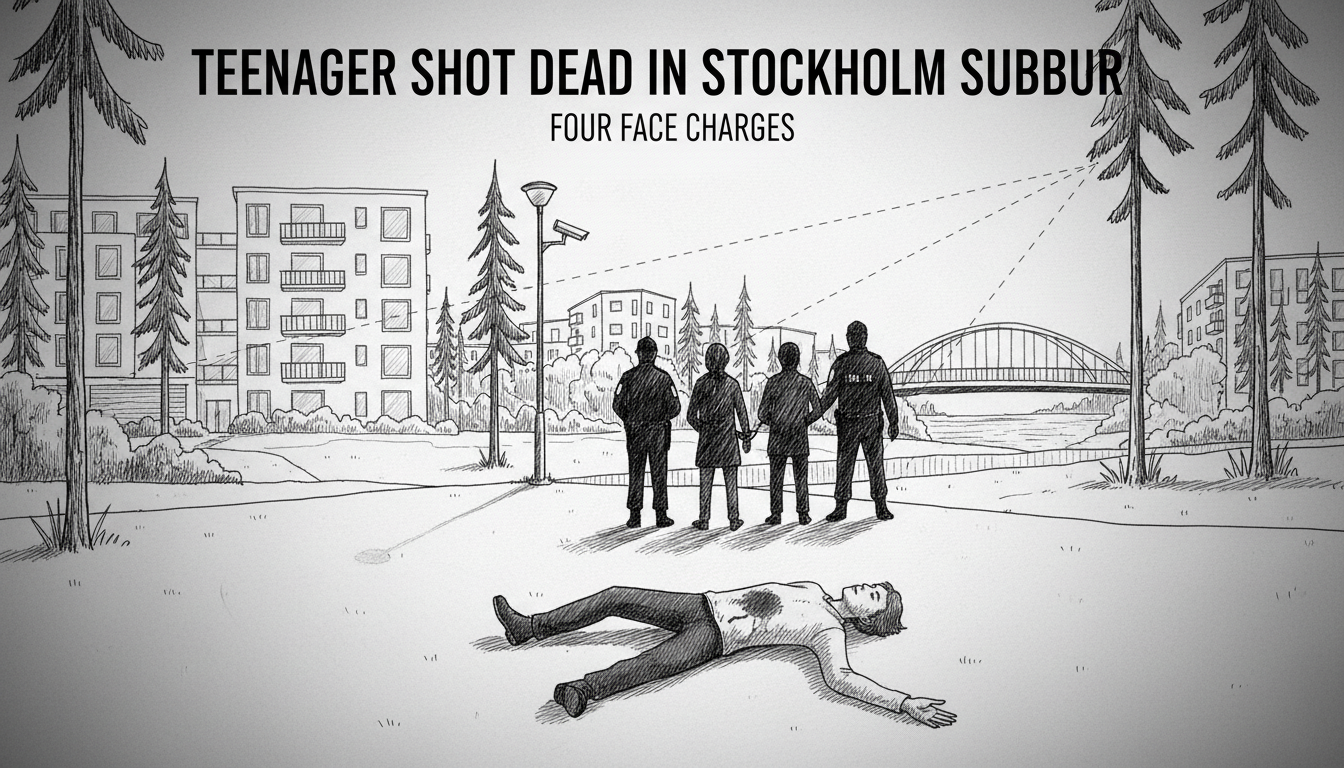
A quiet evening turned tragic in Fruängen when four teenagers faced gunfire in a pedestrian tunnel. One boy suffered a fatal head wound and later died at a hospital. The shooting happened as the group returned from a local gym, their ordinary routine shattered by unexpected violence.
Senior prosecutor Ingrid Viklund described the incident as an execution. She said in a statement that shots were fired at close range. The investigation suggests the shooter acted on others' orders, but motives remain unclear. Neither the deceased nor the injured victim had prior police records or criminal histories.
Police captured a 16-year-old suspect near the scene while he headed toward a taxi. Authorities now charge him and three others with murder and three attempted murders. Two face additional charges for preparing murder plots in February, including incidents in Rinkeby.
Viklund confirmed the evidence is unusually strong. Surveillance cameras captured the entire event, and responding officers quickly located and arrested the shooter. This case highlights growing concerns about youth violence in Swedish suburbs.
Stockholm's suburban communities like Fruängen typically represent peaceful residential areas. This violent event contrasts sharply with Sweden's reputation for safety and social stability. Many residents express shock that such brutality could occur in their neighborhood.
Gun violence remains relatively rare in Sweden compared to global standards, but each incident sends ripples through society. The timing raises questions about gang recruitment among youth and weapon accessibility. Community leaders call for increased youth engagement programs and better social support systems.
International observers often note Sweden's progressive social policies, but this tragedy shows no society is immune to violence. The case continues through Sweden's legal system, where prosecutors seek justice for the victims and answers for a concerned community. The outcome could influence how Swedish authorities address organized crime among young people.
Local organizations in Fruängen and Rinkeby now discuss prevention strategies. They aim to protect other teenagers from similar fates. These conversations reflect broader Swedish society trends toward community-based safety solutions rather than purely punitive approaches.