
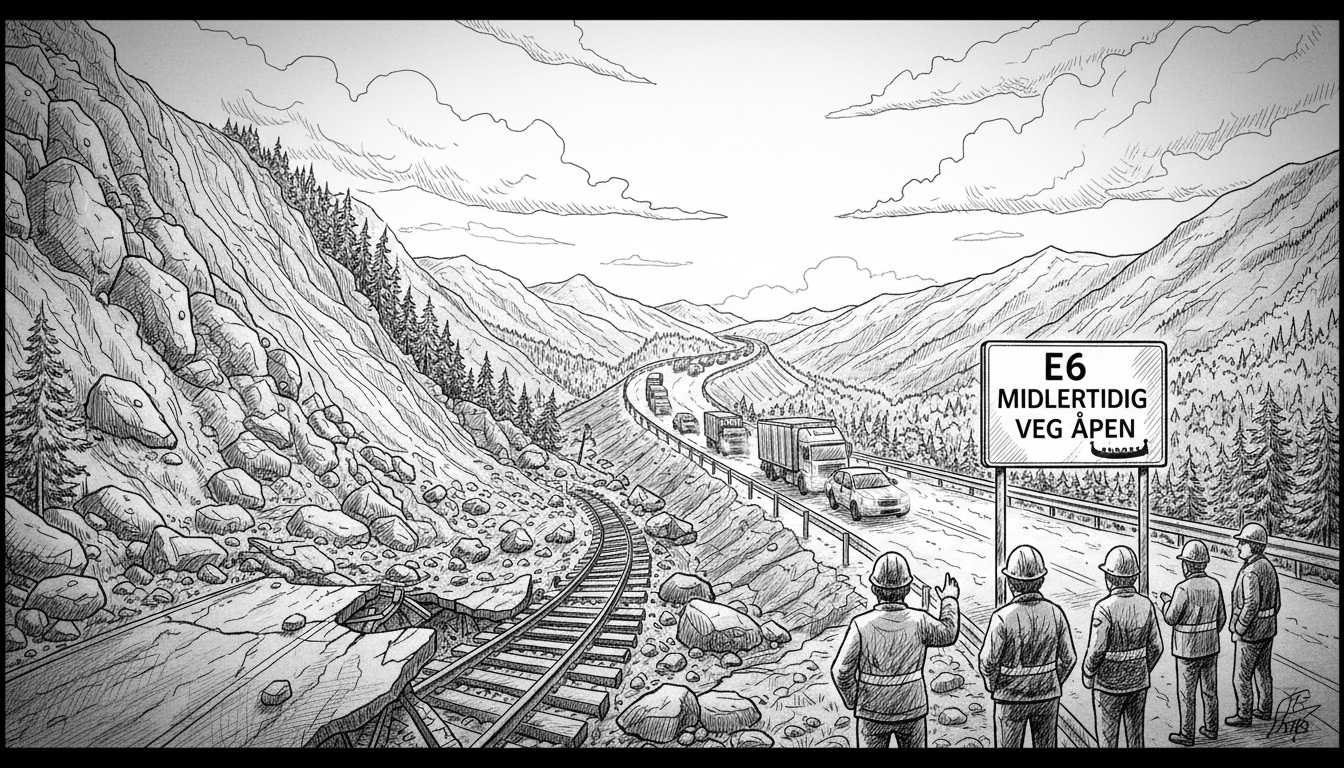
A temporary section of Norway's vital E6 highway will open near Levanger this Saturday afternoon. The Norwegian Public Roads Administration confirmed the opening time as approximately 2 PM local time. This development comes after a major landslide devastated the area in late August.
The landslide near Nesvatnet lake destroyed both the new and old E6 highway sections along with railway tracks. The incident completely severed this crucial transportation corridor in central Norway. Emergency crews have worked continuously to restore basic access while permanent reconstruction continues.
This temporary solution represents a critical milestone for the Trøndelag region's transportation network. The E6 serves as Norway's primary north-south artery, connecting major cities and facilitating commercial transport. Local businesses and residents have faced substantial detours since the landslide occurred.
Norwegian infrastructure projects typically follow strict safety protocols and environmental standards. The country's mountainous terrain presents constant challenges for road maintenance and construction. Landslides and rockfalls remain persistent threats, particularly during periods of heavy rainfall or rapid snowmelt.
What does this temporary opening mean for travelers? The restored access will significantly reduce journey times between Trondheim and northern destinations. Commercial transport companies can resume more efficient routes. Local communities along the affected corridor will regain vital connections.
The permanent reconstruction of both highway and railway infrastructure continues separately. Engineers face complex geological assessments before designing long-term solutions. Norwegian authorities have not provided a timeline for complete restoration of the damaged transportation corridor.
This situation highlights Norway's ongoing battle with natural terrain challenges. The country invests heavily in infrastructure maintenance but cannot eliminate all natural risks. Climate change may increase the frequency of such events as weather patterns become more extreme.
For international readers, this demonstrates Norway's efficient response to infrastructure emergencies. The temporary solution shows practical problem-solving while permanent work continues. The approach balances immediate public needs with long-term safety considerations.