
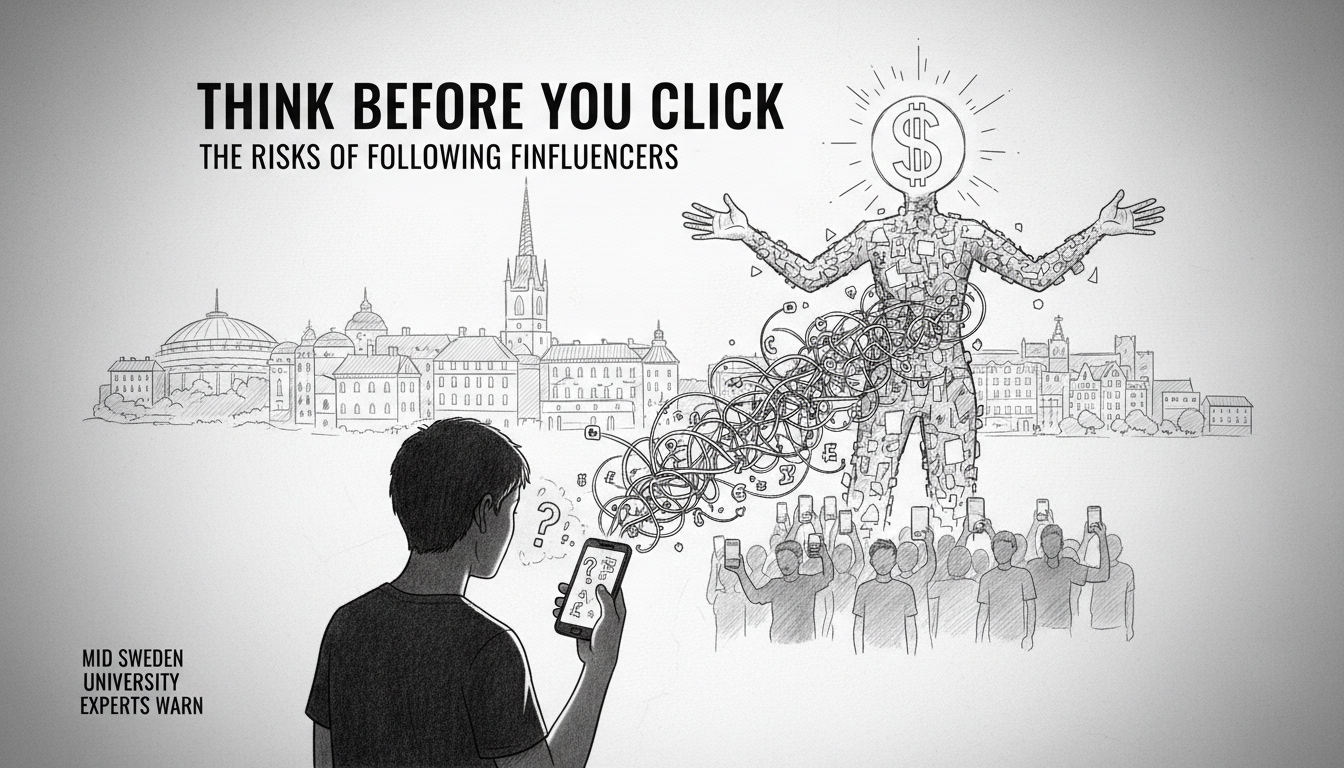
Sweden serves as an example of a growing appetite for investment in financial markets, something that can create financial security for households but also expose them to significant risks. Statistics indicates that about 90% of household financial assets are invested in financial instruments, with only 10% held in cash or bank deposits (the lowest share in the EU). As more people rush to invest in financial markets, one challenge stands out: the struggle to access accurate and trustworthy financial information.
This issue becomes even more critical for society's most vulnerable groups, such as young people, who face difficulties in finding sources of financial guidance at the very moment they need it most.
The Rise of FinFluencers
This growing demand for financial guidance has created a new reality of unlimited access of unregulated advice giving. Today's generation is increasingly turning to alternative sources for financial information and one trend has taken centre stage: the rise of so-called financial influencers, commonly known as FinFluencers, sharing various tips about stocks and personal finances.
Instead of relying on traditional advisors, many young people look to these digital voices for guidance, following their advice and opinions on investment strategies and market trends unaware that these influencers are there to promote content shaped by commercial interests.
FinFluencers have gained remarkable popularity while masquerading as information channels. By advertising products, partnering with financial companies, and launching their own subscription-based communities behind paywalls, many are making millions from their businesses as highlighted in newspapers such as Dagens Industri and Privata Affärer.
The Appeal and the Danger
On the one hand, these influencers deliver information quickly, in an engaging style, enhanced by sleek designs, vibrant colours, and catchy sound effects. The influencers often possess an ability to mirror the language, values, and aesthetics of young people, making their content appear both relatable and inspiring.
On the other hand, the recent information published by Sweden's financial regulatory authority raises a pressing question: Can FinFluencers be trusted as a foundation for investment decisions?
Red Flags to Consider
Several red flags stand out:
Information Gap: Many FinFluencers come from backgrounds in digital marketing, lifestyle blogging, or travel and entertainment. This does not automatically disqualify them, but it does mean they often lack the professional training, regulatory oversight, and ethical obligations required to provide responsible financial advice.
Structural Market Failure: Perhaps more troublesome, this trend risks developing into a structural market failure that disadvantages an entire generation. Social media algorithms reward engagement over accuracy, turning financial information into a commodity. What looks like democratised financial education is, in reality, a sophisticated system of persuasion that steers young people towards specific products and services that might work against their best economic interests.
Unregulated Information Markets: Some corners of social media have allowed unregulated information markets to thrive in exactly the areas where rational, well-informed decision-making matters most. This has even led to financial behaviours with serious consequences, such as those witnessed during the GameStop crisis.
A Call to Action
This is where the importance of calls to action becomes clear. We need to strengthen the role of financial literacy and financial capability, particularly among young people, individuals with limited educational opportunities, and residents of marginalised communities through credible channels, backed by solid research and in collaboration with government institutions.
This is to ensure that young people, as well as other vulnerable groups, can access financial knowledge in a way that is simple and accessible, yet accurate and reliable. These efforts should be further supported by responsible actors within the financial sector through initiatives such as European Money Week, digital webinars, and in-person seminars, where reliable information to improve financial literacy and financial capability is provided in an engaging way.
This article was written by Mustafa Nourallah, Anna-Karin Stockenstrand, Peter Öhman from the Centre for Research on Economic Relations (CER) at Mid Sweden University, and Imtiaz Sifat from Radboud University.