
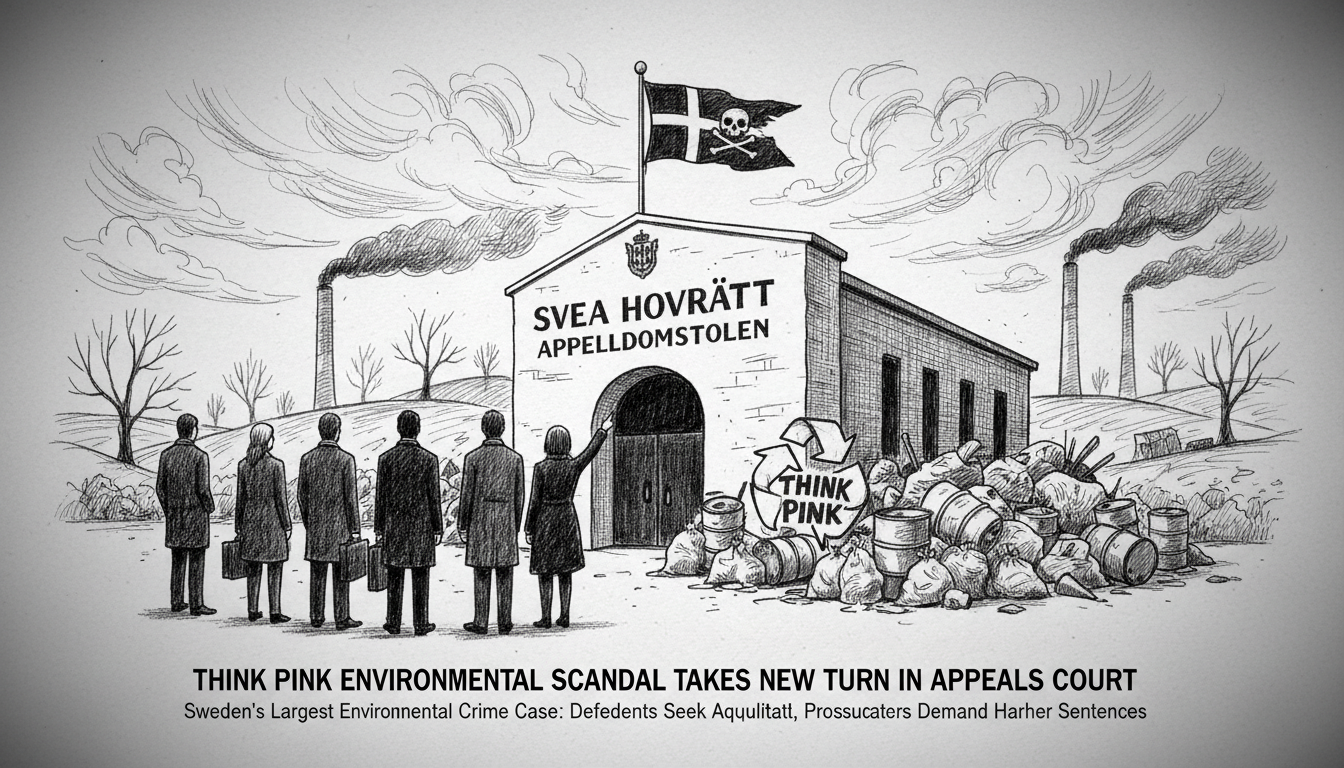
The massive Think Pink environmental case has entered its appeals phase in Sweden. Ten of eleven defendants previously received convictions for serious environmental crimes linked to the waste company's operations in central Sweden between 2015 and 2020.
As the appeal hearing begins at the Land and Environment Court of Appeal, all defendants are seeking acquittal. Meanwhile, prosecutors want harsher sentences for most defendants, including television personality Leif-Ivan Karlsson, who was the only one cleared in the initial trial.
Prosecutor Linda Schön stated, "We had sought substantially higher penalties for most involved than what they received."
The exception was Fariba Vancor, the longtime public face of the hyped waste company. She received Sweden's harshest environmental crime sentence - six years in prison for 19 counts of serious environmental offenses. Her lawyer described it as the toughest environmental penalty ever issued in Sweden.
Jan Tibbling, Vancor's lawyer, said after the June verdict, "It couldn't have gone worse."
The appeal court will consider largely the same evidence as the district court, though some new hearings are planned. The massive trial is scheduled for 82 hearing days and expected to continue until next May.
In a parallel case last week, Vancor received an additional 18-month sentence for economic crimes within the company. Another key figure received four months for similar charges.
Karlsson received a conditional sentence for economic crimes connected to the cruise ship Baltic Star.
This case represents Sweden's largest environmental crime prosecution. The investigation spans approximately 50,000 pages.
Prosecutors allege the defendants orchestrated illegal dumping of hundreds of thousands of tons of waste at 21 locations across central Sweden. The waste, primarily construction and demolition materials, should have been sorted but was instead crushed and piled or buried.
Dumping occurred near water protection zones, unprotected stormwater wells, residential areas, and shoreline protection zones across 15 municipalities including Uppsala, Västerås, and Stockholm-area communities.
The district court confirmed serious environmental crimes occurred at 19 of the 21 sites in question. The appeals process now determines whether convictions stand and sentences change.
This case highlights Sweden's ongoing struggle with organized environmental crime, particularly in the waste management sector where proper disposal costs create profit incentives for illegal operations.