
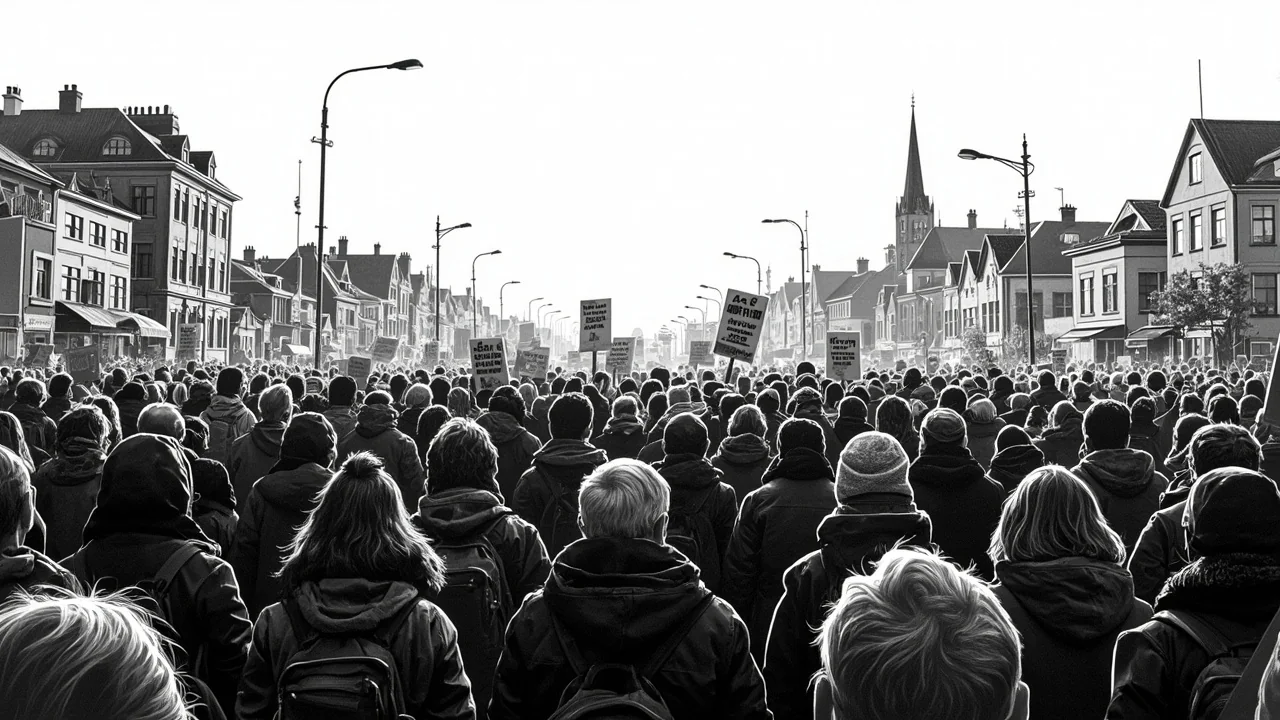
Thousands of people filled the streets of Nuuk on January 18 in what's being called the largest protest ever staged in Greenland's capital. The demonstration was a direct response to former US President Donald Trump's renewed push to acquire the self-governing Danish territory and his threats of tariffs against Denmark and its Nordic allies.
From my perspective covering Danish society, this isn't just a geopolitical story. It's about the human impact of policy statements that can feel distant in Copenhagen but resonate deeply in Greenlandic communities. The protest, organized swiftly after Trump's Saturday statement, shows how international rhetoric can trigger immediate local action.
Trump threatened to impose 10% tariffs on Denmark, Finland, Iceland, Norway, and Sweden unless a deal for Greenland was reached. This follows the Nordic Foreign Ministers' joint statement earlier in January reaffirming their position on Greenland's status. While the raw data doesn't include specific community leader quotes from Nuuk, the sheer scale of the public response speaks volumes about local sentiment.
The situation touches on core themes in Danish society news, including the complex relationship between Copenhagen and its autonomous territories. It raises questions about integration and sovereignty that go beyond typical Copenhagen integration debates. The Danish welfare system and social policy framework extend to Greenland, making this a domestic issue as much as a foreign policy one.
Danish municipalities and social centers often serve as the frontline for discussing these national identity issues. While this protest occurred in Nuuk, similar conversations about Denmark immigration policy and territorial integrity are happening in community halls across Denmark. The immediate regional searches triggered by the tariff threats indicate widespread concern about economic and political stability.
Protests of this magnitude in Greenland are rare, making this a significant moment in the ongoing dialogue about the Arctic nation's future within the Danish realm. The Nordic response has been unified, reflecting the interconnectedness of regional policy.