
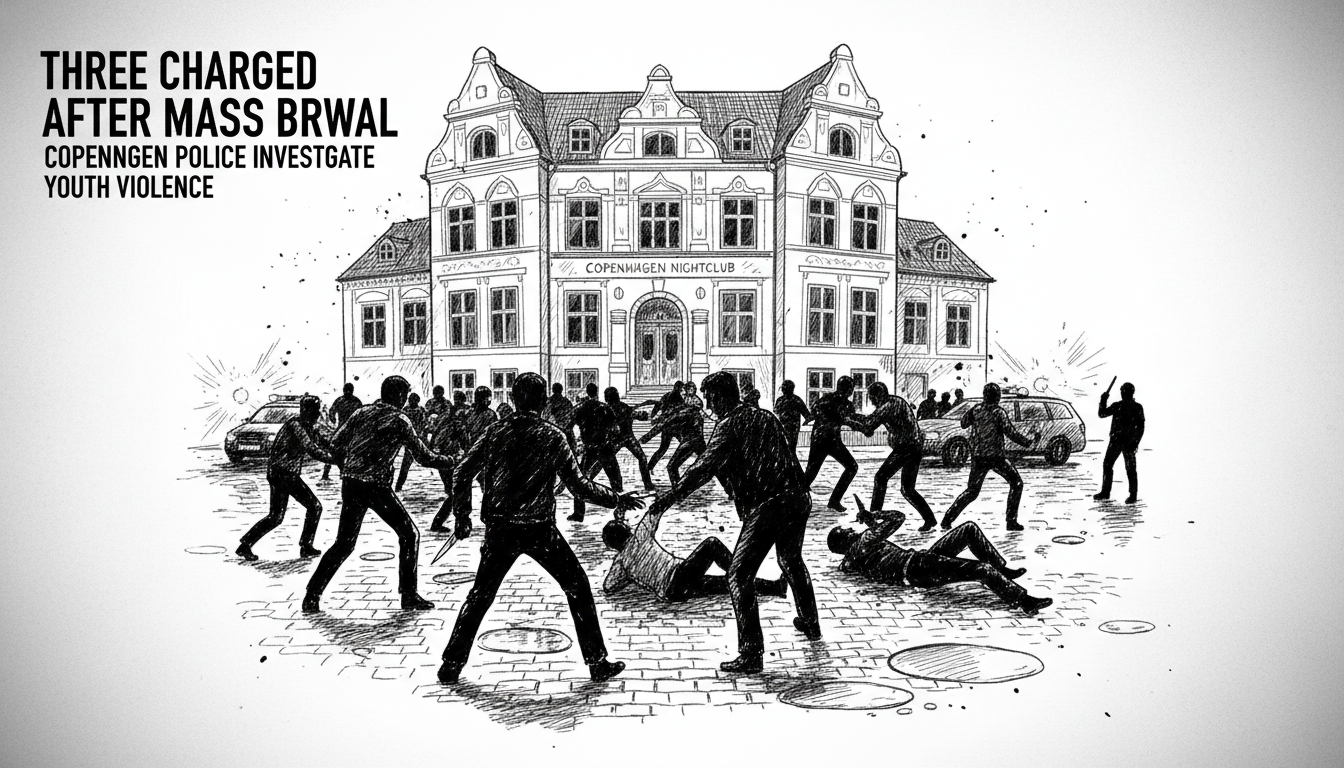
Copenhagen police have charged three individuals following a violent confrontation that escalated into a stabbing incident outside a nightclub in the city center. The altercation occurred during early Sunday morning hours on Nørregade, a central Copenhagen street known for its nightlife establishments. Authorities estimate between twenty and thirty people participated in the physical confrontation, with approximately one hundred bystanders present when violence erupted.
Police officials confirmed three victims sustained superficial knife wounds and received medical treatment before being discharged from hospital. All involved parties appear to be approximately eighteen to nineteen years old, raising questions about youth violence in urban nightlife districts. The incident began inside a nightclub before moving outdoors where it intensified, according to police accounts.
Investigators recovered knives from the scene but cannot yet confirm their connection to the stabbings. The police watch commander described the suspects as uncooperative during questioning, noting none of the involved parties would provide accounts of what triggered the violence. All three charged individuals were initially detained then released pending further investigation, with police acknowledging they currently lack sufficient evidence for pretrial detention.
This incident highlights ongoing challenges in Copenhagen's integration efforts, particularly concerning youth violence in entertainment districts. Denmark's social policy framework emphasizes prevention through community centers and municipal programs, yet such incidents continue to surface. The Danish welfare system typically provides robust social services, but nighttime violence in urban cores remains a persistent concern for authorities.
Local integration specialists note that incidents involving young adults in nightlife districts often reflect broader social dynamics. Copenhagen integration programs have expanded in recent years, focusing on youth engagement and conflict resolution. However, the effectiveness of these initiatives becomes questioned when group violence erupts in central city locations.
Danish immigration policy has evolved to emphasize both inclusion and public safety, with municipalities developing targeted approaches for urban youth. The Copenhagen police department has increased patrols in nightlife areas following similar past incidents, yet this latest confrontation suggests more comprehensive strategies may be necessary. Community leaders have called for enhanced youth outreach programs and improved communication between authorities and neighborhood representatives.
Police continue investigating and may bring additional charges as more participants are identified. They've requested anyone with relevant information or video footage to come forward. The case underscores the complex intersection of urban nightlife management, youth intervention programs, and public safety enforcement in Denmark's capital city.