
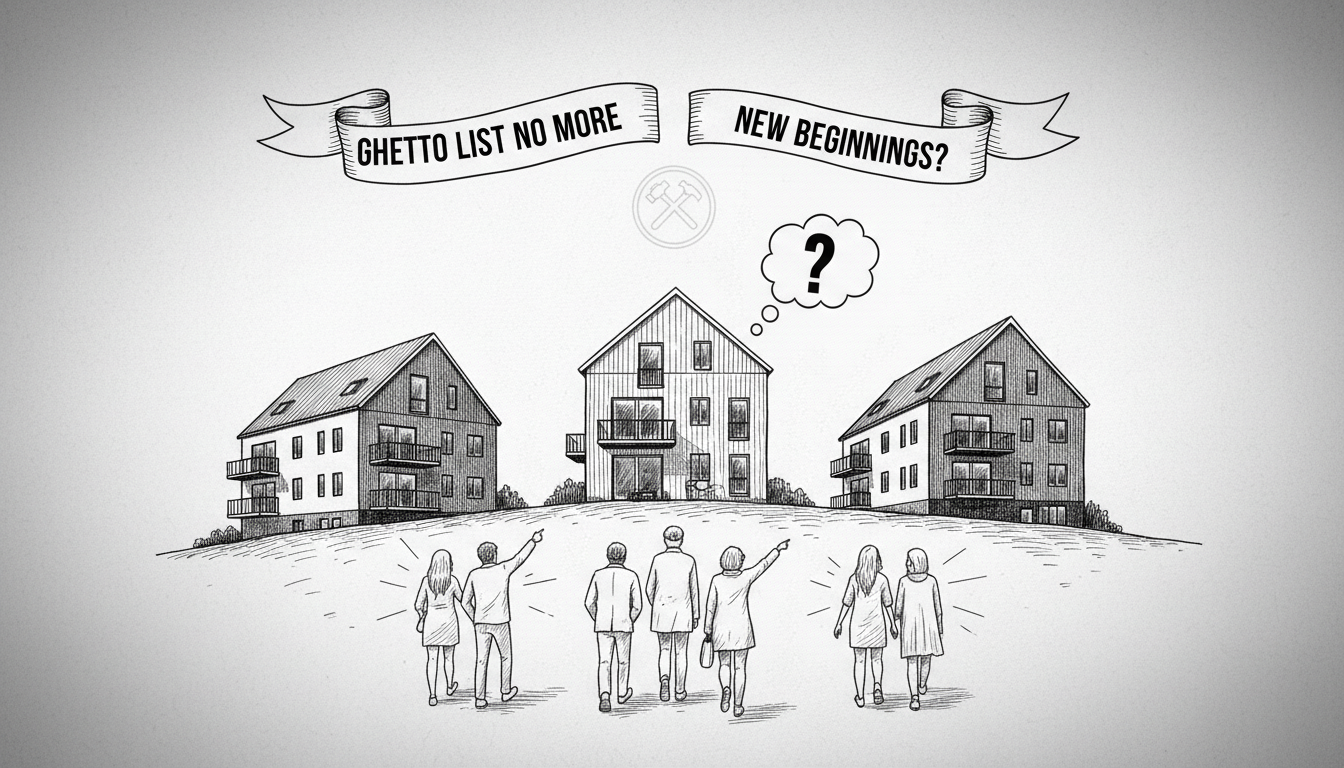
Three Danish housing areas have officially been removed from the country's controversial 'parallel society' and 'vulnerable area' lists, commonly called the 'ghetto list'. The neighborhoods of Skovvejen/Skovparken in Kolding, Askerød in Greve, and Stengårdsvej in Esbjerg are now free of the designation. For long-term residents like Deeqa Mohamed, who has lived in Skovparken for over thirty years, the removal is a welcome but confusing correction. She says she never saw a ghetto outside her window and calls the original listing a form of discrimination against a pleasant community.
The Danish government's list identifies areas with high concentrations of residents from non-Western backgrounds and significant socio-economic challenges. To be classified, an area must have over 50% residents with non-Western heritage and meet at least two of four additional criteria. These include high rates of unemployment, low education levels, criminal convictions exceeding three times the national average, and low gross income. The stated goal is to promote integration and prevent parallel societies, but critics argue the label itself is stigmatizing and counterproductive.
Local officials celebrated the delisting as a victory for community efforts. The Mayor of Esbjerg, Jesper Frost Rasmussen, called it an 'early Christmas gift' that spares the area from potential demolition mandates linked to the list. He emphasized a shift from talking neighborhoods down to building them up. In Skovparken, resident Fatima Mohamoud reported feeling safer due to a drop in local crime, a key factor in the area's removal. She hopes the new status will improve the area's reputation and make it more attractive.
The delisting reflects a broader national trend. The total number of designated parallel societies has dropped from eight to five, and vulnerable areas from twelve to seven. This reduction is attributed to targeted municipal interventions, including social programs, physical renovations, and policing. Yet the path off the list can be precarious. Greve's Mayor, Pernille Beckmann, noted that Askerød constantly hovers near the threshold, warning that progress can lead to complacency. Her municipality now plans to focus less on the list itself and more on holistic district development involving politicians, housing organizations, and local businesses.
From an integration policy perspective, this update reveals the tension within Denmark's social model. The welfare system is designed for cohesion, but the ghetto list mechanism is a blunt instrument. It triggers substantial resources for area renewal, including demolition and rebuilding mandates for long-listed areas, but it also brands communities. Resident Søren Juul Nielsen from Stengårdsvej captured this contradiction, stating they never felt they lived in a ghetto due to strong local communities. The question now is whether the positive momentum from delisting can be sustained without the pressure of the official label, or if some areas will simply cycle back onto the list in future assessments. The policy's success may ultimately depend on shifting from monitoring deficits to actively investing in social infrastructure and economic opportunity for all residents.