
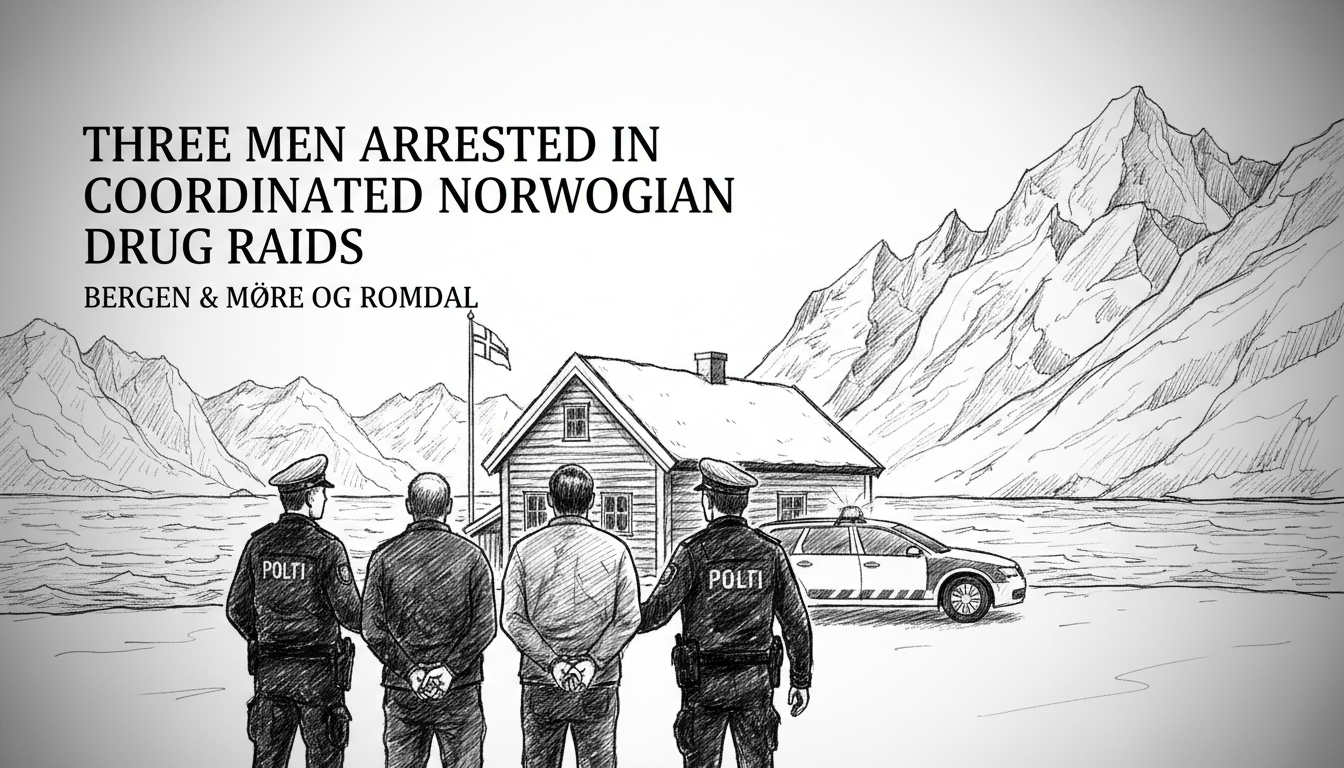
Norwegian police have arrested three men in their twenties in a coordinated operation targeting major drug distribution. Authorities believe the men were involved with large quantities of cannabis and cocaine. The arrests occurred on Wednesday during planned raids at three separate addresses across two western counties. Two suspects were detained in Bergen, while a third was arrested in Møre og Romsdal. All three now face charges for serious narcotics offenses.
A police prosecutor from the Western Police District confirmed the early stage of the investigation. Officials requested the men be held in custody pending further proceedings. The prosecutor declined to comment on specific details of the case. This operation highlights ongoing police efforts against organized drug crime in Norway's coastal regions.
This case fits a broader pattern of narcotics enforcement in Norway. The country maintains some of Europe's strictest drug laws, with penalties for serious offenses often involving lengthy prison terms. Recent years have seen increased police focus on intercepting drug shipments entering through major ports like Bergen. The city's strategic location on the west coast makes it a potential transit point for contraband moving north from continental Europe.
International readers should understand Norway's unique legal approach. Unlike some neighboring countries, Norway has not moved toward decriminalization for personal use. The government's official policy remains focused on prevention, treatment, and strict law enforcement. This arrest operation targeting what police call 'larger quantities' suggests investigators are focusing on distribution networks, not individual users. The request for custody indicates prosecutors believe the suspects may flee or interfere with evidence.
What does this mean for Norway's drug trade? Seizures of cocaine have been rising, reflecting broader European trends. Cannabis remains the most widely used illicit substance. Police operations like this one aim to disrupt supply chains and increase street prices. The real test will be whether these arrests lead to convictions and longer-term disruption of the networks involved. Past major cases have sometimes revealed international connections to criminal groups in other countries.
The social implications are also worth noting. High-profile drug arrests often reignite debate about Norway's punitive model. Some health experts argue for a greater shift toward harm reduction. Others point to the country's relatively low rates of drug-related deaths as evidence the current system works. This legal tension exists against a backdrop of rising drug purity and availability in Scandinavian cities. For now, the police message is clear. They will continue to target those they believe are profiting from the illegal drug trade in communities from the fjords to the capital.