
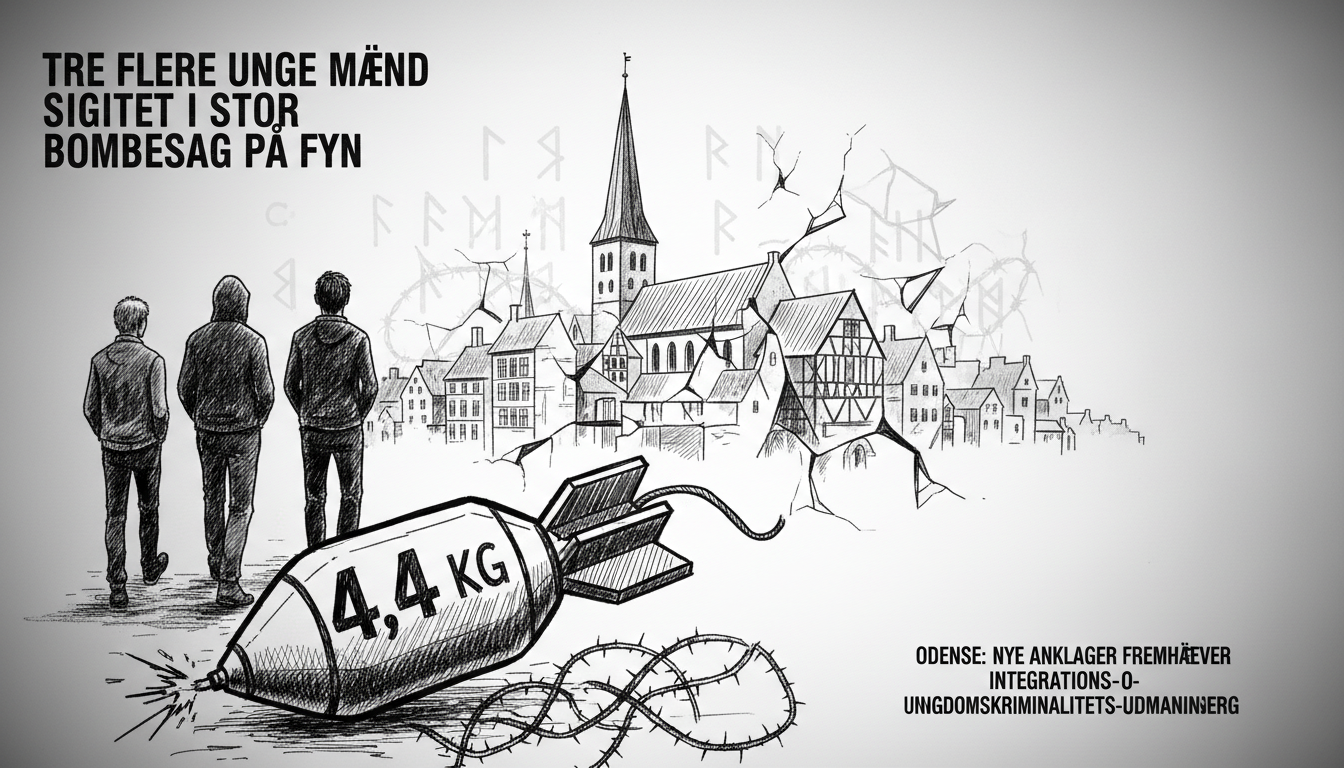
Danish prosecutors have charged three additional young men in a major bombing case in Odense. The trial for the new defendants opened in the city court on Thursday. This development expands what officials describe as a complex case with a large cast of characters. A special prosecutor stated the case contains extensive information and many involved individuals. The three men, aged 20, 21, and 23, face charges of endangering multiple lives. The charges stem from an attempt to detonate a bomb containing 4.4 kilograms of explosives outside an apartment building on Nyborgvej in Odense. The alleged attempt occurred during the night between December 28 and December 29. This incident is part of a broader pattern of youth-related violence that challenges Danish integration models. The case raises difficult questions about social cohesion and the effectiveness of prevention programs in Danish municipalities.
Four other men were previously convicted in connection with the same bombing attempt. They received prison sentences of up to ten years in a ruling earlier this year. All four of those individuals have appealed their convictions. The new defendants are accused of acting in concert with the previously convicted men. This legal strategy suggests prosecutors view the event as a coordinated group action. The inclusion of a 17-year-old Swedish national among the initial convicts highlights the transnational dimensions sometimes present in such cases. It also points to the challenges faced by social centers working with at-risk youth across Scandinavia. Community leaders in Copenhagen and other cities often cite a lack of resources for early intervention.
From my perspective covering Danish society news, this case touches deep nerves in the national conversation about security and integration. The Danish welfare system is designed to provide support and prevent alienation. Yet incidents like the Odense bombing attempt indicate some young men are falling through the cracks. Statistics on integration often show mixed results for second-generation immigrants in education and employment. These socioeconomic factors can create fertile ground for radicalization, despite Denmark's extensive social policy framework. The response from local social centers and national authorities will be critical. They must balance judicial consequences with long-term strategies for inclusion.
What does this mean for Denmark's social policy moving forward? The case will likely fuel debates on immigration policy and the allocation of resources for youth programs. Danish integration efforts have historically focused on language acquisition and labor market participation. Some experts argue for more targeted psychological and community-based support. The trial's outcome could influence how municipalities design local intervention strategies. It also serves as a stark reminder of the human impact when systems fail to engage vulnerable individuals. The residents of the apartment building on Nyborgvej experienced a profound violation of their safety. Their community, and Danish society as a whole, now grapples with the aftermath and searches for solutions.