
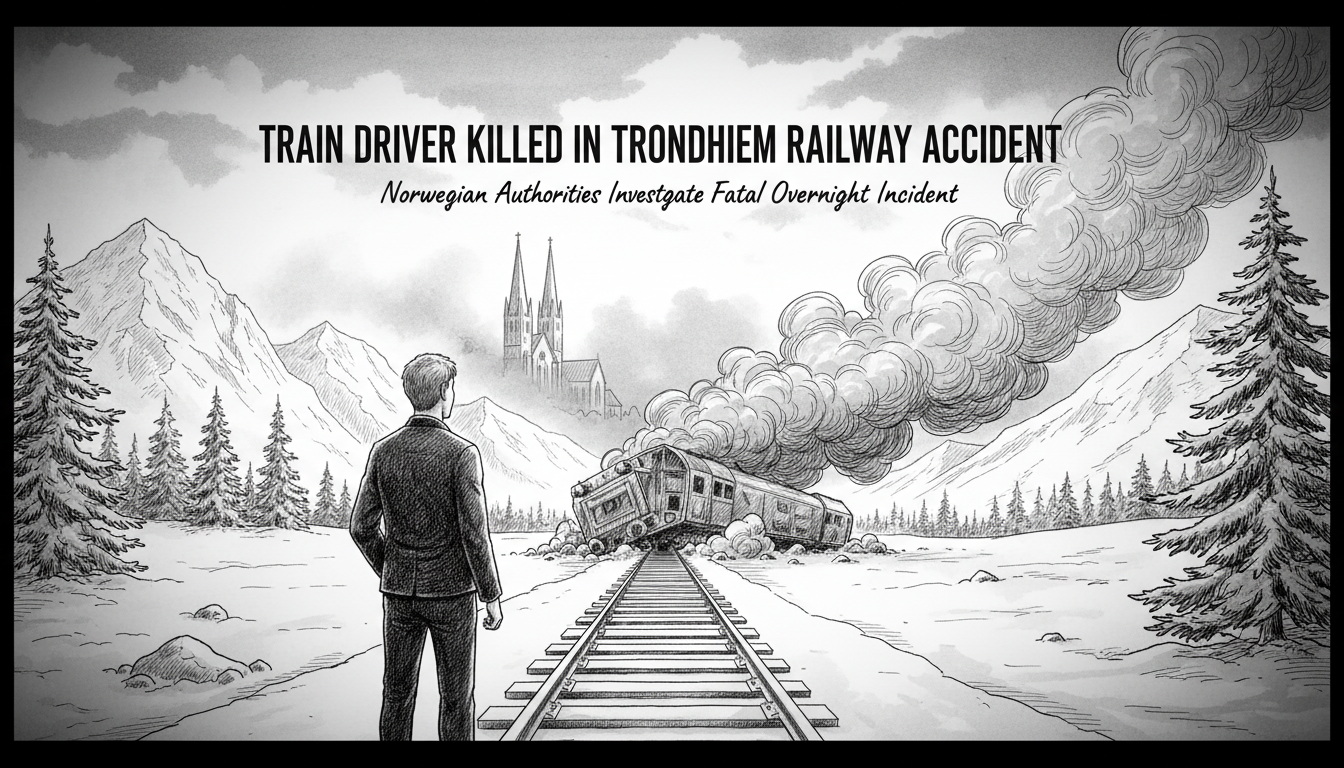
A tragic railway incident in central Norway has claimed the life of a young train operator. Snorre Stemshaug Roe died when his train struck a person on the tracks near Trondheim during overnight operations. The 23-year-old driver made the emergency call to police himself just after 1 AM, reporting the collision despite his attempts to activate emergency braking systems.
Emergency responders arrived quickly at the scene and initiated life-saving measures. Medical personnel declared the individual deceased shortly after their arrival. Operations manager Svein Helgetun confirmed the sequence of events in an official statement. He noted the driver immediately reported the impact and his emergency braking efforts.
The train involved was operating without passengers at the time of the incident. Only two SJ Norge employees were aboard the vehicle, which was returning to maintenance facilities in Støren. Company representatives confirmed the crew consisted of operational staff traveling between depots.
This accident raises serious questions about railway safety protocols in Norway's transportation network. The Trondheim region serves as a crucial transportation hub connecting central Norway with northern territories. Railway safety has become increasingly important as Norway expands its Arctic infrastructure development.
Norwegian railway operations follow strict safety guidelines developed by Bane NOR, the state-owned railway infrastructure manager. These incidents trigger automatic investigations by both railway authorities and the Accident Investigation Board Norway. The investigation will examine track conditions, signaling systems, and operational procedures.
Norway's railway network has maintained a strong safety record compared to European averages. This tragic event marks one of the few fatal incidents involving railway personnel in recent years. The Norwegian Railway Directorate continuously updates safety protocols based on incident investigations.
The psychological impact on railway workers involved in such incidents cannot be overstated. Norway's transport unions provide immediate counseling and support services for crew members following traumatic events. The broader transportation community typically rallies around affected workers and their families.
This accident occurs as Norway invests heavily in railway modernization projects. The government's National Transport Plan allocates substantial funding to railway safety improvements nationwide. These investments aim to maintain Norway's position as having one of Europe's safest railway systems.
Railway safety experts will closely monitor the investigation findings. Their analysis could influence future safety measures across Scandinavia's transportation networks. The Norwegian Parliament's transportation committee regularly reviews such incidents for potential policy implications.
The human cost of transportation accidents remains a sobering reality despite technological advances. This tragedy reminds all Norwegians of the professionals who maintain the country's critical infrastructure around the clock, often working during unsocial hours to keep transportation systems functioning.