
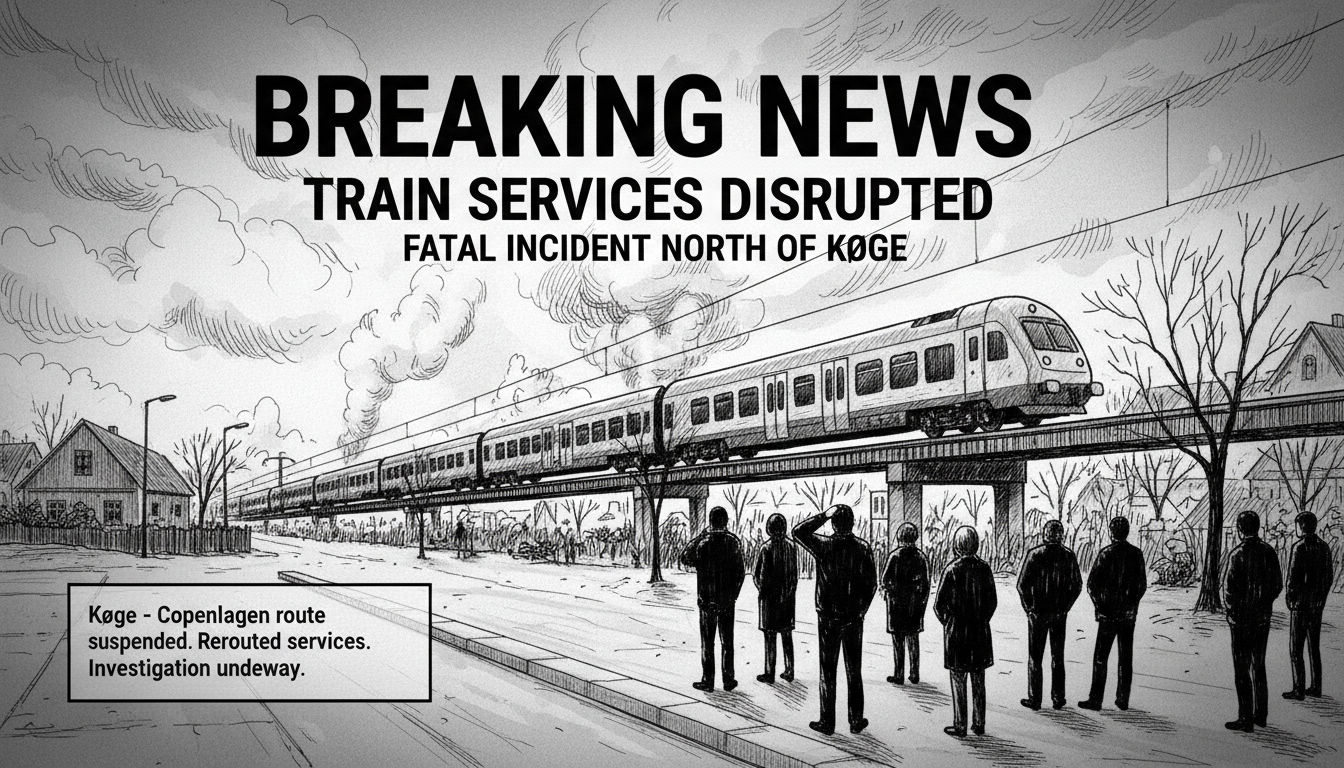
A person died on Monday after being struck by a train north of Karlslunde. The incident occurred just after noon, halting all train traffic between Køge Nord Station and Copenhagen Central Station. Railway officials confirmed the suspension and said they have not determined when services will resume.
Train operator DSB rerouted multiple trains through Roskilde Station instead. This affects commuters traveling between Zealand's southern regions and the capital. Police have not released the victim's gender or age as investigations continue.
This tragedy highlights ongoing safety concerns along Denmark's busiest rail corridors. The Køge-Copenhagen line serves thousands of daily commuters and represents a critical transportation artery. When incidents occur here, ripple effects spread across the entire regional network.
Denmark's railway system maintains strong safety records overall, but pedestrian incidents remain challenging to prevent completely. The country has invested heavily in barrier systems and warning signals at high-risk crossings. Still, accidents persist in areas where tracks intersect with public access routes.
International visitors should note that Danish rail disruptions typically resolve within hours. Travelers can check real-time updates through official apps or station announcements. Alternative bus services often deploy during extended closures, though journey times increase significantly.
Local authorities will conduct a standard investigation into the circumstances surrounding the incident. Such probes typically examine train operator responses, signaling functionality, and potential contributing factors. Previous similar incidents have led to safety enhancements at identified risk locations.
For now, commuters face extended travel times and should plan alternative routes. The disruption comes during a regular weekday, affecting both work commutes and leisure travel. Railway officials prioritize restoring service safely while respecting the ongoing police investigation.
This marks the second fatal railway incident in the region this year, raising questions about prevention measures. While Denmark's railways rank among Europe's safest, each tragedy prompts reevaluation of existing protocols. The coming days will reveal whether this incident leads to new safety initiatives.
Rail passengers should expect residual delays even after service restoration. Crews need time to reposition equipment and normalize schedules following significant disruptions. Travelers might consider flexible ticketing options if their plans remain uncertain.