
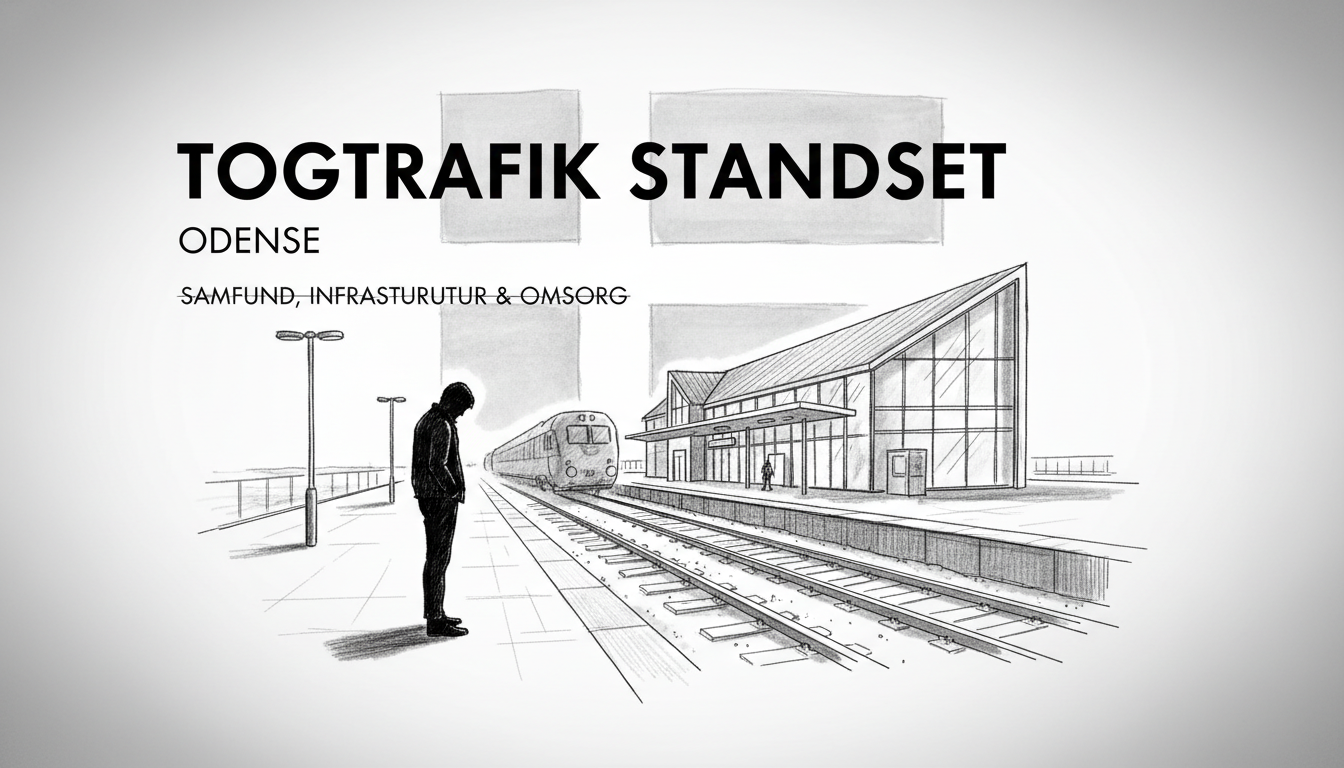
All train traffic to and from Odense Station was suspended for approximately thirty minutes on Tuesday evening. The disruption followed an incident where a person was struck by a train. Police worked at the scene before releasing the station just after 7:30 PM. Train services then resumed, but Danish State Railways warned of continued delays and some cancellations. Their initial, cautious estimate suggested normal operations could restart around 8:00 PM.
This brief but significant halt in Denmark's third-largest city highlights the immediate human and systemic impact of such tragedies. Beyond the obvious personal tragedy, these events ripple through the fabric of Danish society and its celebrated welfare model. They test the resilience of public infrastructure and the social safety nets designed to support citizens in crisis. For a nation that prides itself on efficiency and social cohesion, any disruption to daily life prompts reflection on support systems.
Odense, a major transport hub on the island of Funen, connects vital regions. A stoppage here affects commuters, businesses, and freight across the country. The swift police work and subsequent communication from authorities are standard in Denmark's highly coordinated public response protocols. These protocols are a cornerstone of the Danish welfare system, which aims to manage public incidents with minimal lasting disruption.
From a social policy perspective, every incident on the railways raises difficult questions. It touches on mental health support, urban safety planning, and the societal pressures that can lead individuals to such desperate acts. Community leaders in Copenhagen and other Danish municipalities often stress that true integration and social stability require robust preventative measures. These measures go beyond physical infrastructure to include accessible social centers and mental health services.
Statistics on social well-being and integration efforts are relevant here. Denmark continuously evaluates how its policies support vulnerable populations. Events like the one in Odense serve as stark reminders of the work that remains. The system's response is efficient, but the ultimate goal is prevention. The focus must remain on building a society where fewer people reach such a point of despair. The trains are running again, but the conversation about how to strengthen the social fabric continues. This is the ongoing challenge for Danish social policy.