
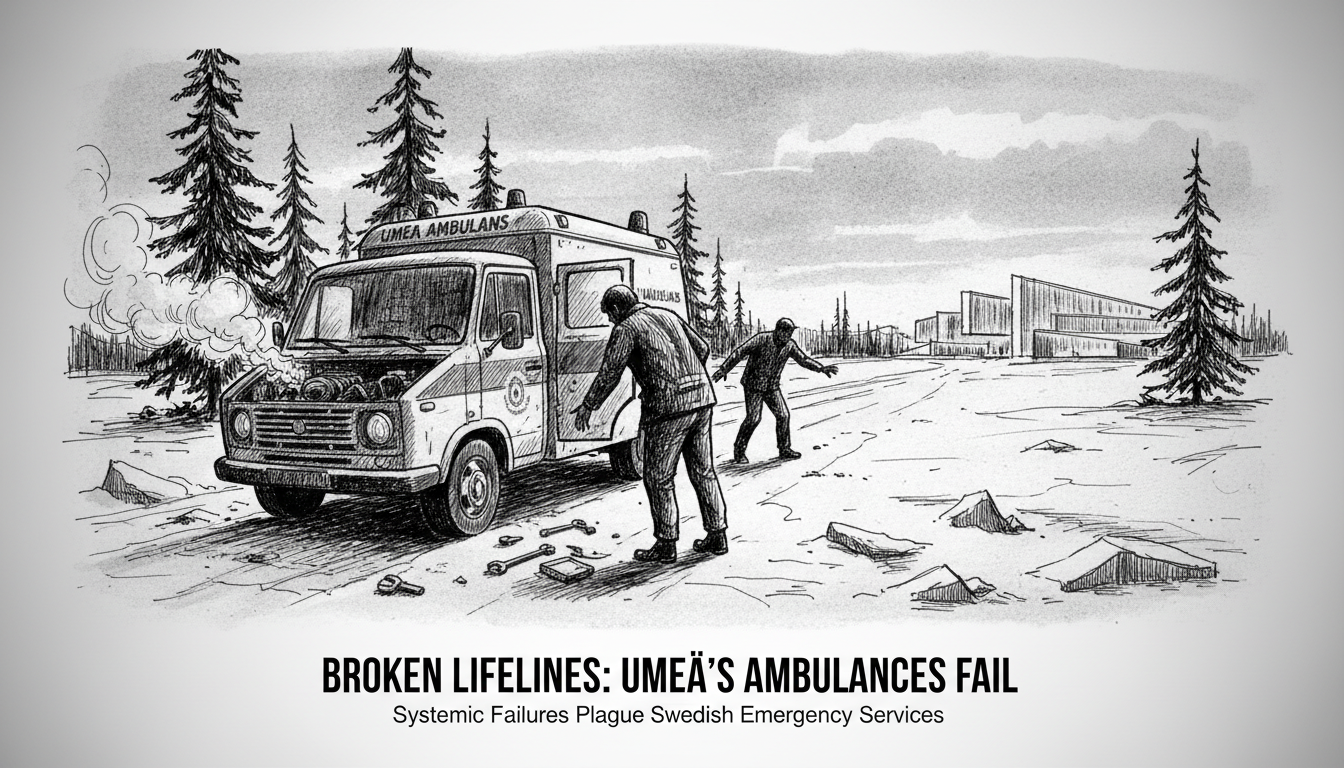
Emergency services in northern Sweden face a critical vehicle shortage. Multiple ambulances in Umeå have broken down during active emergency calls. The aging fleet creates dangerous situations for both patients and medical staff.
Ambulance driver and safety representative Tobias Gulliksson described the worrying pattern. Vehicles have required towing during shifts. Replacement ambulances must be dispatched mid-emergency. The situation remains particularly alarming because these breakdowns haven't yet occurred during the most critical Priority 1 calls. Gulliksson noted this appears to be more luck than system reliability.
The core problem stems from delayed vehicle replacement cycles. Ambulances typically require replacement every five years. Many current vehicles have accumulated nearly 50,000 miles. Regional procurement delays have left the service operating with outdated equipment.
Region Västerbotten's operational manager Stian Kvalvik acknowledged the procurement issues. Staff shortages within the procurement unit contributed to delays. A new framework agreement should be finalized by late January. The original plan called for four new ambulances in 2025 and four more in 2026. Current projections now suggest all eight vehicles might arrive during 2026.
Daniel Stålnacke, the region's procurement chief, defended the process despite recruitment challenges. He characterized this procurement as unusually fast compared to typical regional timelines.
This situation reflects broader challenges in Swedish regional healthcare management. Local governments bear responsibility for emergency medical services. Budget constraints and administrative bottlenecks frequently impact essential service delivery. The Umeå ambulance crisis demonstrates how procurement delays directly affect frontline emergency response capabilities.
International readers should understand that Swedish healthcare operates through 21 regional councils. These bodies manage both hospitals and pre-hospital emergency services. The system faces particular strain in northern regions where vast territories and harsh weather compound operational challenges.
The immediate consequence involves extended response times for patients. Vehicles entering 'fail-safe mode' can only travel 30-40 km/h. Broken suspensions and engine warnings further compromise reliability. Medical professionals operate with legitimate concerns about vehicle safety during critical interventions.
What happens next depends on January's procurement outcome. Regional officials must address both immediate vehicle needs and systemic procurement weaknesses. The situation in Umeå serves as warning for other Nordic regions managing aging emergency vehicle fleets.