
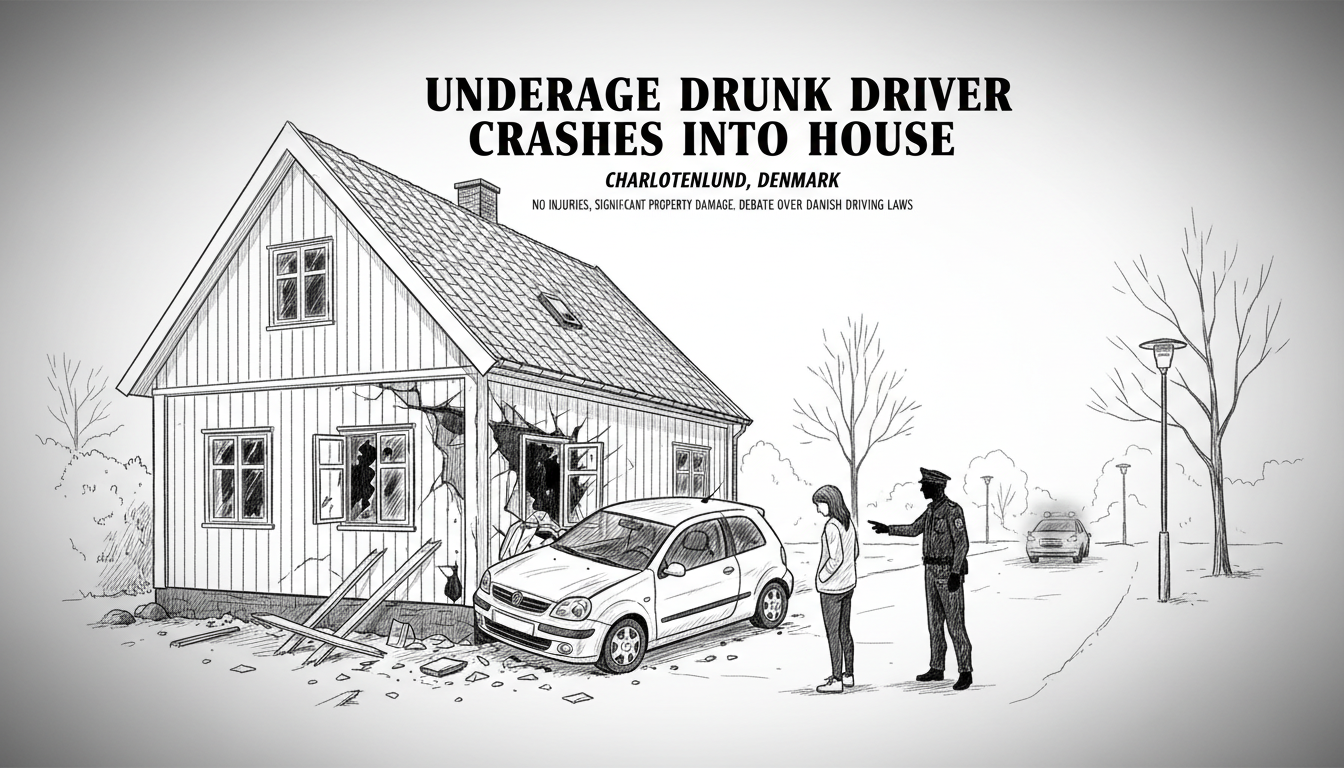
A 17-year-old girl faces charges for drunk driving and operating a vehicle without a valid license after crashing into a house in Charlottenlund. The incident occurred late Saturday evening, causing property damage but no injuries. Police confirmed the driver had consumed alcohol beyond legal limits.
Authorities received the emergency call at 11:54 PM and immediately dispatched officers to the scene. "We confirmed that a house had been struck," said Ahmed Osman, police watch commander for North Zealand. "We also determined the driver had consumed alcohol above the permitted level."
The teenage driver now faces dual charges for drunk driving and driving without proper authorization. Danish law prohibits 17-year-old license holders from driving after 8 PM without an accompanying adult who is at least 24 years old and has held a driver's license for minimum five years.
This incident highlights ongoing concerns about underage drinking and driving regulations in Denmark. Despite strict licensing requirements, such violations continue to occur, raising questions about enforcement and prevention measures.
Structural engineers assessed the damaged property and confirmed no collapse risk. "We examined whether the building needed reinforcement, but it does not," Osman stated. "Damage repair services are now on site."
The location within Charlottenlund remains undisclosed, though authorities confirmed the vehicle has been removed from the scene. This affluent Copenhagen suburb rarely experiences such dramatic traffic incidents, making the event particularly notable for local residents.
Denmark's graduated licensing system aims to reduce accidents among young drivers through phased privilege acquisition. Yet this case demonstrates how alcohol impairment can override even structured safety systems. The combination of underage drinking and illegal driving hours presents a dangerous scenario that fortunately resulted only in property damage this time.
Similar incidents in recent years have prompted calls for stronger alcohol education programs in schools and stricter enforcement of driving curfews. The psychological and legal consequences for the teenage driver could be substantial, given Denmark's strict approach to drunk driving offenses.
International readers should note that Scandinavian countries typically maintain lower blood alcohol limits than many other nations, often at 0.02% for experienced drivers and zero tolerance for novice operators. This case serves as a reminder that Nordic nations enforce traffic regulations stringently, even for minor offenders.