
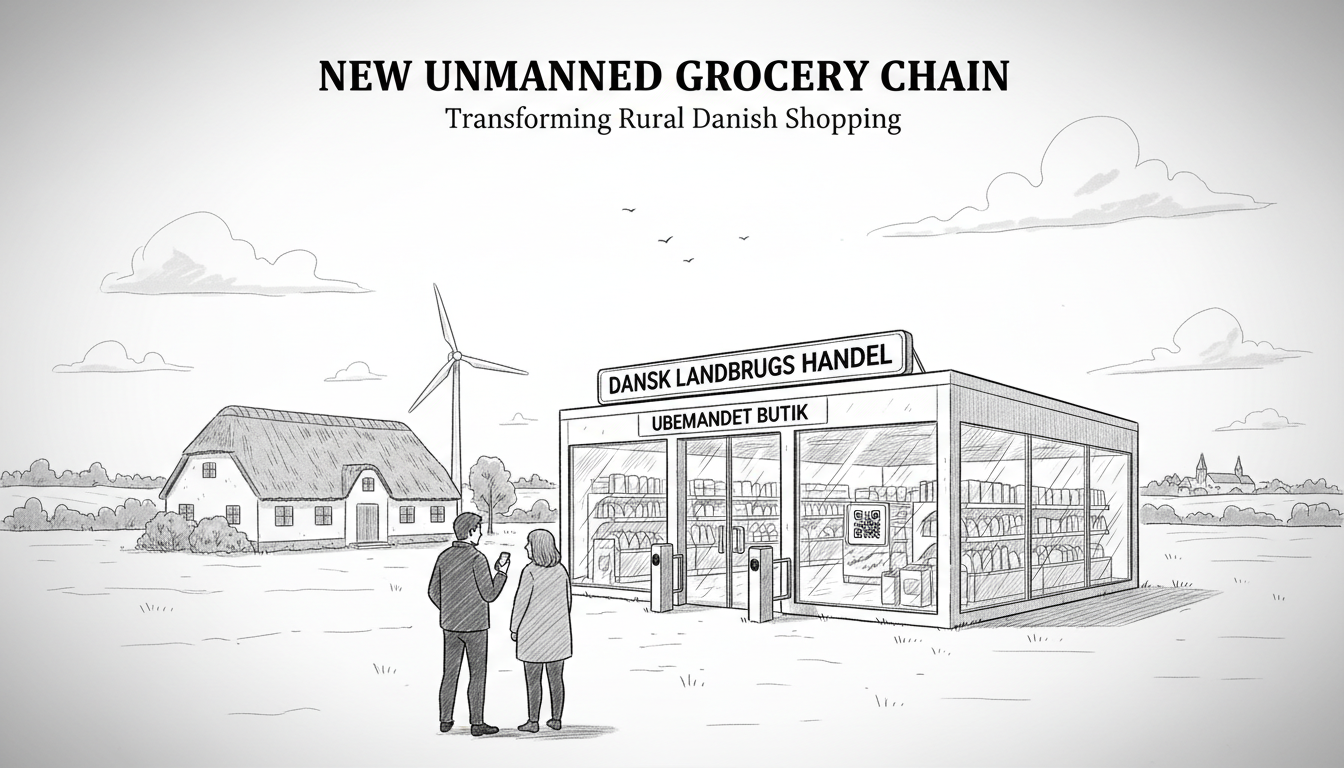
A new Danish grocery chain plans to open 100 unmanned stores across the country's rural areas. The concept called Købmanden 24/7 targets small towns that often struggle to maintain local shopping options.
Entrepreneur Finn Christiansen leads the ambitious expansion plan. His vision involves automated stores operating around the clock without staff. This approach could potentially save costs while providing basic shopping services in underserved communities.
To understand the scale of this proposal, consider that Netto, Denmark's largest grocery chain, currently operates approximately 550 stores nationwide. Reaching 100 locations would immediately position the new chain as a major player in the Danish retail landscape.
Industry expert Bruno Christensen sees both potential and challenges in the concept. He believes many rural communities might welcome such stores initially. The current economic situation makes unmanned options appealing for areas losing traditional grocery stores.
However, Christensen expresses long-term concerns about customer satisfaction. He questions whether automated stores can compete on product variety and fresh produce. Customers might eventually prefer established chains offering wider selections and promotional items.
The Danish grocery market already features intense competition with numerous established players. Christensen doubts unmanned concepts will thrive outside urban centers. He predicts traditional chains will continue setting industry standards while automated stores might find limited success in cities rather than villages.
Despite skepticism from some quarters, the concept has attracted serious backing. Dagrofa, the company behind Meny and Spar chains, has invested in Købmanden 24/7. This corporate support suggests confidence in the business model's potential.
Rural grocery stores across Denmark face mounting pressure from rising food prices and operational costs. Many village shops have closed in recent years, leaving communities without local shopping options. The unmanned store concept attempts to address this growing service gap.
The success of this venture depends on several factors. Consumer acceptance of completely automated shopping remains uncertain in traditional retail markets. Technical reliability, security concerns, and maintaining adequate product freshness present additional hurdles.
If successful, Købmanden 24/7 could reshape rural retail across Scandinavia. Other Nordic countries face similar challenges maintaining services in sparsely populated areas. A working model in Denmark might inspire similar initiatives in Sweden, Norway, and Finland.
The coming months will reveal whether Danish shoppers embrace this retail innovation or prefer traditional shopping experiences with human interaction and wider product ranges.