
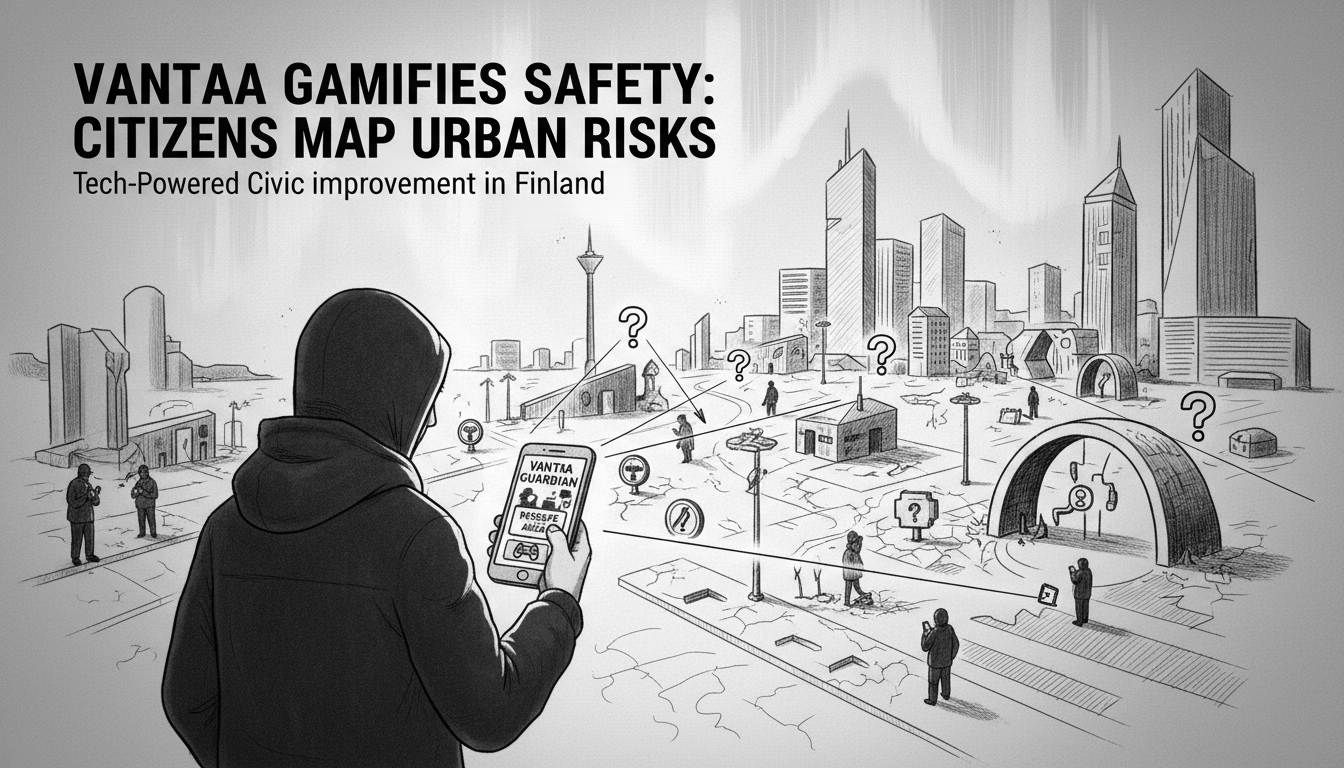
The city of Vantaa is launching a novel civic engagement project. It uses a mobile game to crowdsource data on unsafe locations in the Koivukylä and Korson districts. This initiative taps into Finland's deep tech and gaming expertise for urban problem-solving.
A new game module went live on Monday within the existing Crowdsorsa app. Active players have already begun submitting reports, which appear as green dots on a live map. The city pays residents one euro for each approved report about a location that feels unsafe.
Players can submit a photo and a short description with a suggestion for improvement. The game's rules strictly prohibit photographing people. The focus is solely on the urban environment, according to city officials. Examples of unsafe spots include poorly maintained areas, littered zones, or dark underpasses.
Toni Paju, CEO of the app's developer, explained the process. All reports are reviewed manually by human moderators. Only serious and constructive submissions are approved. Each player can report a maximum of ten locations per day.
The city has allocated a total prize pool of 5,000 euros for the project. The game will run until the funds are exhausted or until December 21st. The city particularly hopes to engage younger residents through this gamified approach.
This is not the first use of the Crowdsorsa app in Finnish cities. Helsinki, Espoo, and Vantaa have previously used it for tasks like invasive species control. The Tampere-based startup behind the app has also seen its platform deployed in Sweden and Canada.
Milja Inkeroinen, Vantaa's interaction specialist, outlined the next steps. The city will assess all validated reports to plan corrective measures. These could include installing new lighting in dark areas or building safer pedestrian underpasses near train stations.
Analysis: A Finnish Model for Civic Tech
This project highlights a distinct Finnish approach to smart city development. Instead of relying solely on expensive sensor networks, it leverages citizen participation through a familiar medium: mobile gaming. Finland's world-class gaming industry, with major studios like Supercell and Remedy Entertainment, has created a population comfortable with app-based interaction.
It is a cost-effective data-gathering method. For a 5,000 euro investment, the city gains a detailed, real-time map of perceived safety issues directly from its residents. This data is likely more nuanced than traditional survey methods.
The choice of Koivukylä and Korson is notable. These are suburban districts where traditional civic feedback channels might be less effective, especially among youth. The gamified, incentivized model directly targets this engagement gap.
There is an obvious question about sustainability. The project has a fixed budget and end date. The real test will be whether the city acts visibly on the reports. If players see their suggestions lead to tangible improvements, trust in such participatory models will grow. If not, public interest in future rounds will likely fade.
This initiative reflects a broader trend in the Nordic tech sector. Startups are increasingly creating B2G (Business-to-Government) solutions that address public sector challenges. The success of Crowdsorsa, a Tampere startup with international clients, shows the export potential of Finnish civic technology.
The model is clever but not without precedent. Helsinki's "Fix My Street" platforms have existed for years. The innovation here is the explicit gamification and micro-payment structure. It will be interesting to see if this leads to higher-quality, more actionable data compared to free-to-use reporting tools.
For international observers, this is a case study in pragmatic innovation. It combines Finland's gaming prowess, its high-trust society, and a practical municipal need. The project's results could influence how other cities worldwide use lightweight tech to engage citizens and improve urban living.