
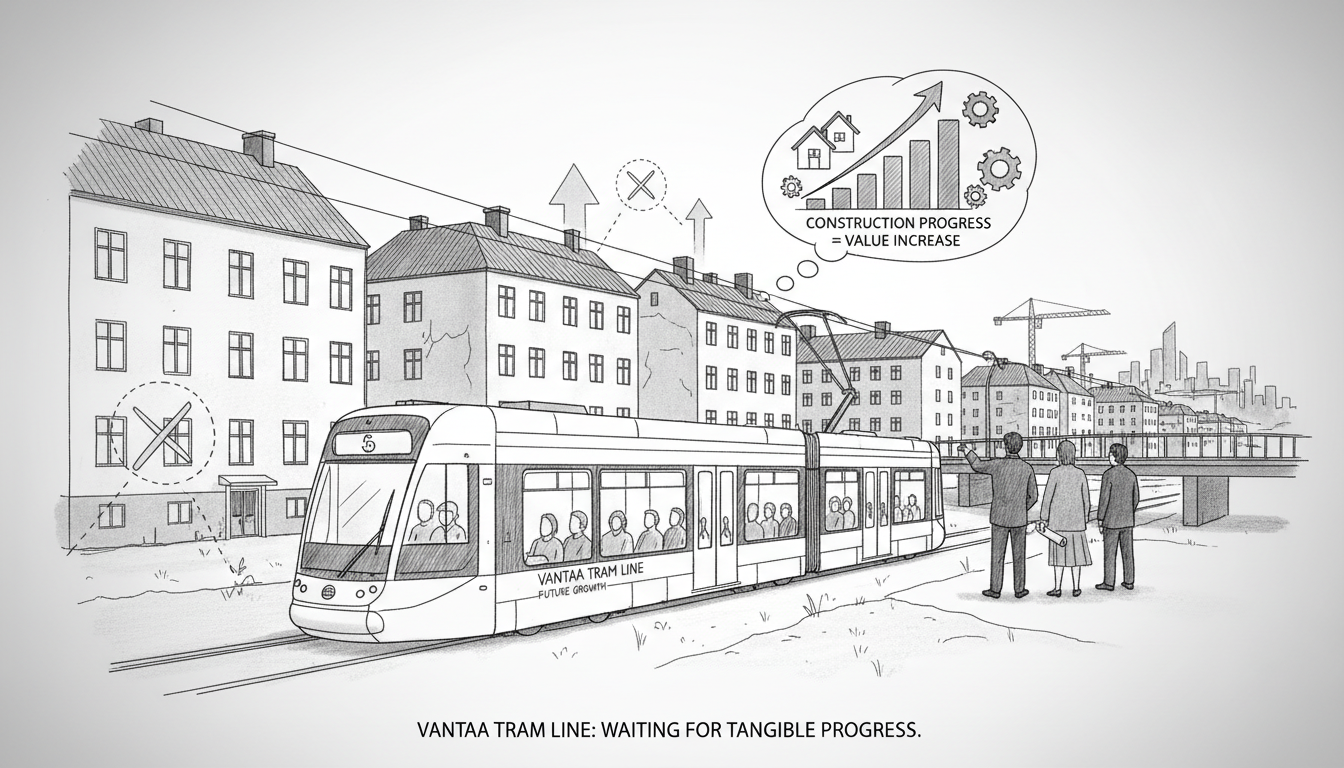
The new tram line under construction in Vantaa has not yet influenced housing prices along its planned route, according to recent market analysis. Experts predict price increases will materialize only as construction progresses and the tram service becomes a tangible reality. This development is closely watched in the Helsinki metropolitan area, where public transport investments often trigger significant urban transformation and real estate valuation shifts.
Lasse Palovaara, a leading director at a major Finnish real estate agency, noted the project's novelty. "It is still a relatively fresh development," Palovaara said in an interview. Other housing market specialists consulted for the report maintain a firm belief that the tram will stimulate property sales and elevate price per square meter figures in the coming years. The impact is expected to vary significantly between different neighborhoods along the line.
The area of Hakunila's Kaskela, situated directly on the tram route, serves as a primary case study. Analysts point to a common pattern in Finnish urban development. Major infrastructure projects typically generate anticipation long before physical completion. The actual financial premium for properties emerges when construction milestones are visibly met and the service start date approaches. This pattern has been observed with Helsinki's metro extensions and the Tampere tram network.
For international observers and potential investors, this situation highlights a key aspect of the Nordic real estate market. Value appreciation from public works is often delayed and calculated. It contrasts with markets where speculation might cause immediate price spikes based on announcements alone. The Finnish market tends to respond to concrete progress, reflecting a pragmatic approach to valuation.
The Vantaa tram represents a substantial investment in the capital region's eastward expansion. It connects suburban centers to the main rail network, aiming to reduce car dependency. This aligns with broader Finnish and European Union urban policy goals focused on sustainable mobility and densification around transit hubs. The project's funding involves municipal, state, and EU cohesion funds, tying local development to wider regional strategies.
What does this mean for residents and buyers? Current prices along the route may represent a potential window before the anticipated uplift. But buyers should be cautious. The promised connectivity must be weighed against ongoing construction disruption and the final timeline for service commencement. The municipal government of Vantaa is banking on the tram to spur further residential and commercial development, increasing the area's tax base.
The direct commentary here is straightforward. Market experts are stating the obvious with confidence: better transport links increase property values. The only real question is the timing and magnitude. The delay in price reaction is not surprising. It offers a measured insight into a market that avoids frenzy, waiting for steel rails and overhead wires instead of political promises. The real test will come when the first trams begin their test runs, turning artist's renderings into daily commutes.