
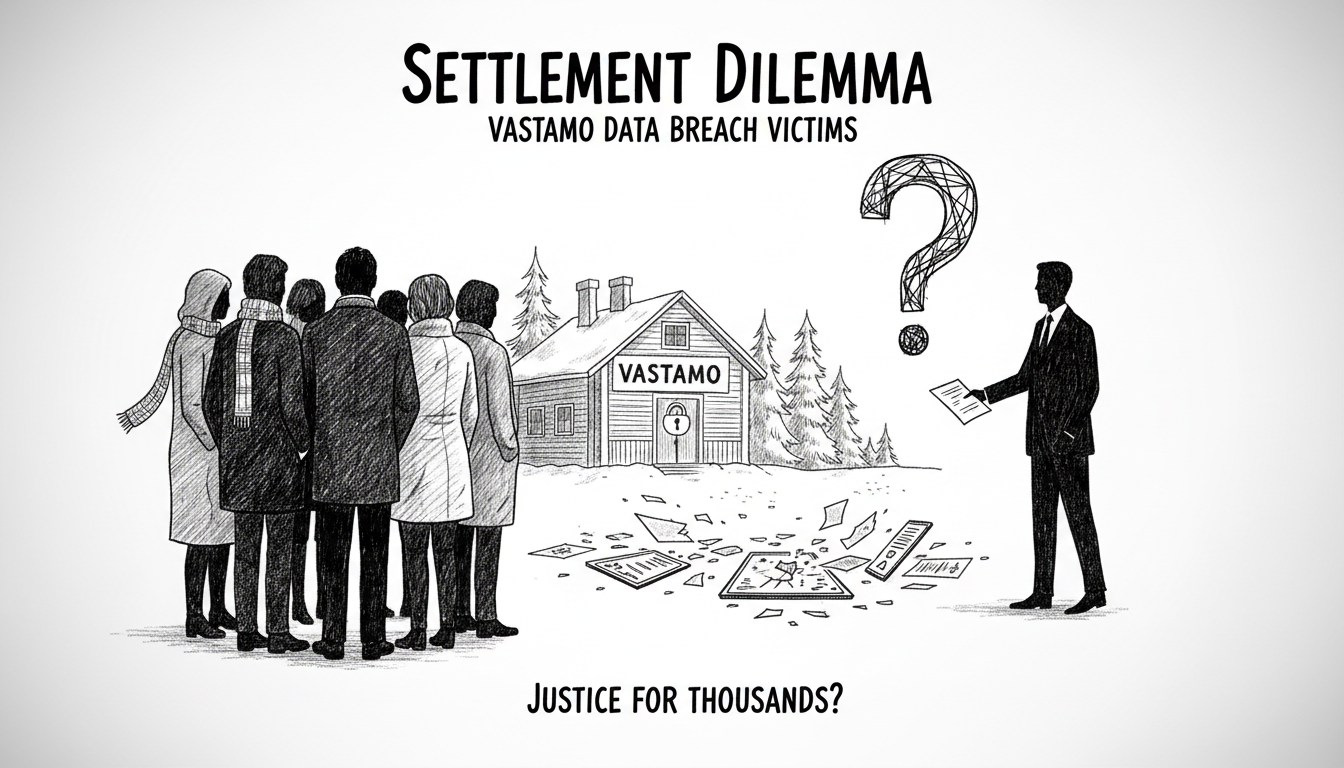
A Helsinki woman named Liisa faces an impossible choice after her most intimate therapy sessions were stolen and published online. She is one of approximately 33,000 victims of the massive Vastaamo psychotherapy center data breach that shocked Finland. Now she must decide whether to accept a settlement agreement that could benefit the very person accused of the crime.
Liisa attended therapy sessions for two years following significant personal losses. She estimates her records contain about one hundred entries detailing her private struggles. The breach destroyed her trust in healthcare systems. She questions whether she can ever share personal information with medical professionals again.
Her daily life has become complicated by practical concerns. She placed a credit ban on herself to prevent criminals from taking out loans in her name. This creates constant inconvenience for someone who never uses installment payments anyway.
Lawyers Paula Pajula and Jenni Raiskio have taken up the victims' case. They created a special settlement procedure to help breach victims claim compensation. The lawyers argue this approach avoids years of court battles for individual victims. It also makes compensation enforceable if the suspect receives a final conviction.
The settlement process presents moral complications for victims. Accepting the agreement could potentially reduce the sentence for Aleksanteri Kivimäki, the man convicted of the data breach. Kivimäki maintains his innocence despite being found guilty in district court this spring. He has appealed the decision to the Helsinki Court of Appeal.
Liisa initially felt angry when lawyers recommended settling with Kivimäki. She questions his motives given his public statements about settlements potentially reducing his sentence. She describes the situation as a complete farce where the accused behaves like a celebrity while victims struggle in the background.
Despite her reservations, Liisa accepted the settlement agreement. She acknowledges that legal complexities confuse ordinary people. The state treasury has already paid some compensation amounts ranging from 500 to 3,000 euros, but the calculation methods remain unclear to victims.
The compensation amounts have sparked controversy. The state treasury established three compensation categories of 1,500, 1,000 and 500 euros. Each amount gets reduced by a 220 euro deductible. Lawyers Pajula and Raiskio call these sums incomprehensibly small given the suffering involved. They warn of a mass injustice in the making.
Some victims have lost their ability to work because of the breach. Lives have collapsed under the weight of exposed secrets. For these individuals, even the maximum possible compensation of 3,600 euros feels completely inadequate. The lawyers have requested the state treasury pause processing compensation claims until proper amounts get established.
The data breach exposed extraordinarily sensitive information. Therapy notes contained names and identifying details. Patients discussed traumatic experiences including incest victimization. Others confessed infidelities they never intended their partners to discover. These records remain publicly available online years after the initial breach.
Victims continue living in uncertainty five years after the crime. Many fear someone will misuse their therapy notes and personal information. The psychological impact has been severe enough that lawyers know of suicide cases among victims.
The case highlights systemic failures in supporting crime victims. Lawyers note Vastaamo clients never received proper legal protection at any stage. The state provided no publicly funded legal assistance regardless of victims' financial situations.
This represents one of Finland's largest data protection failures. It raises fundamental questions about digital security in healthcare and victim compensation in mass crimes. The final court decision expected in early 2026 will provide legal closure but cannot erase the personal damage already done.
Legal experts observe that Finland lacks established procedures for mass victim compensation cases. The Vastaamo situation creates precedent for how the country handles digital privacy violations affecting thousands simultaneously. The outcome will influence future data protection regulations and victim support systems.
Nordic countries typically pride themselves on robust social safety nets and functional bureaucracy. This case exposes gaps in those systems when confronting novel digital crimes. Other European nations will watch how Finland resolves this challenge affecting fundamental privacy rights.