
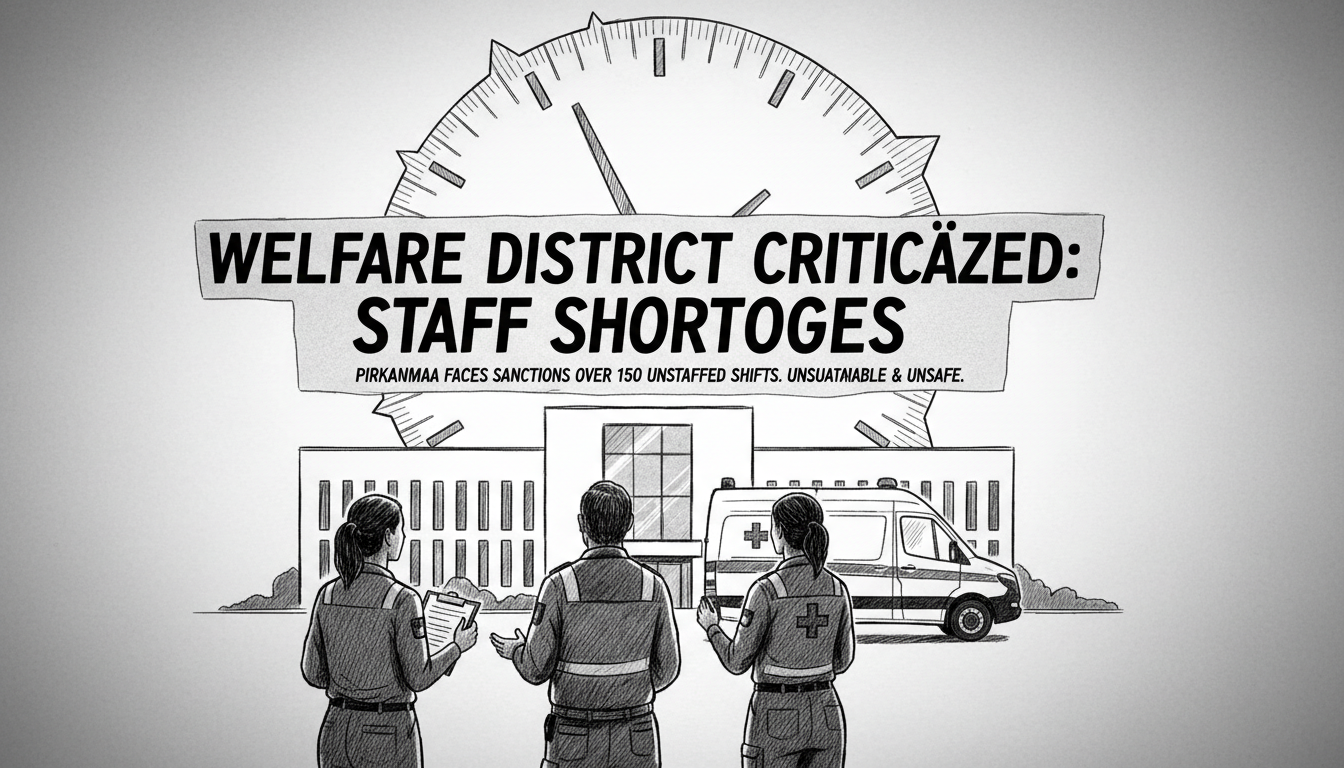
The Western and Inner Finland Regional State Administrative Agency has issued a formal notice to Pirkanmaa Welfare District over repeated violations of emergency service staffing requirements. The agency found that minimum shift staffing levels were consistently not met, compromising public safety and basic rights.
During a recent review period, officials documented 150 work shifts where required minimum staffing levels were not achieved. The administrative agency called this practice contradictory and unsustainable from a fundamental rights perspective. Repeated understaffing of emergency personnel directly threatens citizen safety and constitutional protections.
Authorities emphasized that financial constraints cannot justify violating legal requirements for emergency services. The rescue department's difficult economic situation does not provide grounds for failing to comply with the law, according to the agency's decision. No changes in regional service needs or risks occurred that would justify reducing service levels.
The administrative agency noted that rescue workers were being assigned to emergency medical tasks simultaneously with rescue units and stations being closed due to staff shortages. This created a dangerous situation where multiple critical services were compromised at once.
Rescue services operate separately from social and healthcare services under Finnish law. Welfare districts cannot prioritize certain tasks over others when it comes to emergency response. All legally mandated duties must be performed regardless of how personnel are allocated between different functions.
While no major operational deficiencies were observed during the review period, the actual service level has effectively declined according to agency assessment. This creates a hidden risk where emergency response capacity appears adequate on paper but fails in practice.
The welfare district must now report actual staffing levels to the administrative agency every six months starting in the third quarter. This increased oversight aims to ensure compliance with legal requirements and prevent future violations.
This situation reflects broader challenges in Finland's recently reformed social and healthcare system. The 2023 establishment of welfare districts created new administrative structures that are still developing their operational capabilities. Emergency services integration has proven particularly challenging across multiple regions.
Similar staffing issues have emerged in other Finnish welfare districts, suggesting systemic problems rather than isolated incidents. The administrative agency's strong response indicates growing concern about emergency service reliability nationwide.
International readers should understand that Finnish rescue services provide both firefighting and emergency medical response. Staff shortages therefore affect multiple critical public safety functions simultaneously. The situation in Pirkanmaa, which includes the city of Tampere, highlights vulnerabilities that could exist in other Nordic countries with similar decentralized service models.