
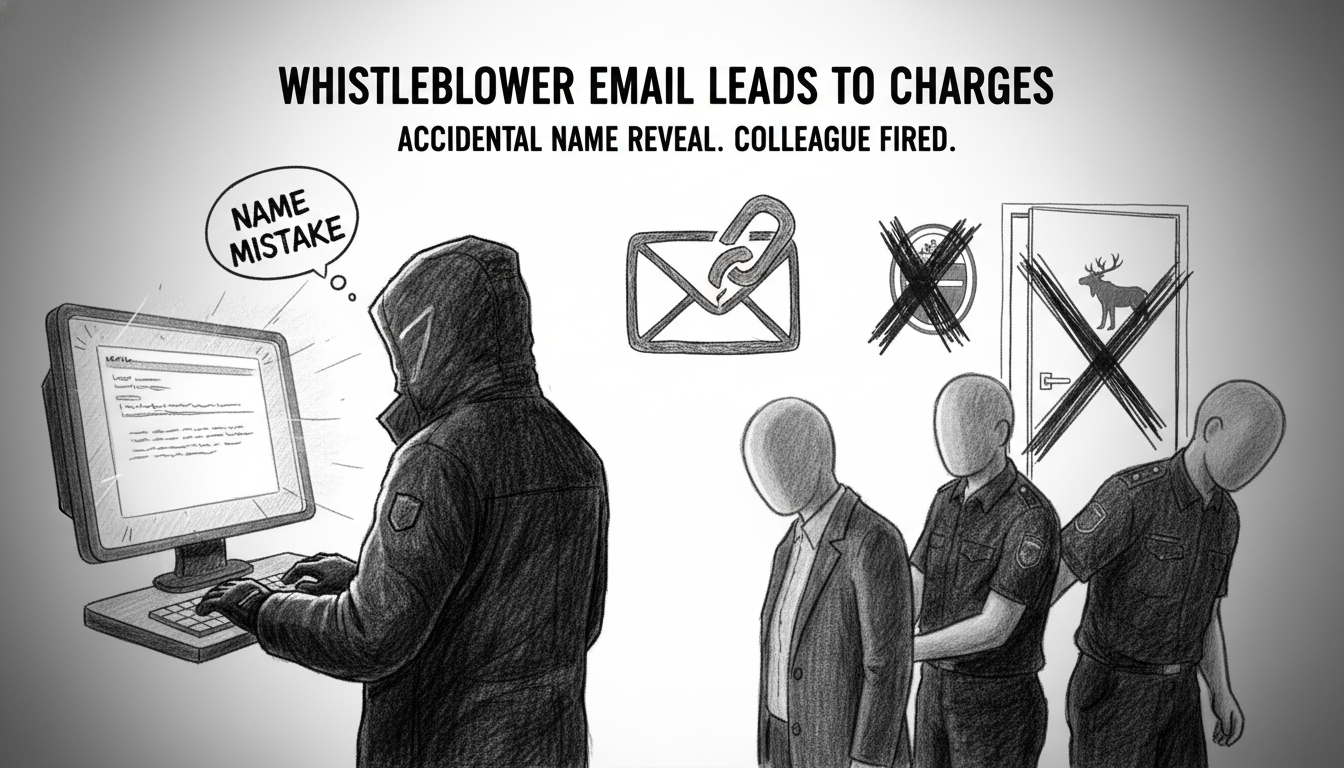
An anonymous email sent to department managers in Blekinge municipality and region backfired for the sender. The message claimed one of their colleagues held dual positions and mismanaged work hours, affecting patient care.
The email came from a newly created address using common Swedish names. It was signed with two common first names supposedly working in the regional department.
Police identified the actual sender as a female municipal employee. She now faces charges for unlawful identity use in two cases.
During questioning, the accused said she did not know two people with those names actually worked in the regional department. She claimed she chose the names randomly to maintain anonymity.
The original tip about the colleague's misconduct proved accurate. The exposed coworker subsequently lost their position with the region.
This case highlights the complex balance between whistleblower protection and legal boundaries. The employee's attempt to expose wrongdoing resulted in criminal charges against her instead.
Sweden has strong whistleblower protections, but using false identities remains illegal. The situation shows how good intentions can backfire when proper channels aren't followed.