
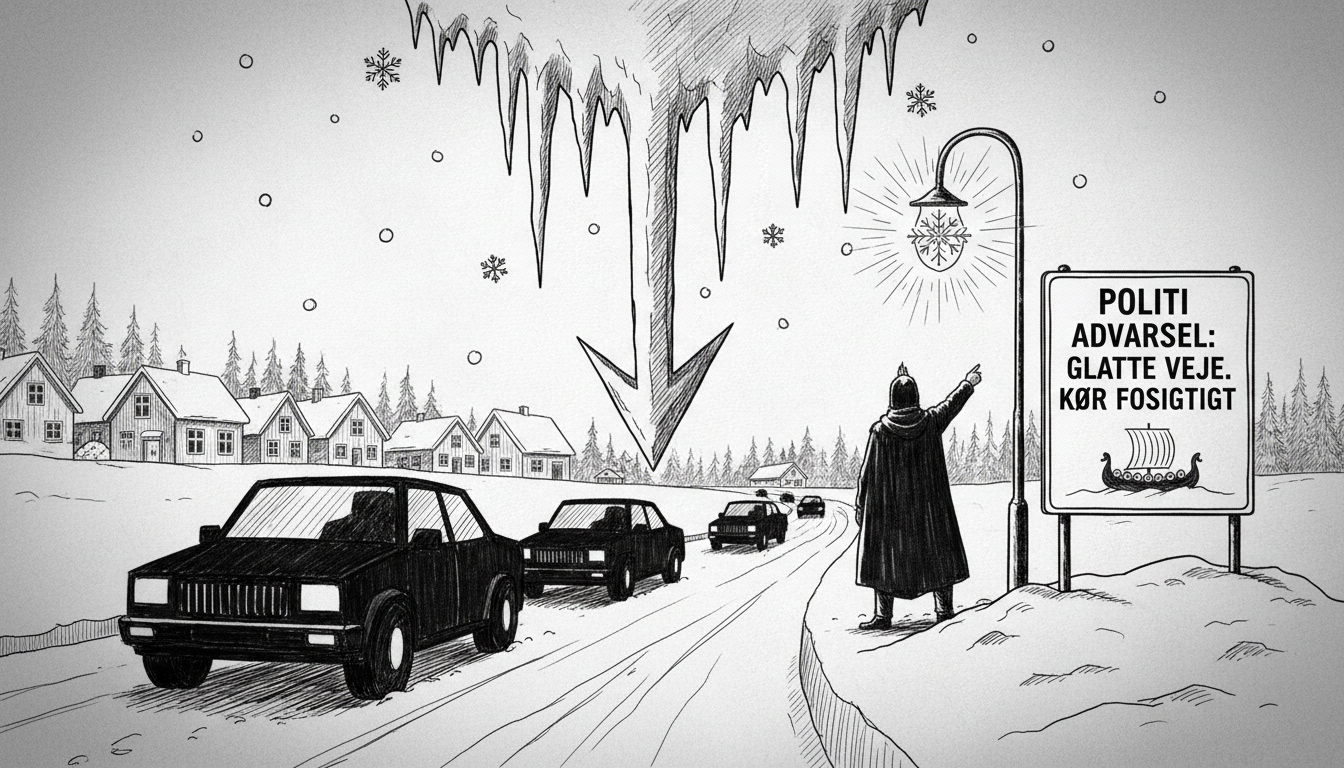
Danish authorities issued urgent winter driving advisories after multiple weather-related accidents occurred across southern regions. Police reported several vehicles sliding off roads overnight, with four incidents recorded in Southeast Jutland alone. Officers emphasized that while no serious injuries occurred, the slippery conditions created dangerous situations for morning commuters.
Mathias Møller, a police watch commander, described the situation directly. "We've had numerous traffic accidents during recent hours due to poor road conditions and slippery surfaces," he stated. "Drivers need to remain particularly cautious during morning traffic." He confirmed all incidents involved property damage only, with vehicles ending up in ditches or against guardrails.
The weather system brought between 2-8 centimeters of snow to southwestern Denmark overnight. Meteorological officials warned the precipitation would transition to rain and sleet throughout the day. This shift creates additional hazards as rain falls on frozen, snow-covered surfaces. Roads, bicycle paths, and sidewalks could become extremely slippery under these conditions.
Michael Henriksen, another police watch commander, reported a separate truck accident in South and Southern Jutland. "We had a truck that drove into a ditch," he noted. "It's always a good idea to be alert and take necessary precautions." Authorities confirmed salting operations were underway to improve road safety.
This early winter weather event tests Denmark's renowned infrastructure preparedness. The country's municipal response systems activate quickly for such conditions, but unexpected weather patterns challenge even well-prepared Nordic nations. International residents often find Danish winter driving conditions surprising, particularly the speed at which black ice forms.
Danish driving culture typically adapts well to winter conditions, but early season storms often catch some motorists unprepared. Many drivers haven't yet switched to winter tires, which become mandatory from November through April depending on conditions. The police warnings serve as an important seasonal reminder for all road users.
Meteorological officials specifically highlighted risks in Esbjerg and Tønder municipalities where light freezing rain was anticipated. The weather front moved across Denmark from the southwest overnight, stalling across Central Jutland and North Zealand. These conditions demand extra vigilance from commuters and school transportation services.
The incident pattern reflects broader challenges in Scandinavian climate adaptation. While Denmark's welfare system provides strong social safety nets, individual preparedness remains crucial for weather emergencies. The country's integration policies often include winter driving education for new residents unfamiliar with Nordic conditions.
Local social centers frequently provide community guidance during such weather events, particularly for vulnerable populations. Today's incidents demonstrate how quickly conditions can deteriorate, even in a country renowned for its efficient response systems. Drivers should allow extra travel time and maintain greater following distances until conditions improve.