
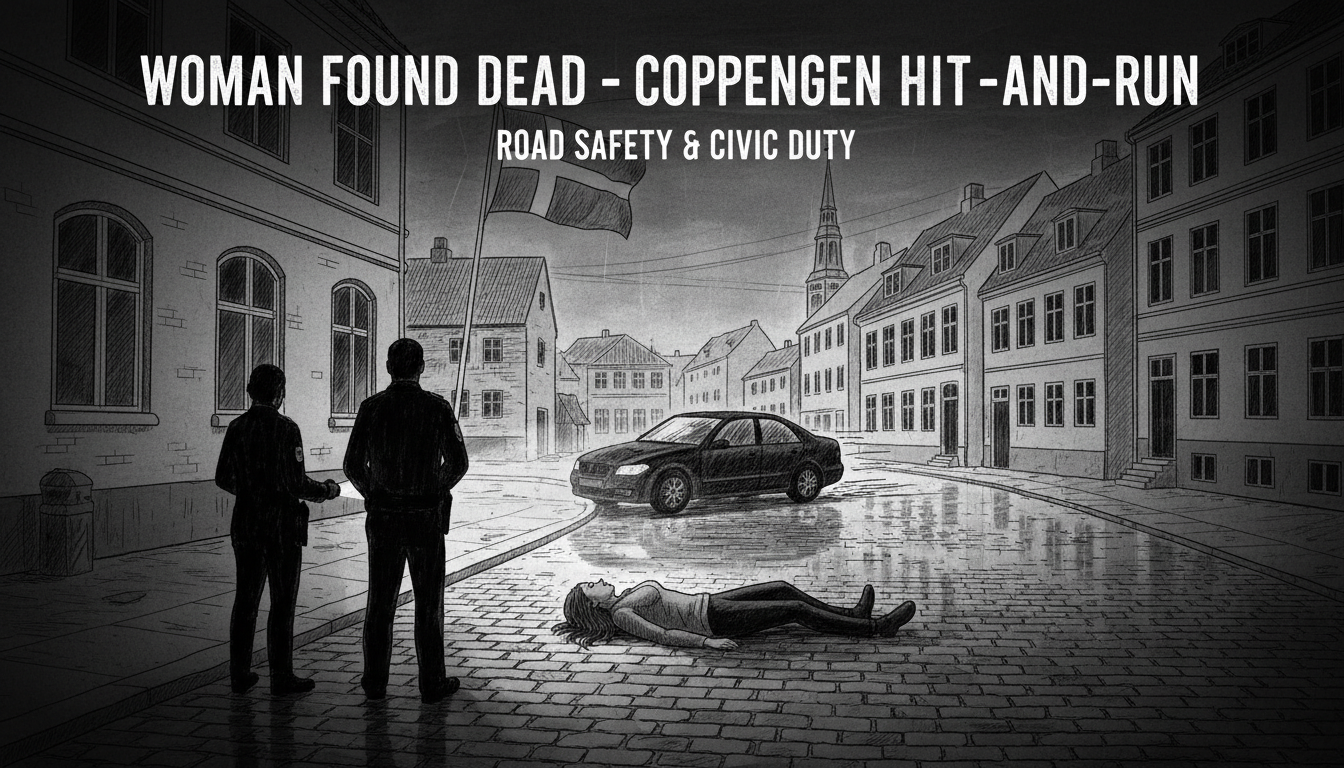
A woman was found dead on a road in Hvidovre early this morning. Police suspect a fatal traffic collision and are searching for a driver who left the scene. The incident occurred on Avedøre Havnevej, a key industrial and port access road in the Copenhagen suburbs. Authorities received the report at 3:41 AM and found the woman deceased upon arrival. Traffic was closed for several hours during the investigation. Police have now identified the victim as a 39-year-old woman. Her next of kin have been notified. A police supervisor stated the investigation points to a traffic fatality with a party who fled. Officers are urging that driver and any witnesses to come forward. They can be contacted at any time on a dedicated phone line. The road has since reopened to traffic. Police confirm they have no further updates at this time.
This tragic event on the outskirts of Copenhagen opens a difficult conversation about road safety and community responsibility. It strikes at the heart of a society that prides itself on a strong social contract and a functional welfare system. The immediate human cost is a life lost and a family grieving. The broader societal question is why someone would leave the scene of such an incident. Danish traffic laws are strict, and penalties for hit-and-run are severe, reflecting a cultural emphasis on collective responsibility. Yet, this case suggests a breakdown in that social compact, however momentary or panic-driven.
From an integration and social policy perspective, incidents like this test the fabric of local communities. Hvidovre, like many municipalities in Greater Copenhagen, is a diverse area. Effective integration relies on shared norms and trust in public institutions, including law enforcement. When individuals evade this trust, it creates ripples of insecurity. Community leaders in integration hubs often stress that safety and rule-of-law are foundational for social cohesion. A hit-and-run investigation can strain the relationship between residents and the police, who must now appeal for public cooperation to solve the case.
Statistics show that traffic fatalities in Denmark have generally declined over decades, thanks to rigorous policy and infrastructure investment. However, each death is a policy failure. Copenhagen and its suburbs have invested heavily in segregated cycling lanes and traffic calming measures, but major arterial roads like Avedøre Havnevej remain high-speed environments. This case may prompt the municipality to review safety on similar routes. For international observers, Denmark's response will be telling. The welfare state is designed to protect citizens from cradle to grave, but it cannot prevent every tragedy. Its strength is measured in the thoroughness of the investigation and the support offered to the bereaved family. The coming days will show if community witnesses help uphold the social contract that this incident breached.