
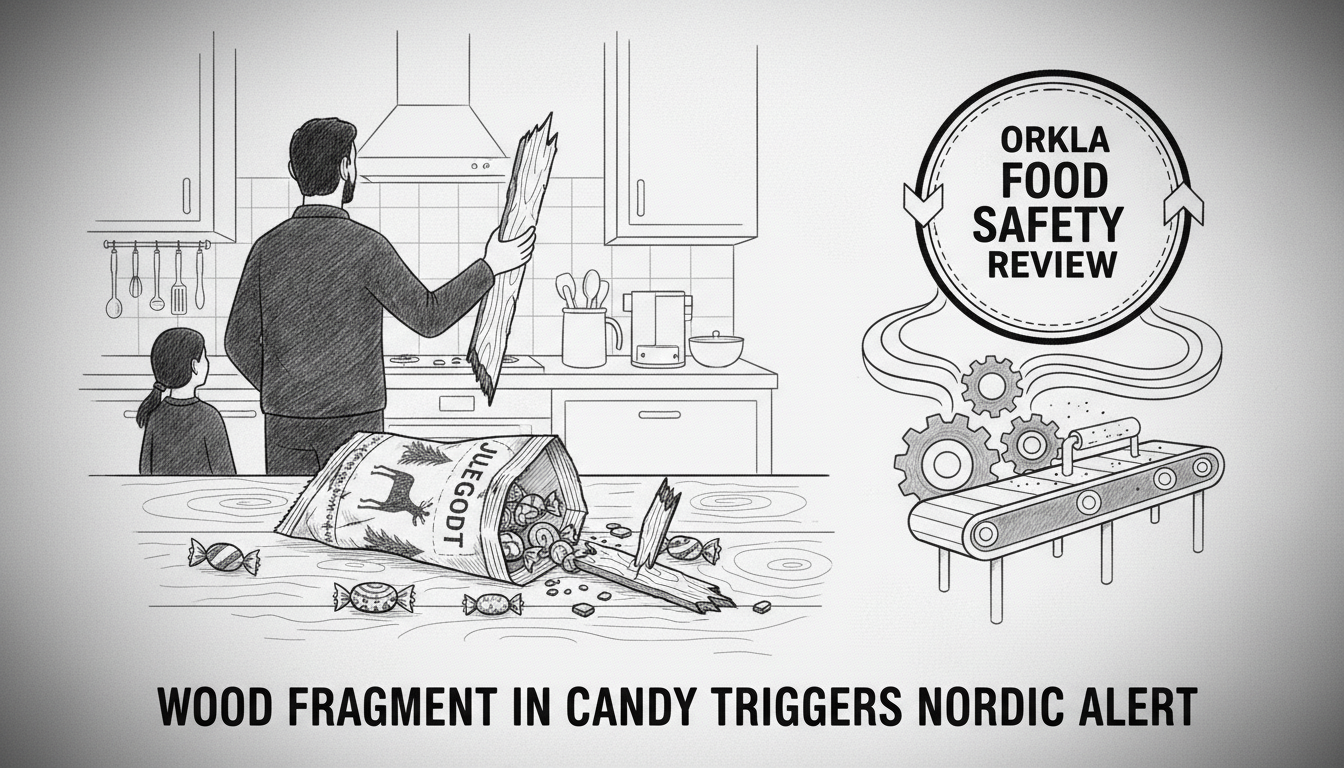
A Norwegian father discovered an eight-centimeter wood splinter in a bag of popular Christmas candy. The incident occurred during a family gingerbread decorating evening in Norway. Christian Krageboen found the foreign object in a bag of Nidar's 'Laban's Christmas Party' marshmallow and jelly sweets. He immediately alerted both the Norwegian Food Safety Authority and the manufacturer Orkla. The discovery prevented his children from potentially consuming the hazardous material. This event raises immediate questions about production controls at a major Nordic food conglomerate. It also triggers a broader examination of seasonal food safety protocols during high-volume holiday production cycles.
Orkla, the parent company of Nidar, responded promptly to the complaint. Communications Director Elisabeth Aandstad Ekheim issued a formal apology. She explained the probable cause was a malfunction in the molding process. The Laban candies are cast in forms made from wooden boards. A board likely became damaged in the machine, with a fragment breaking loose into the product stream. Ekheim stressed such incidents are extremely rare given the vast annual production volume. The company is following up on the specific case internally. This response is standard for a major producer facing a quality control lapse.
This incident carries weight beyond a single contaminated bag. Norway maintains one of the world's most stringent food safety regimes through Mattilsynet. Any breach, especially involving children's products, draws intense regulatory scrutiny. The timing during the Christmas season amplifies public concern. Families stock up on traditional sweets like Laban figures for holiday celebrations. A failure here undermines consumer trust in a iconic Norwegian brand. Orkla's dominance in the Nordic snack market means its production issues affect millions of households. The company must now demonstrate this was an isolated mechanical fault, not a systemic quality oversight.
Historical context shows similar incidents have occurred with other food producers in the region. Each case typically leads to temporary batch recalls and intensified factory inspections. The Norwegian system relies on consumer reporting to catch statistical anomalies missed by sampling. Krageboen's decision to contact authorities exemplifies this crucial public-private safety net. His comment to reporters highlighted the latent risk. He stated a smaller fragment could have caused a child to choke if parents were not present. This underscores the non-negotiable safety standards required for products marketed to families.
What are the likely consequences? Mattilsynet will probably request a detailed incident report from Orkla. The agency may conduct an unannounced inspection of the relevant production line. For consumers, the direct impact is a reminder to visually inspect food, even from trusted brands. For Orkla, the reputational damage is contained by a swift, transparent apology and corrective action. The company's statement acknowledged the experience was unpleasant for the family. This pragmatic approach often mitigates long-term brand harm in the Norwegian market, which values honesty over defensiveness. The broader lesson is that even with advanced automation, physical production processes require relentless vigilance. This is particularly true for seasonal items where production speeds may increase.
The incident concludes with a formal apology but leaves open questions about preventive measures. Will Orkla increase the frequency of mold inspections? Will it implement additional detection systems downstream? The company's commitment to following up 'further' suggests internal reviews are underway. For now, Norwegian parents can continue their Christmas traditions, perhaps with a more cautious eye on the candy bowl. The system functioned as designed: a vigilant citizen triggered a corporate and regulatory response. This interplay defines the high safety standards Norway expects and generally receives.