
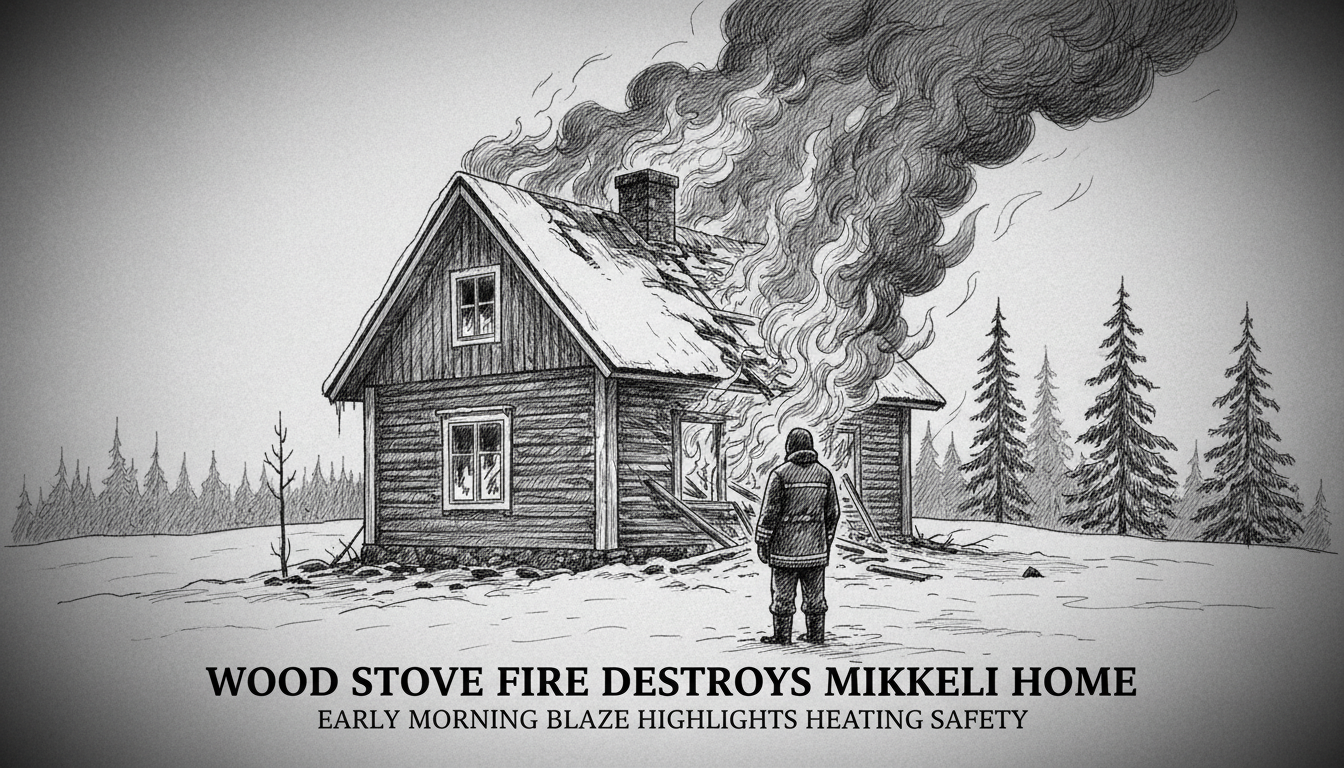
A residential fire sparked by a wood-burning stove has left a single-family home uninhabitable in the Mikkeli region. The blaze began smoldering in the chimney structure on Thursday evening then erupted into a full-scale fire by Friday morning around six o'clock. Fire Chief Joona Myyryläinen confirmed the fire originated from a wood stove used the previous day, with embers remaining in the lower chimney section overnight. The resident alerted rescue services to Taulumäentie road located between Haukivuori and Hiirola municipalities. Emergency crews conducted structural demolition to fully extinguish the hidden flames within the building's framework. No injuries occurred though the resident experienced smoke exposure during the incident. The property now requires complete chimney reconstruction and remains unsuitable for occupancy according to official assessments. Fire authorities confirmed no spreading danger to neighboring structures existed during the emergency response.
This incident highlights ongoing fire safety concerns regarding wood-burning heating systems in Finnish rural communities. Finland's climate demands extensive heating through long winters, creating particular risks in older housing stock. The Mikkeli region in Eastern Finland contains numerous older properties relying on traditional heating methods. National rescue departments consistently emphasize chimney maintenance and proper ash disposal procedures. Similar incidents have occurred throughout the country during recent heating seasons, particularly in single-family homes constructed before modern safety standards. The Finnish National Rescue Association publishes extensive guidelines for wood-burning safety available in multiple languages. International residents should note that Finnish insurance policies typically require regular chimney sweeping documentation for coverage validation. This practical consideration remains crucial for property owners using solid fuel heating systems. Local rescue services offer free safety inspections in many municipalities, a valuable resource often underutilized by homeowners.
The broader context reveals Finland's ongoing energy transition affecting residential heating choices. Government policies increasingly encourage transitions from individual wood burning toward district heating and heat pump systems. Current energy subsidies and renovation grants reflect this strategic direction within national climate policies. The European Union's building efficiency directives also influence long-term heating system requirements across member states. For international observers, this incident demonstrates practical challenges within Finland's green transition as rural households balance traditional practices with modern safety requirements. The Finnish Parliament continues debating support mechanisms for heating system upgrades, particularly targeting older properties in regions like South Savo. Future policy developments will likely impact similar households throughout the Nordic country, making this localized incident reflective of broader national conversations.