
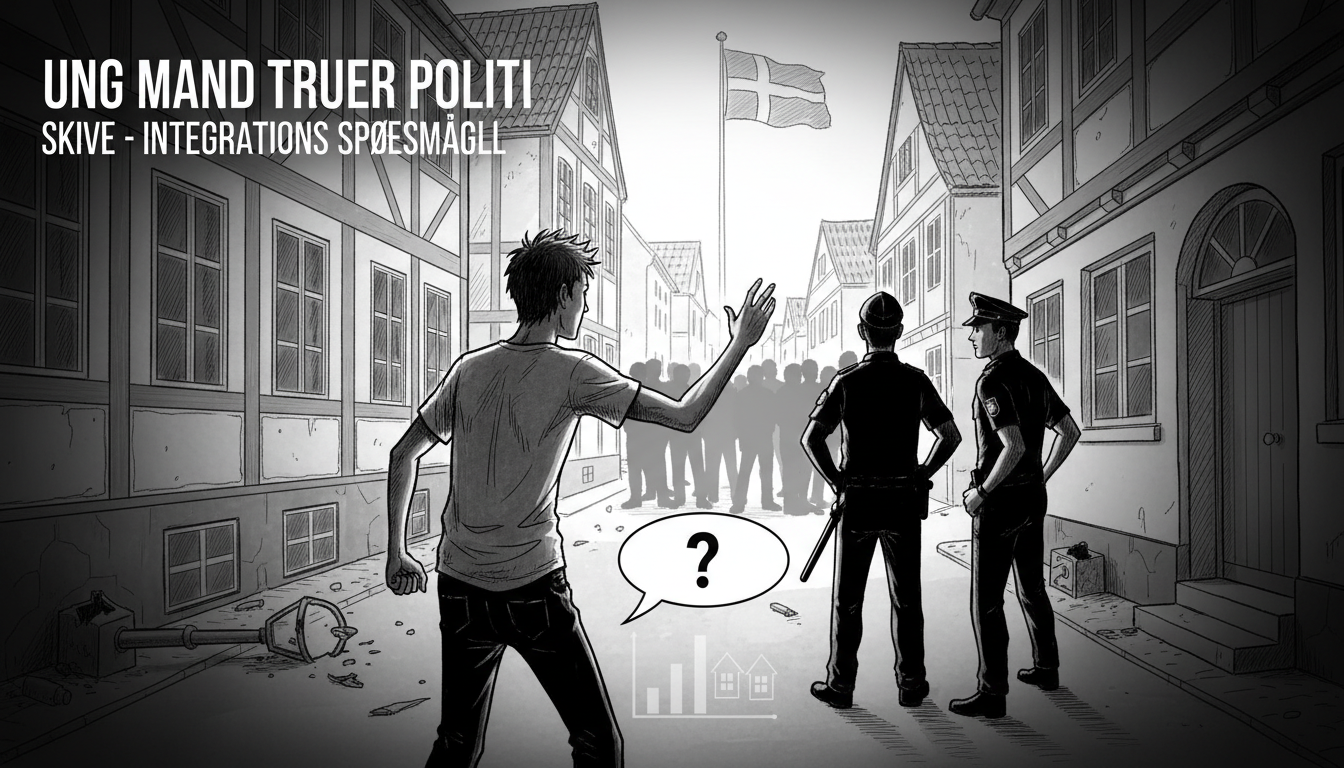
A Friday night altercation on Nordbanevej in Skive escalated into a series of serious charges against a 19-year-old man. The incident began as a fight between two young men. Local police officers arrived and separated the combatants. Both men faced initial charges for violating public order regulations. The situation deteriorated when the 19-year-old began shouting insults at the officers. This verbal abuse led to an additional charge of offensive language. He then refused to identify himself to the police, resulting in a third charge for violating the Administration of Justice Act.
The most serious development occurred later that evening as police prepared to release him. The young man allegedly turned to an officer and issued a direct threat. He stated, 'You can expect it. You are finished. You are so finished,' according to a police assistant from the local Skive force. These threats prompted a fourth and most severe charge, meaning the case will now proceed to court. The original cause of the fight remains unclear, as the report did not specify what sparked the conflict.
This episode in a provincial Danish town connects to wider national conversations about youth, authority, and social cohesion. Skive, like many municipalities outside major urban centers, faces the complex task of integrating diverse populations into a tight-knit social fabric. The Danish welfare system relies heavily on trust and a shared sense of civic responsibility. Incidents that challenge police authority publicly test that foundation. They often trigger local debates about resource allocation for youth programs and social prevention work.
Statistics from recent integration reports show varied outcomes. Educational attainment and employment rates for young men in certain demographic groups can lag behind national averages. Community centers and municipal social services are typically the first line of defense in preventing such escalations. A local community leader, who asked not to be named, noted that evening conflicts often stem from idle time and a lack of engaging alternatives for young adults. 'These are not just police matters,' the leader said. 'They are symptoms of whether our social infrastructure is reaching everyone.'
The case will follow standard Danish legal procedure. The court will weigh the evidence of the threats against the constitutional protections for free speech, which have limits regarding threats to public servants. The outcome may influence how police in smaller districts handle similar volatile situations during release procedures. For international observers, this story highlights the daily challenges of maintaining the famous Danish social contract. It shows that even in a society known for its order, friction points exist where policy meets complex human reality on quiet streets after dark.