
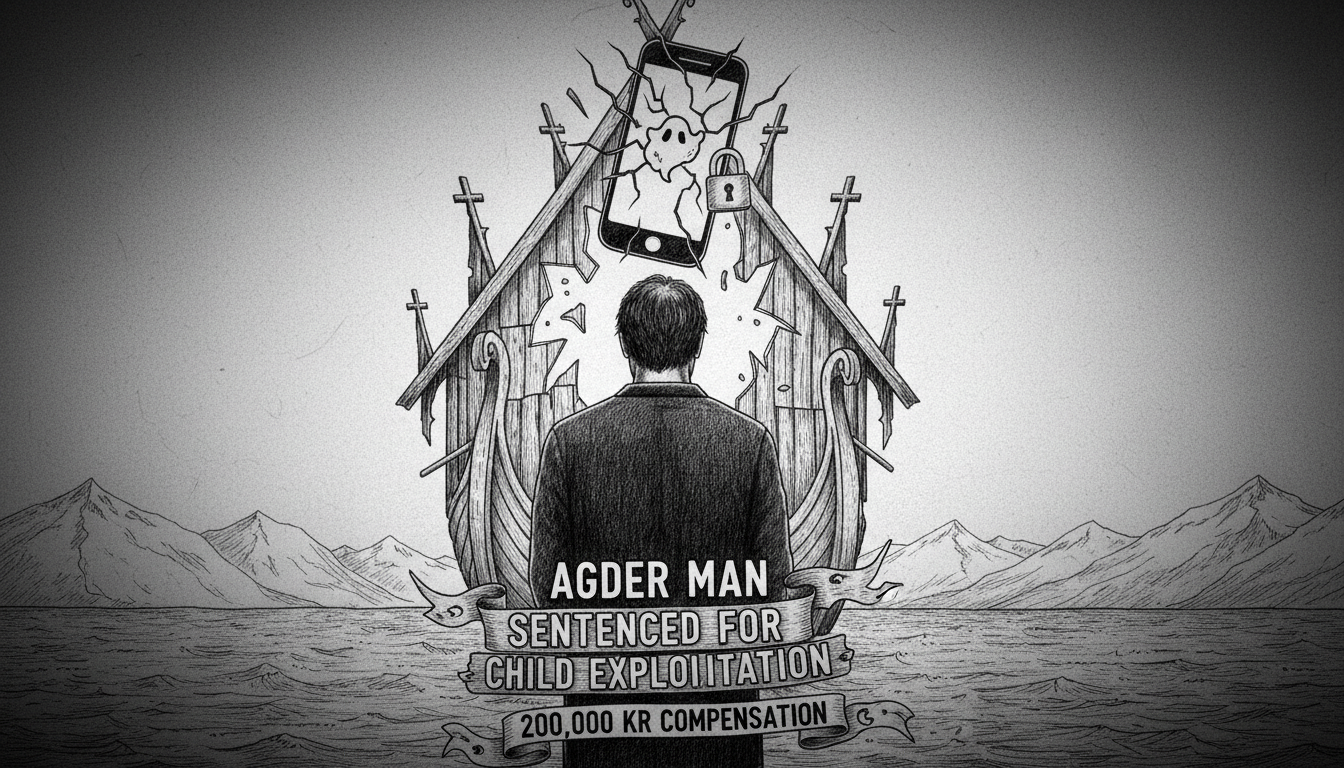
A man in his twenties from Agder has received a prison sentence for the rape of a girl under 14. The court also convicted him for exploiting the victim via the social media platform Snapchat. This case highlights the intersection of serious sexual crime and digital exploitation within the Norwegian justice system.
The Agder District Court sentenced the man to one year and four months in prison. He was found guilty of coercing the child into performing sexual acts on camera. The victim then sent the recordings to the defendant via Snapchat. The man was also convicted for sending sexualized images of himself to the minor. The court ordered him to pay the girl 200,000 kroner in compensation for non-economic damages.
This ruling underscores the Norwegian legal system's approach to digital sex crimes. The sentence reflects the gravity of offenses against children, even when physical contact is absent. Norwegian law treats such digital coercion as a severe violation. The compensation award aims to address the profound psychological harm caused to the victim.
Legal experts note that cases involving social media platforms like Snapchat present unique challenges. Evidence preservation and proving coercion in digital environments require specialized police work. The Agder police district handled the investigation, leading to this conviction. The outcome demonstrates the judiciary's capacity to adapt to modern criminal methods.
The case occurred in southern Norway's Agder region, known for its coastal communities. It serves as a stark reminder that serious crimes penetrate all areas of the country. Norway generally reports low rates of violent crime, but sexual offenses remain a persistent challenge. The government has prioritized combating violence against children in recent national action plans.
For the international community, this case illustrates Norway's strict penalties for child exploitation. The sentence and substantial compensation highlight a victim-centered legal approach. It also shows the proactive role of the courts in addressing crimes facilitated by technology. The conviction sends a clear message about the consequences of such actions.
The broader implications touch on parental awareness and digital literacy. Experts urge guardians to understand the apps their children use. They recommend open conversations about online safety and boundaries. This case will likely influence ongoing policy discussions about regulating social media platforms to protect minors. The Norwegian Parliament, the Storting, continues to review legislation in this area.
What happens next? The convicted man has the right to appeal the district court's verdict. If the sentence stands, he will serve his time in the Norwegian correctional system, which focuses on rehabilitation. The victim receives court-ordered support and compensation, though the emotional scars from such a betrayal of trust are deep and lasting. This case is one of many that shape Norway's evolving response to digital-era crimes against children.