
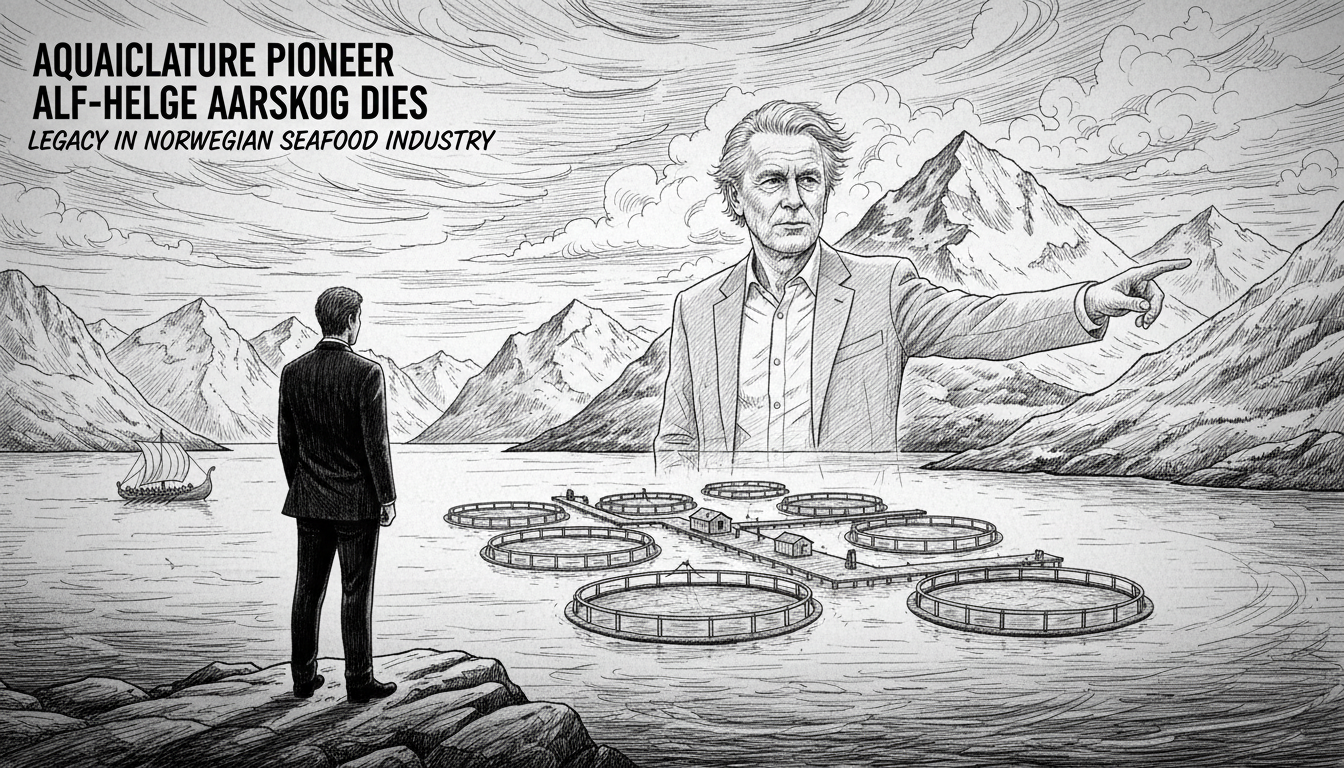
The Norwegian aquaculture sector is mourning the loss of Alf-Helge Aarskog, a central figure in building the country's salmon farming industry. Aarskog passed away on Friday after a brief illness. He was 58 years old. He led Mowi, formerly Marine Harvest, for a decade and is widely regarded as one of the industry's foremost builders. His death marks the passing of a visionary who shaped Norway's blue economy.
Ivan Vindheim, the current CEO of Mowi, confirmed the news. He said the company received the information with great sadness over the weekend. Vindheim stated they had lost a dear former boss, colleague, and a good friend. Aarskog's career was deeply rooted in aquaculture. He held a degree in the field from the Norwegian University of Life Sciences (NMBU). After his tenure at Mowi ended, he worked as an independent consultant. He also taught at NMBU, worked part-time for Eide Fjordbruk, and held several board positions.
Geir Ove Ystmark, director of the industry organization Sjømat Norge, called Aarskog one of the great industrial builders in Norway. Ystmark highlighted Aarskog's importance for the development of several major companies. These included Lerøy, Mowi, and most recently Eide Fjordbruk. According to Ystmark, Aarskog was an impatient voice for implementing regulations focused on the environment and sustainability. Ystmark concluded that with his passing, Norway has lost an important industrial developer and a visionary leader.
The implications of his loss extend beyond corporate boardrooms. Aarskog operated at the intersection of industry growth and environmental stewardship, a constant tension in Norwegian coastal policy. His push for sustainable regulation came as the industry faces criticism for sea lice and escapes affecting wild salmon stocks in Norwegian fjords. His advocacy reflected a pragmatic industry view that long-term profitability requires solving these environmental challenges.
His work with Eide Fjordbruk, located in the intricate fjord systems of Western Norway, points to the localized nature of this industry. Success depends on managing specific fjord conditions, community relations, and strict governmental permits. The Storting frequently debates expansion zones and tax regimes for aquaculture. Leaders like Aarskog who bridged the gap between Oslo policymakers and coastal operators are becoming rare. His death leaves a vacuum in a sector critical to Norway's export economy and regional employment.
The Norwegian seafood industry is a global powerhouse, second only to petroleum in export value. It relies on figures who can navigate complex biological systems, international markets, and domestic politics. Aarskog's career demonstrated that balance. His legacy will be tested as the industry seeks new growth while meeting stricter sustainability demands from the EU and global buyers. The question now is who will champion the next phase of development with the same blend of industrial ambition and environmental pragmatism.