
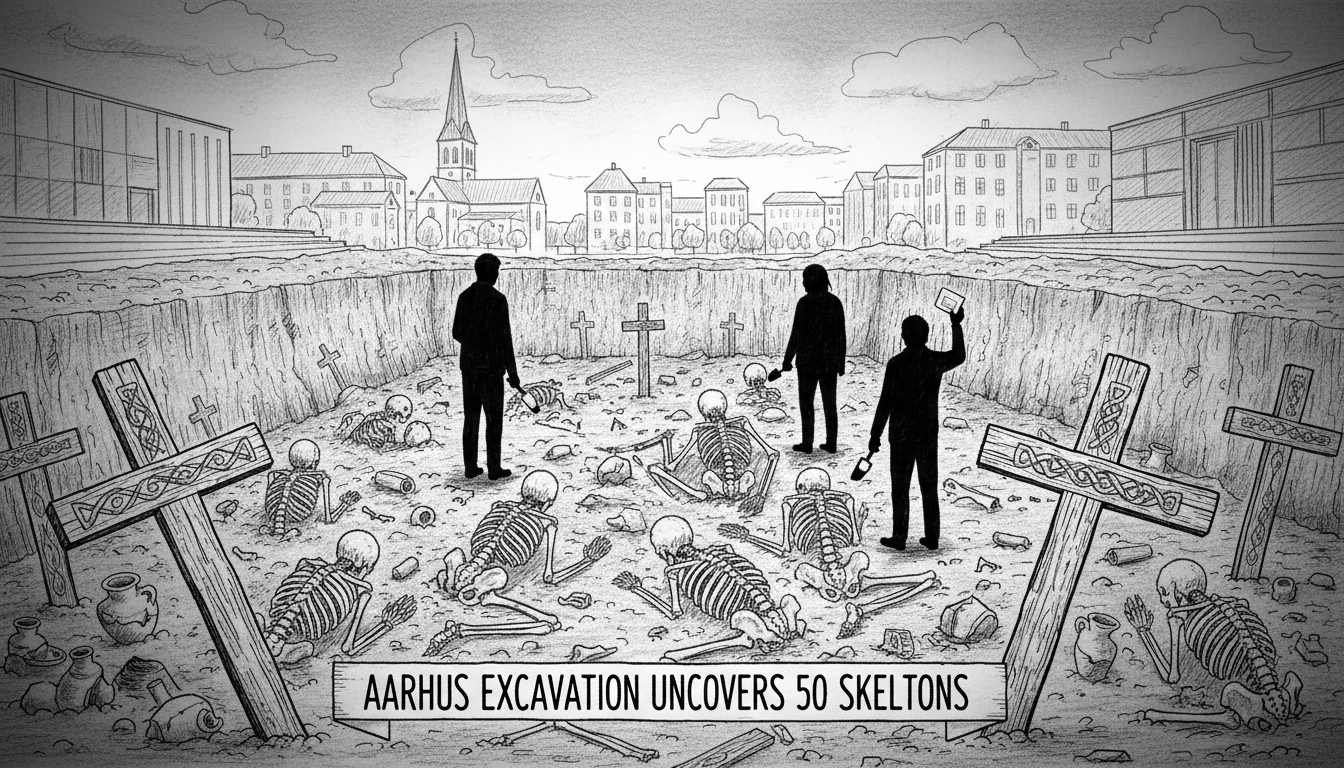
Archaeologists have discovered more than 50 skeletons during an excavation in Aarhus, Denmark. The find occurred in Sankt Olufs Gade street in the city center. Some skeletons may date back 900 years according to researchers. They originate from a former cemetery that existed in the area since the 12th century.
The cemetery remained in use until 1813. The discovery could reveal new information about Christianity's development in the city. Mads Ravn, an archaeologist and head of Local Cultural Heritage, said the skeletons provide unique opportunities. "These rare skeletons give us an exceptional chance to learn more about the first Aarhus residents' lives, diseases, and beliefs," he stated in a press release. Researchers will also examine how the bodies were buried.
The excavation connects to Aarhus Municipality's installation of new waste containers in the area. Archaeologists will now conduct detailed examinations of the skeletons at Moesgaard Museum. Carbon testing will help determine more precise dates for the remains.
This discovery highlights how modern urban development often uncovers hidden historical layers beneath Scandinavian cities. The careful excavation demonstrates Denmark's commitment to preserving cultural heritage even during routine municipal projects.