
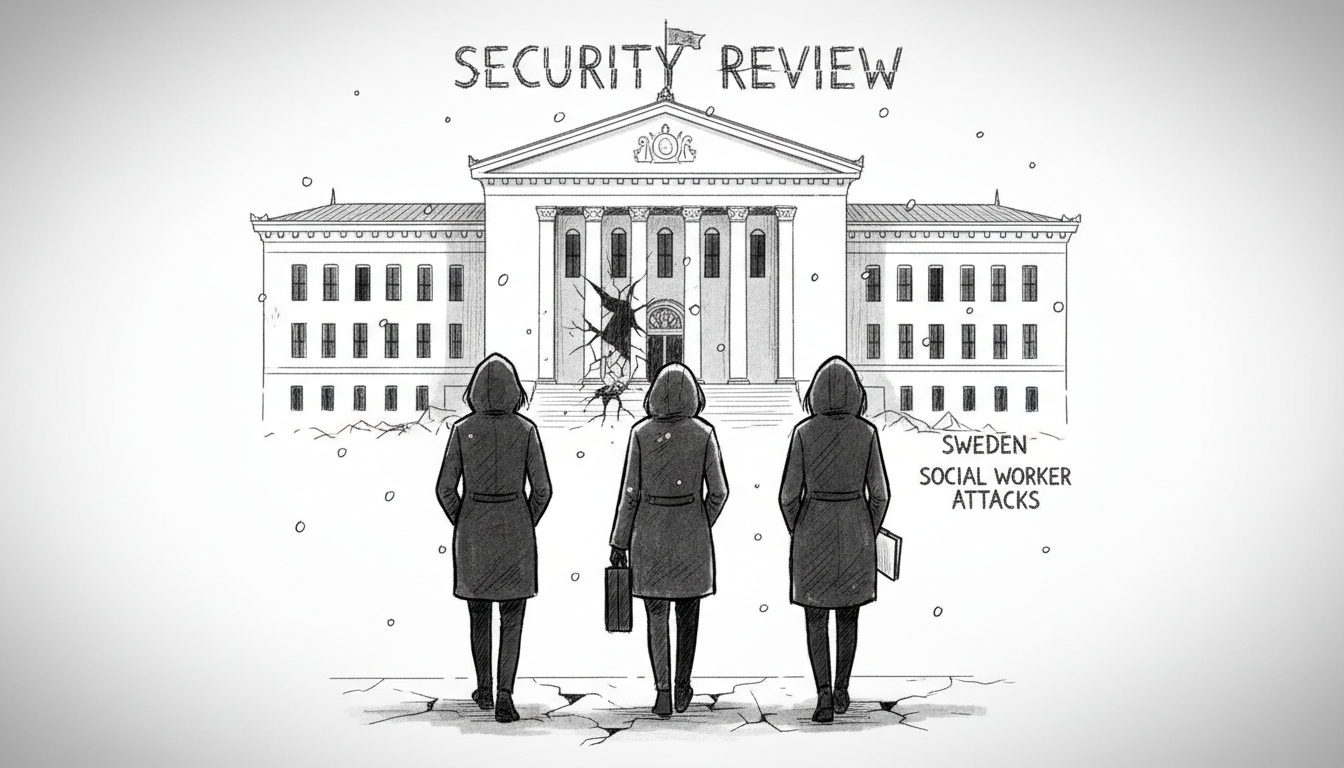
A violent assault on two social workers in Stockholm has intensified national debates about workplace safety within Sweden's welfare sector. The attack occurred outside municipal offices in the Slakthusområdet district, raising immediate questions about protection for public servants. Social Services Minister Camilla Waltersson Grönvall described the incident as deeply troubling, stating it is unthinkable that employees cannot take a break without fear.
The two women, both in their thirties, were attacked near a staff entrance in Johanneshov. A masked assailant struck them with a hard tool. Colleagues witnessed the assault, and both victims required ambulance care. Veronica Starck, a district administration chief, confirmed the women are physically recovering but will need ongoing psychological support. Crisis counseling has been activated for all staff in the building.
Minister Waltersson Grönvall linked the event to a persistent pattern of threats against social workers. A union survey from 2021 found 45 percent of social work members faced threats or violence in a single year. A more recent study indicated 38 percent of social secretaries experienced threats or violence within two years. The minister warned this climate risks deterring social workers from making tough decisions needed to protect vulnerable children.
The Swedish government has previously promoted security measures like camera surveillance and guards in municipal buildings. This attack forces a reevaluation of those policies. Discussions are now underway at the Enskede-Årsta-Vantörs district administration about further enhancements. Staff safety is a recurring theme there, officials noted.
A significant part of the threat landscape stems from gang criminality, according to the minister. She recounted stories of social workers visiting homes where parents and children wear protective vests. The government recently proposed a new Care of Young Persons Act, arguing current legislation from 1990 fails to address children raised in gang environments. The reform aims to give social services different tools to operate in these high-risk contexts.
Misinformation campaigns about child protective services also contribute to a hostile atmosphere. Waltersson Grönvall said building public trust remains an active challenge, as many families fear social services will remove their children. This distrust can manifest as verbal threats or, in extreme cases, physical violence.
Police are investigating possible links between this assault and another nearby attack the same day. A 35-year-old man was arrested for assaulting a 65-year-old in the Blåsut area. A police spokesperson noted the same type of tool was used, but did not confirm a direct connection. The man remains in custody as prosecutors examine potential ties between the events.
The immediate response involved activating emergency management protocols. District officials held daily meetings to assess security gaps. No definitive decisions on new measures have been made, but the process highlights how a single violent act can trigger widespread bureaucratic review. The incident puts pressure on both local municipalities and the national government to deliver concrete safety improvements.
This case exposes a fundamental tension in Swedish society. Social workers operate at the frontline of societal problems, from gang crime to family dysfunction. Their work requires contact with individuals in extreme distress, which inherently carries risk. Balancing an open, accessible welfare state with employee safety is a complex policy puzzle. The Riksdag may face calls to allocate specific funding for security upgrades in vulnerable districts.
The attack near Rosenbad's sphere of influence shows policy decisions made in the capital have direct consequences for street-level bureaucracy. As the investigation continues, the focus will remain on whether existing government policy is sufficient or if more robust, systemic protection is needed for those implementing Sweden's social safety net.