
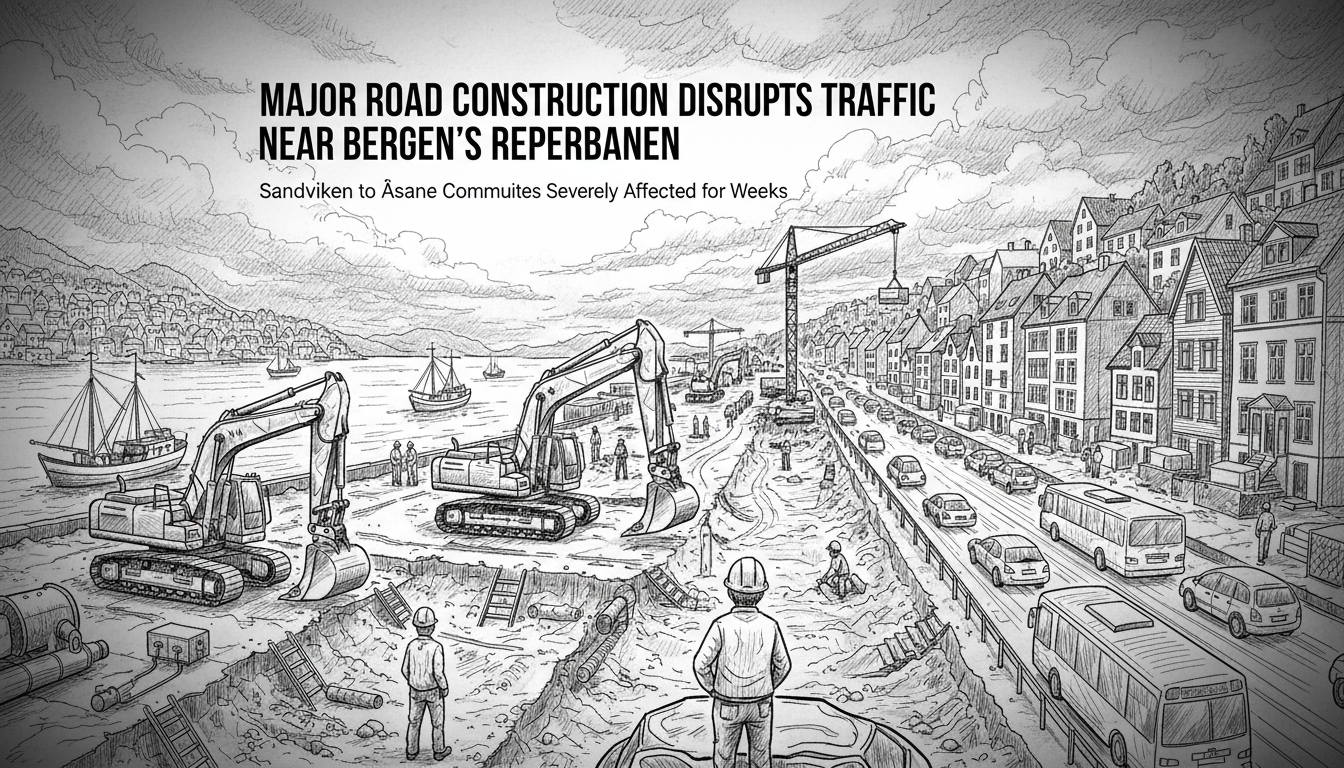
Substantial traffic delays are affecting commuters traveling between Sandviken and Åsane near Bergen. Road construction along the Reperbanen corridor has created significant bottlenecks during peak travel periods. The narrowing of this key transportation route is causing extended queues that impact daily commutes.
Transportation officials confirm the construction project will continue for several weeks. They are implementing traffic management measures to minimize disruption. The work involves critical infrastructure upgrades to the road surface and drainage systems. These improvements aim to enhance long-term road safety and durability.
Bergen's unique geography creates particular challenges for road maintenance. The city is surrounded by seven mountains and numerous fjords. This limits alternative routes when major corridors undergo repairs. The Reperbanen serves as a vital connection between northern suburbs and the city center.
Norwegian infrastructure projects follow strict environmental protocols. Construction near fjords requires special permits and environmental assessments. Workers must prevent sediment runoff from reaching nearby waters. They use specialized containment systems to protect marine ecosystems.
Commuters express frustration with the extended travel times. Many are exploring public transportation alternatives during the construction period. Bergen's light rail system is experiencing increased ridership as drivers seek alternatives. The city's ferry network also provides additional transit options.
Local businesses are monitoring the construction's economic impact. Reduced accessibility can affect customer traffic for shops and services. Some establishments report decreased foot traffic since the project began. Delivery services are adjusting schedules to account for longer transit times.
Norway invests heavily in maintaining its transportation infrastructure. The country's challenging topography and harsh winters demand frequent road repairs. Projects typically accelerate during warmer months when weather conditions are more favorable. The current work aligns with this seasonal pattern.
Transport authorities recommend checking traffic updates before traveling. They suggest adjusting departure times to avoid peak congestion periods. The department provides real-time traffic information through official channels. Commuters can access alternative route suggestions through mobile applications.
This situation highlights broader transportation challenges in Norwegian cities. Urban centers balance preservation of natural landscapes with infrastructure needs. The current project demonstrates how even necessary maintenance creates temporary disruptions. The improvements should provide long-term benefits for the region's transportation network.