
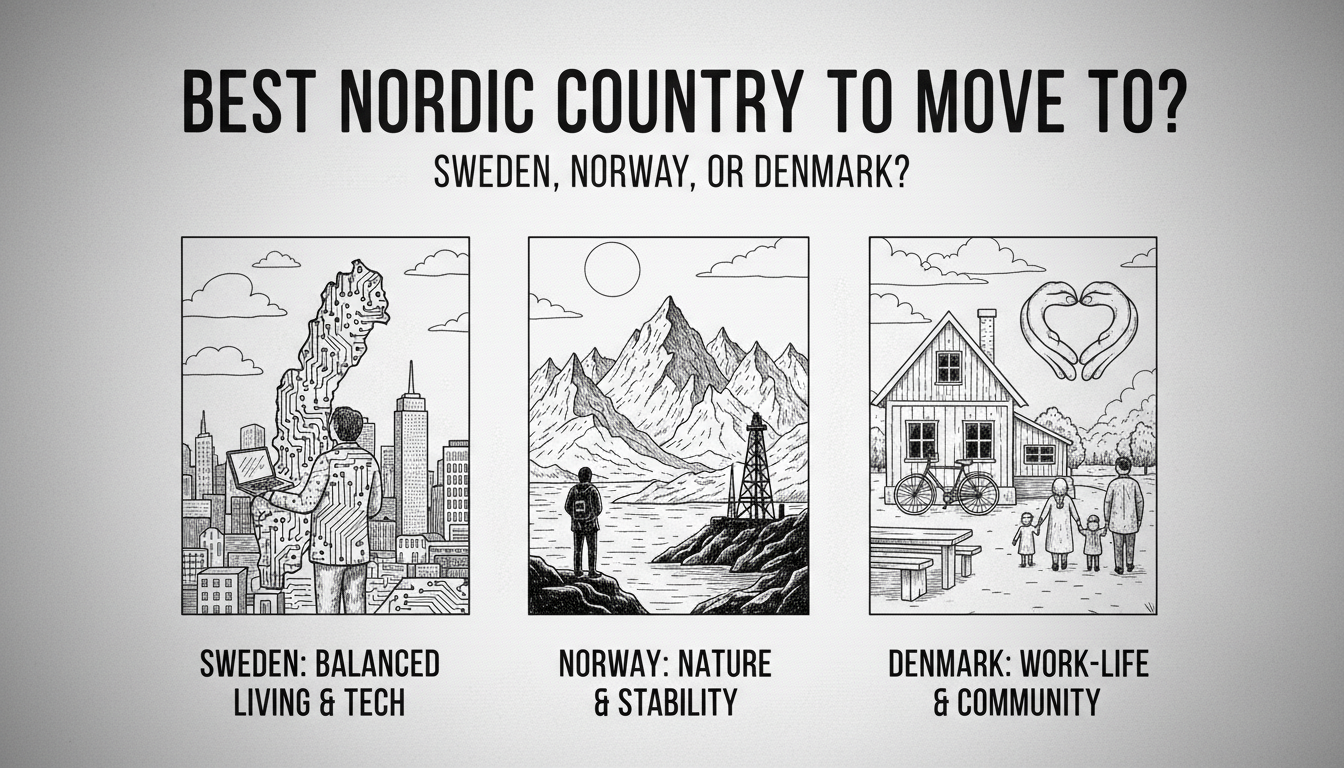
Introduction to Nordic Living
The Allure of Scandinavian Quality of Life
Nordic countries consistently rank high globally. They offer excellent healthcare and education systems. The work-life balance attracts many international movers. Clean environments and safety standards impress newcomers. These nations prioritize social welfare programs for all residents.
Key Factors for Choosing Your Nordic Home
Consider employment opportunities in your field. Evaluate housing costs and availability carefully. Language requirements vary between countries. Integration support differs significantly. Climate preferences might influence your decision.
Overview of Sweden, Norway, and Denmark
Sweden has 10.5 million people across diverse regions. Norway features dramatic fjords and coastal communities. Denmark comprises the Jutland peninsula and numerous islands. All three maintain strong social democratic traditions. Each offers unique cultural experiences for newcomers.
Sweden: The Balanced Choice
Quality of Life and Social Benefits
Sweden provides 480 days paid parental leave. Healthcare costs are capped at 1,200 SEK annually. Education remains free through university level. The country ranks third in global happiness reports. Public transportation systems serve most urban areas efficiently.
Job Market and Economic Opportunities
Stockholm hosts 40% of Nordic unicorn startups. Major employers include Volvo, Ericsson, and Spotify. The tech sector grew 8% last year. Engineering and IT positions offer competitive salaries. Unemployment stands at 6.8% nationally.
Cost of Living and Housing
Stockholm apartment rents average 12,000 SEK monthly. Grocery costs run 15% above EU averages. A three-room apartment costs 4 million SEK in city centers. Public transport monthly passes cost 930 SEK. Dining out remains relatively expensive for residents.
Integration and Language Considerations
Swedish language courses are free for immigrants. About 86% of Swedes speak English fluently. The SFI program provides structured language education. Cultural integration programs operate in all municipalities. Learning Swedish improves employment prospects significantly.
Norway: Nature and Prosperity
Natural Beauty and Outdoor Lifestyle
Norway's coastline stretches 25,000 kilometers. The country maintains 47 national parks. Midnight sun occurs north of the Arctic Circle. Hiking and skiing culture dominates social life. Fjord landscapes attract nature enthusiasts worldwide.
Economic Stability and Employment
Oil and gas contribute 14% to Norway's GDP. The sovereign wealth fund totals 12 trillion NOK. Unemployment remains low at 3.2%. Fishing and maritime industries employ many coastal residents. Engineering salaries average 650,000 NOK annually.
High Living Costs and Compensation
Oslo ranks as the world's fourth most expensive city. Groceries cost 25% more than EU averages. Average monthly rent reaches 15,000 NOK. High salaries offset these living expenses. The minimum wage is 175 NOK hourly.
Cultural Integration Challenges
Norwegian language proficiency requires 600 study hours. About 90% of Norwegians speak English well. Winter darkness affects newcomers psychologically. Social circles can be difficult to penetrate. Local dialects vary considerably across regions.
Denmark: Happiness and Community
Work-Life Balance and Social Cohesion
Danes work 37 hours weekly on average. They enjoy six weeks annual paid vacation. The country tops global work-life balance rankings. Community activities strengthen social bonds. Trust levels among citizens remain exceptionally high.
Business Environment and Innovation
Denmark ranks first in global ease of doing business. Copenhagen hosts numerous clean technology companies. The pharmaceutical industry employs 45,000 people. Startup ecosystems receive substantial government support. Corporate tax rates stand at 22%.
Urban Living and Transportation
Copenhagen's bicycle infrastructure spans 400 kilometers. Public transportation covers 98% of urban areas. Apartments average 12,000 DKK monthly rent. The city aims for carbon neutrality by 2025. Green spaces occupy 25% of city area.
The Danish Approach to Integration
Language courses cost 2,000 DKK per module. About 86% of Danes speak English comfortably. Integration contracts outline mutual responsibilities. Cultural orientation programs last three years. Employment rates for immigrants reach 65%.
Comparative Analysis
Cost of Living Comparison
Norway costs 20% more than Sweden overall. Denmark falls between both for most expenses. Groceries are cheapest in Sweden generally. Housing represents the largest expense everywhere. Transportation costs differ by city density.
Job Market Differences
Sweden offers more tech and startup positions. Norway specializes in energy and maritime industries. Denmark excels in pharmaceuticals and design. Unemployment rates vary from 3.2% to 6.8%. Salary levels correspond with living costs.
Quality of Life Metrics
All three countries score above 7.5 on happiness indexes. Healthcare quality remains excellent across borders. Education systems receive international acclaim. Environmental standards exceed EU requirements. Social mobility opportunities exist everywhere.
Ease of Integration for Expats
Sweden provides the most generous language support. Denmark implements structured integration programs. Norway expects quicker cultural adaptation. English proficiency helps initially everywhere. Learning local languages remains essential long-term.
Making Your Decision
Assessing Your Personal Priorities
Evaluate your career field and employment needs. Consider your tolerance for winter darkness. Determine your housing budget realistically. Assess your language learning capabilities. Reflect on desired community size and type.
Practical Steps for Relocation
Secure employment before moving ideally. Research specific city housing markets thoroughly. Begin language studies several months early. Understand visa and residency requirements completely. Plan initial living expenses for three months.
Long-term Considerations for Settling In
Building social networks takes approximately two years. Achieving language fluency requires consistent effort. Career advancement often demands local qualifications. Understanding cultural nuances develops over time. Participating in community activities accelerates integration.