
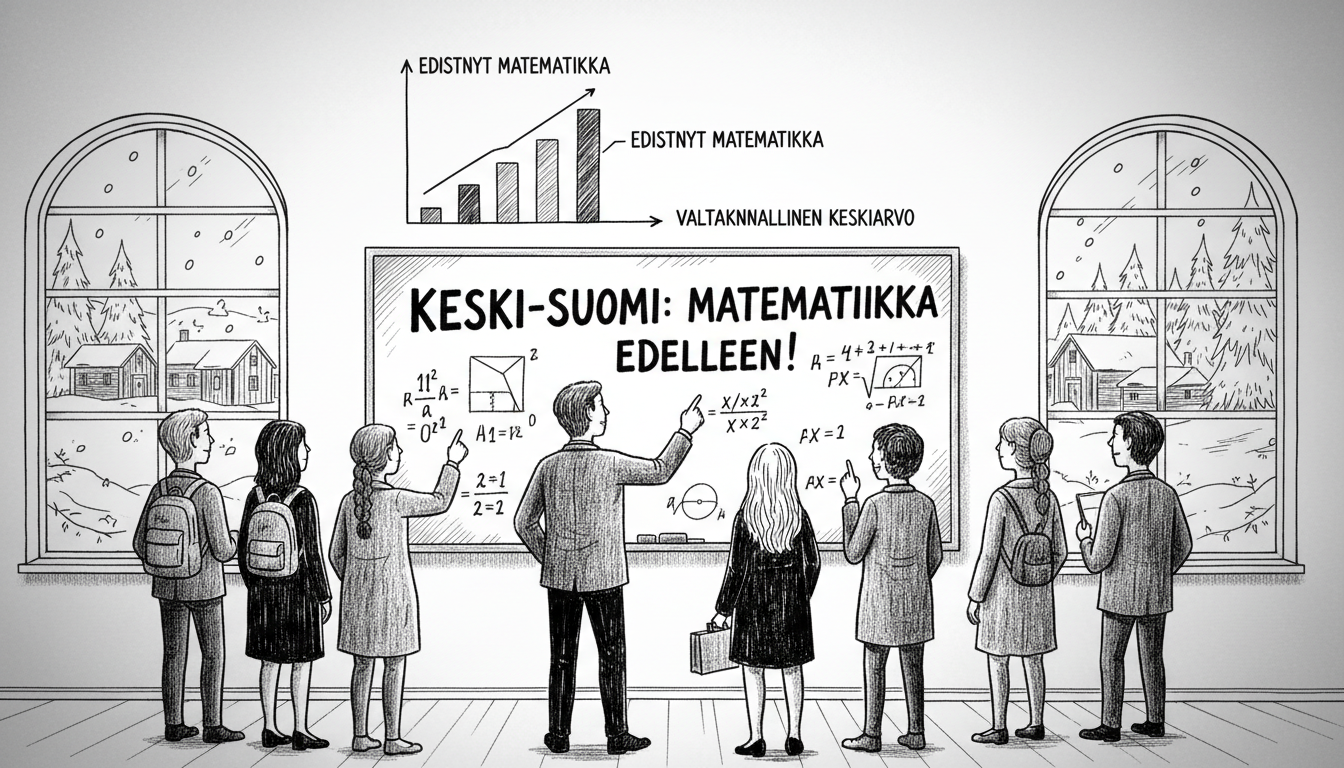
Students in Central Finland are choosing advanced mathematics at the second-highest rate in the entire country, according to a recent national comparison of high school performance. The data reveals that over 50 percent of graduating students in the region completed the demanding long mathematics course during the last three-year period. Only the Northern Ostrobothnia region recorded a higher participation rate, with approximately 53 percent of its students taking the advanced exam. This regional success story highlights a significant divergence in educational outcomes within the Finnish system, which is often viewed internationally as uniformly excellent. The Finnish high school curriculum offers mathematics at two primary levels: the standard 'short' course and the more rigorous 'long' mathematics, which is a prerequisite for many university programs in science, technology, engineering, and economics. National trends have shown fluctuating interest in the advanced subject, making Central Finland's consistent performance noteworthy for policymakers in Helsinki.
A senior mathematics teacher from the University of Jyväskylä's Teacher Training School, recently honored as the Mathematics Teacher of the Year, attributes the region's success to a fundamental cultural shift among educators. The teacher stated that the key factor is the positive attitude of instructors who actively encourage a wide range of learners to attempt the challenging subject. The advanced course is not presented as an exclusive domain for top academic performers but as an accessible challenge for all types of students who are urged to explore it with confidence. This pedagogical approach, focusing on encouragement over gatekeeping, appears to be yielding tangible results in student enrollment and potentially in future STEM career pathways. The teacher's insight points to a critical element often overlooked in educational policy: the mindset of teaching staff can directly influence student choices and self-perception more than formal curriculum mandates from the Finnish National Agency for Education.
The regional data carries implications for national education strategy and economic planning. Finland's government and the Ministry of Education and Culture have long emphasized strengthening STEM competencies to meet the demands of a modern, innovation-driven economy. High participation in advanced mathematics in regions like Central Finland directly supports this national goal by creating a larger pipeline of talent for universities and technical sectors. Conversely, regions with lower participation may face future skill shortages. The disparity invites questions about resource allocation, teacher training, and whether best practices from high-performing areas like Jyväskylä can be systematically shared across other municipalities. For international observers and expatriate families, this report underscores that the Finnish education system, while strong, is not monolithic. Local implementation and school culture create varied experiences, a fact crucial for understanding real outcomes beyond the country's prestigious PISA scores. The next steps will likely involve analysis by the Finnish Education Evaluation Centre to determine if higher advanced math participation correlates with better university admission rates or long-term employment in the region's robust technology and engineering sectors.