
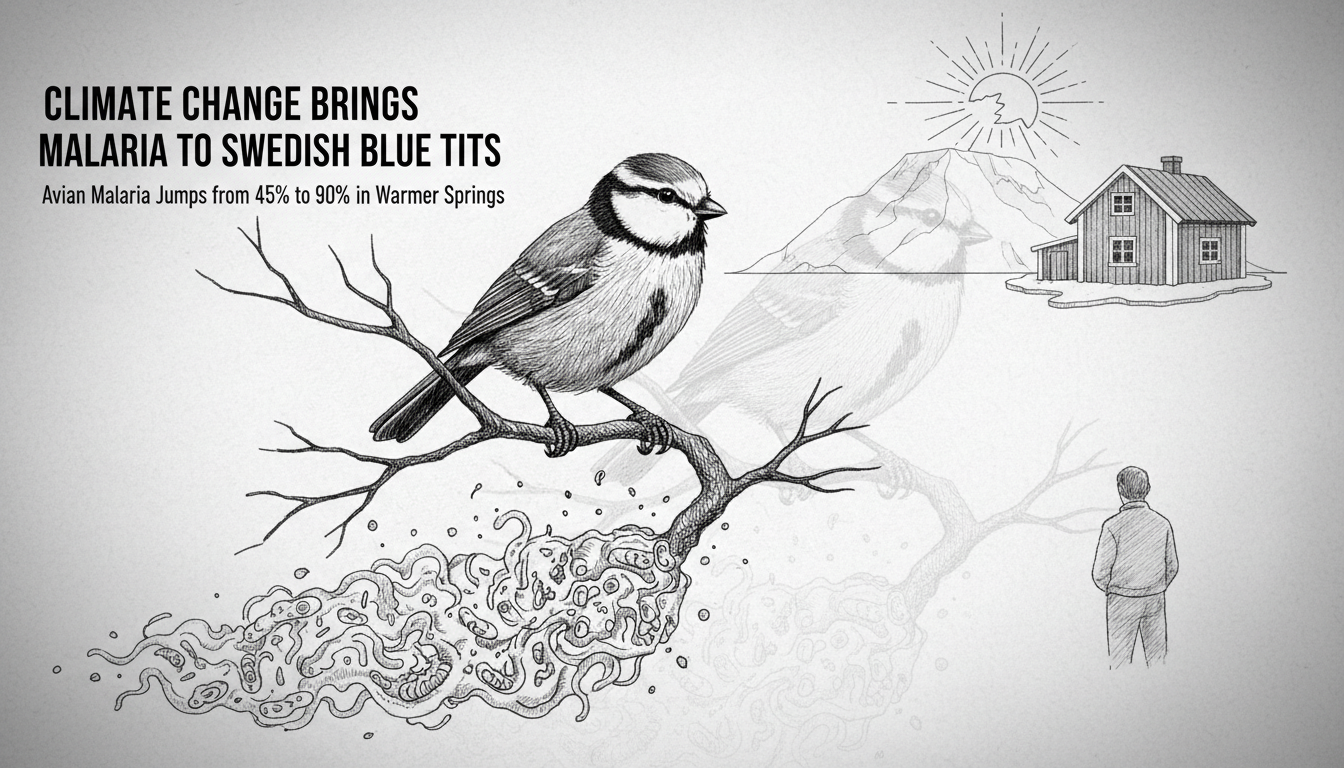
A familiar springtime sound in Swedish gardens is changing. The cheerful call of the blue tit, a common sight at bird feeders from Vasastan to Södermalm, is under threat from a surprising source. A thirty-year study reveals a dramatic rise in avian malaria among these small birds, driven directly by a warming climate.
Researchers at Lund University have collected samples from blue tits for three decades. They found the infection rate has jumped from 45 percent to a staggering 90 percent. 'We see the change is driven by a temperature increase in the spring when the chicks hatch,' said Olof Hellgren, a senior lecturer at the university.
This is more than a statistic. When a blue tit gets sick, its general condition worsens. The bird struggles to gather food and escape predators. This decline in a common species signals a deeper ecological shift. It shows how climate change reshapes Swedish nature in quiet, profound ways.
For international readers and nature lovers in Sweden, this story connects to broader Swedish society trends. Swedes have a deep cultural connection to nature, known as 'allemansrätten' or the right of public access. Birdwatching is a popular national pastime. A decline in garden birds feels personal here.
What is avian malaria? It is caused by parasites in the blood, spread primarily by vectors like mosquitoes. A mosquito bites an infected bird, then bites another. It is important to note these are not the same parasites that infect humans. The risk to people is not the focus. The focus is the health of Sweden's ecosystems.
This research provides a measurable fact about climate impact. It is not a future prediction. It is a current, documented change. The study offers a clear cause and effect. Warmer springs mean more active mosquitoes earlier in the year. This leads to more transmission to vulnerable chicks.
So what does this mean for Swedish lifestyle and biodiversity? The blue tit is an indicator species. Its health reflects the health of its environment. A doubling of disease prevalence points to increased stress on entire populations. This could affect insect control in forests and gardens, as these birds are prolific consumers of caterpillars.
The story is a stark example of a global issue with local consequences. It answers a question many have: how does climate change actually look in a Nordic country? Here, it looks like a sick bird at a backyard feeder. It is a quiet crisis unfolding in plain sight, changing the sound of Swedish springs.
The implications are clear. Conservation efforts may need to adapt. Monitoring for vector-borne diseases in wildlife will become more critical. For Swedes, it is another data point in the ongoing conversation about their changing relationship with nature. The study calls for attention, not alarm. It states the obvious reality that a warmer climate brings new challenges, even to the resilient forests of Skåne.