
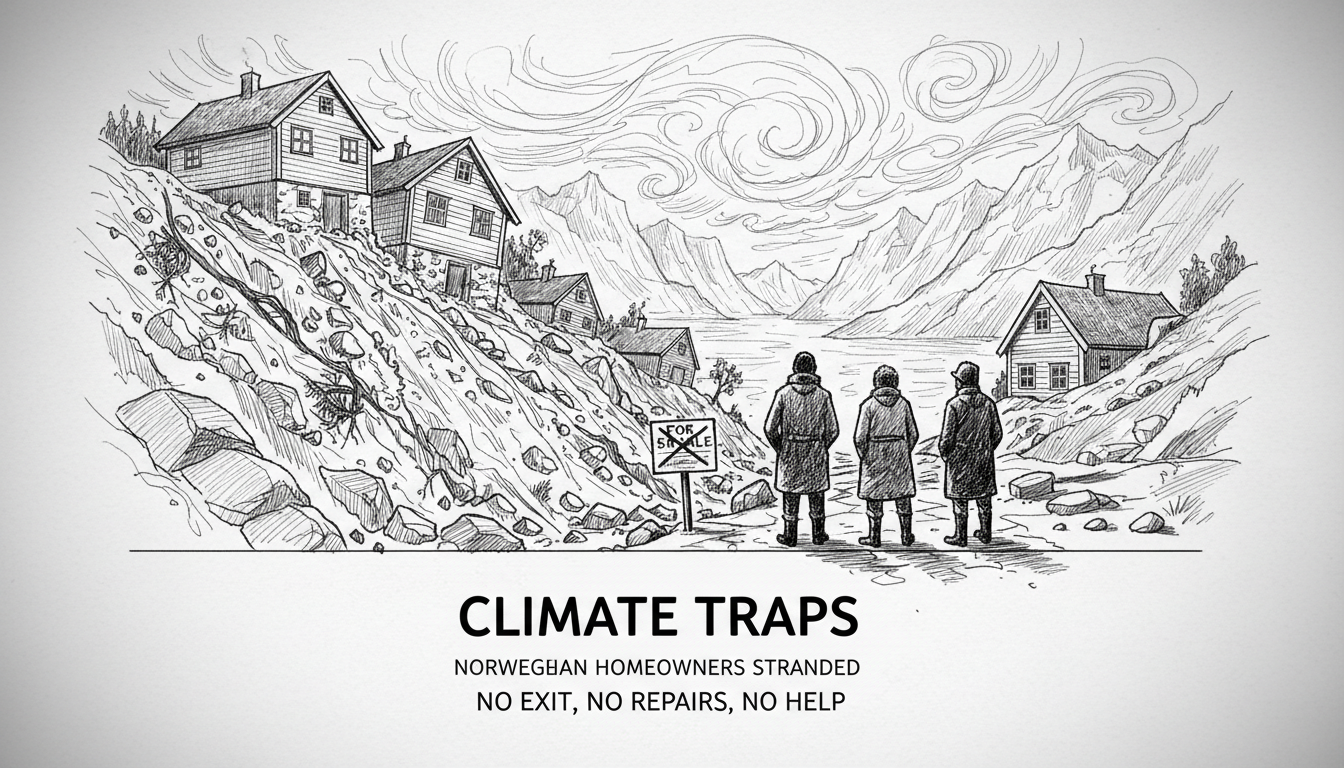
A Norwegian research study reveals a growing crisis. Homeowners across Norway are becoming trapped in properties deemed unsafe due to climate change. They cannot afford to leave and authorities lack clear solutions. This situation highlights a critical gap in national adaptation policy.
In Sunndal, a state of emergency covers an entire neighborhood. Reidar and Linda Strand have air mattresses on their living room floor. They dare not use their bedroom or kitchen after a rockslide hit the Tredalsbotn residential area in October. The couple feels safest in the living room, the room farthest from the mountain wall. Yet they are borrowing a house from friends in Trøndelag to escape the fear of another slide.
Researcher Lene Sandberg from the University of Tromsø studies what happens when homes suddenly become unsafe. She warns current regulations are not adapted to climate change and the increase in natural damage to properties. Securing properties against landslides, floods, and quick clay is extremely costly. Municipalities apply for support from the Norwegian Water Resources and Energy Directorate (NVE). However, over half of these applications are rejected due to limited state funds.
This creates unresolved situations that can stretch on for years. Affected residents are stuck. They cannot move because their homes have lost all market value and are unsellable. They are, in essence, prisoners of their own property in a danger zone.
The Tredalsbotn neighborhood was lucky the recent rockslide only hit one house. The fear of the next event drives the desire to leave. Climate change is exposing more areas to natural hazards. Sunndal has experienced this multiple times in recent years.
Mayor Ståle Refstie of Sunndal notes these areas were developed under different, older building codes. He states the municipality bears no formal responsibility when conditions change. He calls for clearer guidance from the national government on how to proceed in such cases.
Current law envisions cooperation between municipalities and property owners for safety work. The costs are often so prohibitive that neither party takes the initiative. Both wait for the state and NVE to act. This bureaucratic paralysis leaves families in limbo.
A major investigation after the 2020 quick clay landslide in Gjerdrum concluded responsibility for securing properties was unclear and difficult to navigate. A similar case in Byneset, Trondheim, saw a family evacuated for five months before the municipality and state agreed to share the cost of securing their home.
When contacted, several national ministries, including Climate and Environment, Energy, and Justice, declined to comment, stating it was not their responsibility to address.
Back in Tredalsbotn, the Strands pack their bags for their borrowed refuge. Their neighbor, Kjell Sommervold, has nowhere to go. He must stay through the winter, living with constant risk. This is the human face of Norway's climate adaptation failure. The legal and financial framework has not kept pace with the accelerating reality of a warming climate. Without systemic change, more Norwegians will find themselves financially and physically trapped by the very environment they call home.