
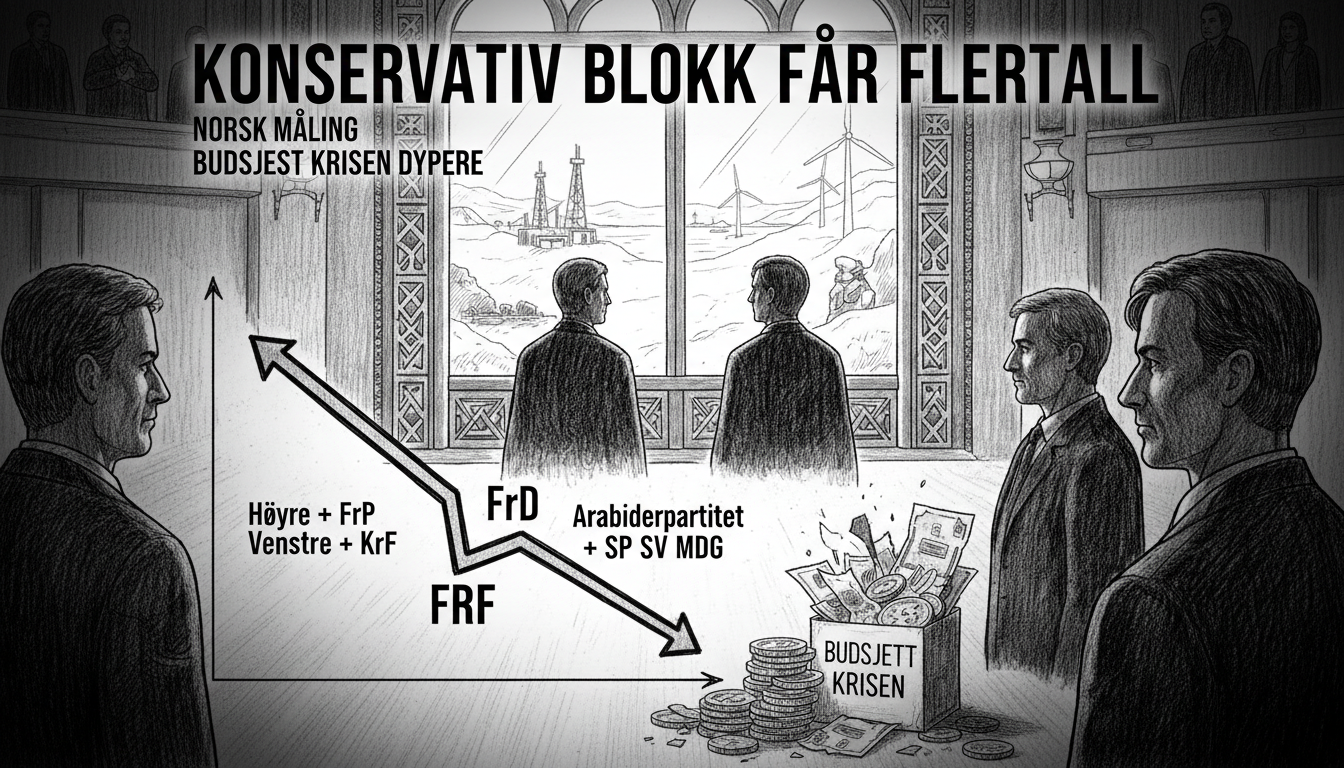
A new political poll shows a dramatic shift in Norwegian parliamentary support. The conservative Progress Party now leads with 25.6 percent voter support. The opposition Labour Party trails at 23.2 percent. This swing restores the political balance to where it stood before former Prime Minister Jens Stoltenberg returned as Finance Minister earlier this year. The survey was conducted from Monday through Friday afternoon. It captures sentiment just before a major parliamentary budget dispute escalated over the weekend.
A political analyst said the poll provides a strong baseline to measure the ongoing drama in the Storting building. The conservative bloc, if an election were held now, would secure 86 parliamentary seats. The red-green coalition parties would win 83 seats. This represents a clear conservative majority. The shift involves approximately 86,000 voters moving from Labour to conservative parties since the general election.
The Conservative Party itself gained support for the fourth consecutive time, reaching 17.1 percent. The Green Party achieved its best result since the election at 5.8 percent. The Centre Party also saw a notable rise to 6.8 percent, its highest since leaving the coalition government. Other parties showed varied results. The poll interviewed 1,024 people nationwide and has a margin of error between 1.5 and 3.2 percentage points.
This political turbulence occurs against the backdrop of Norway's critical budget negotiations. The Storting must reconcile spending plans with the nation's massive sovereign wealth fund, the Government Pension Fund Global. Policy decisions here directly impact Norway's oil and gas industry, a cornerstone of the economy. Major fields like Johan Sverdrup in the North Sea and Snøhvit in the Barents Sea depend on stable fiscal and regulatory frameworks. A shift toward a stronger conservative bloc typically signals different priorities for Arctic development and petroleum taxation.
The immediate cause of the polling shift appears to be the ongoing budget crisis. Disagreements over spending, tax policies, and energy sector support have created deadlock. Such instability worries international investors and energy markets that watch Norway closely. The country is Europe's largest natural gas supplier and a major oil exporter. Political uncertainty in Oslo can influence global energy prices and investment decisions in the Nordic region.
What does this mean for Norway's future? A strengthened conservative majority likely pushes for lower taxes and more aggressive development of Arctic resources. This could include expanded drilling licenses in the Barents Sea and reduced environmental regulations. The Labour Party and its allies would traditionally advocate for a slower, more state-managed energy transition. The current poll suggests voters are responding to the immediate budget chaos by favoring the opposition. It is a clear reaction to perceived government mismanagement. The coming weeks will test whether this is a temporary protest or a lasting realignment in Norwegian politics.