
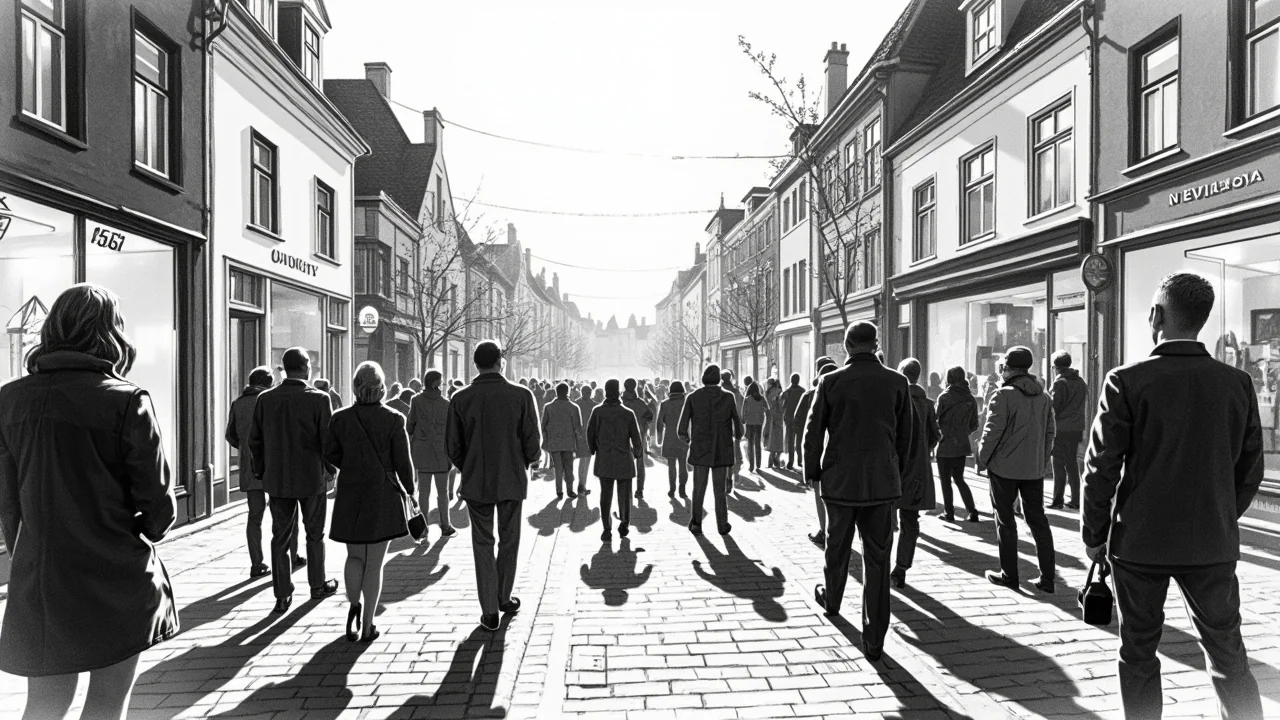
Denmark's physical shops declined by 20% in a decade, but one provincial town is scripting a surprising turnaround. Næstved lost nearly 22% of its stores between 2012 and 2022, mirroring a national trend of vacant storefronts in city centers. Since 2023, however, 76 new shops have opened in Næstved while only 30 have closed, creating a net positive surge that defies the national pattern. This shift points to a fundamental change in how Danish towns are reimagining their main streets, moving away from pure retail toward curated experiences.
A National Pattern of Decline
The backdrop for Næstved's success is a countrywide downturn. Over the past 15 years, Denmark has seen a steady erosion of its physical retail landscape. Analysis shows that only five municipalities—Hvidovre, Stevns, Ikast-Brande, Albertslund, and Lejre—recorded a net increase in shops from 2012 to 2022. Every other municipality in Denmark experienced a decline, culminating in the loss of nearly one-fifth of all brick-and-mortar stores. This created a familiar scene of 'for rent' signs and empty windows in shopping streets across the country, leaving many community hubs struggling for vitality.
The Næstved Strategy: Experience Over Transaction
Local leaders attribute Næstved's reversal to a deliberate pivot in strategy. Nicolaj Lund Jensen, city manager for Næstved Cityforening, explains that the core function of the town center has been redefined. He argues that survival depends on offering what the internet cannot provide. The town center is no longer just a place for purchases but a destination for atmosphere, presence, and personal relationships. This philosophy has attracted a wave of local entrepreneurs who build their businesses on creating unique in-person experiences, from live events to specialized hospitality, thereby drawing people back into the urban core.
Entrepreneurs Building a New Hub
The new businesses driving this change are explicitly designed around community and activity. Morten Høgh Larsen, founder and owner of Høgh’s Cocktailbar which opened in 2025, identified a gap in the local market. He believed Næstved, and many provincial towns like it, were ready for sophisticated social venues. His approach rejects passivity. Instead of hoping customers appear, he creates reasons for them to come, hosting live music and quiz nights to draw crowds. This model of active engagement is becoming a blueprint, where businesses see themselves as contributors to a lively ecosystem rather than isolated retailers.
Synergy Between Commerce and Community
The emergence of experience-based venues like cocktail bars is not viewed as competition for traditional retail. Nicolaj Lund Jensen sees a vital synergy. He notes that the dynamic has flipped since the 1990s. People now primarily come to the town center for an experience, with shopping becoming a more secondary or incidental activity. Therefore, a popular cocktail bar or event space increases overall foot traffic, which in turn benefits neighboring shops. This creates a virtuous cycle where diverse offerings strengthen the entire commercial district, making it a more attractive destination for a longer visit.
Lessons for Other Municipalities
Næstved's case offers a potential roadmap for other Danish municipalities grappling with empty storefronts. The solution appears less about subsidizing traditional retail and more about actively curating a mix of businesses that prioritize human connection and shared experiences. It requires supporting local entrepreneurs who understand their community and are willing to innovate within a physical space. The success hinges on a collaborative effort between business owners and local organizations like city associations to promote the town center as a cohesive destination.
The Future of the Provincial Town Center
The trajectory in Næstved suggests a more hopeful future for provincial town centers, but it is not a return to the past. The model is not about reversing online shopping but about complementing it with something intangible. The value is in creating a sense of place. As Morten Høgh Larsen’s initiative shows, success comes from filling a specific local need with quality and character. The challenge for other towns will be to identify their unique strengths and foster environments where experiential businesses can thrive, ensuring the main street remains the community's living room.
Analyzing the Broader Implications
This turnaround in one town provides a critical case study for Danish social and urban policy. It touches on themes of local entrepreneurship, community cohesion, and the evolving definition of public space within the Danish welfare model. While national policies shape the broader economic environment, Næstved demonstrates that hyper-local initiatives—driven by a clear vision of the town center as an experience hub—can produce tangible results. The question for policymakers is how to replicate these conditions elsewhere, potentially through flexible municipal support for local business associations and zoning that encourages mixed-use, social venues.
Ultimately, Næstved’s story is about adaptation. The town recognized that its center needed a new purpose in a digital age. By betting on experiences, community, and the irreplaceable nature of human contact, it has begun to rewrite the narrative of provincial decline. Its main street is becoming busy again, not solely with shoppers but with people living, socializing, and connecting. This may well be the essential ingredient for the sustainable future of Danish town centers everywhere.