
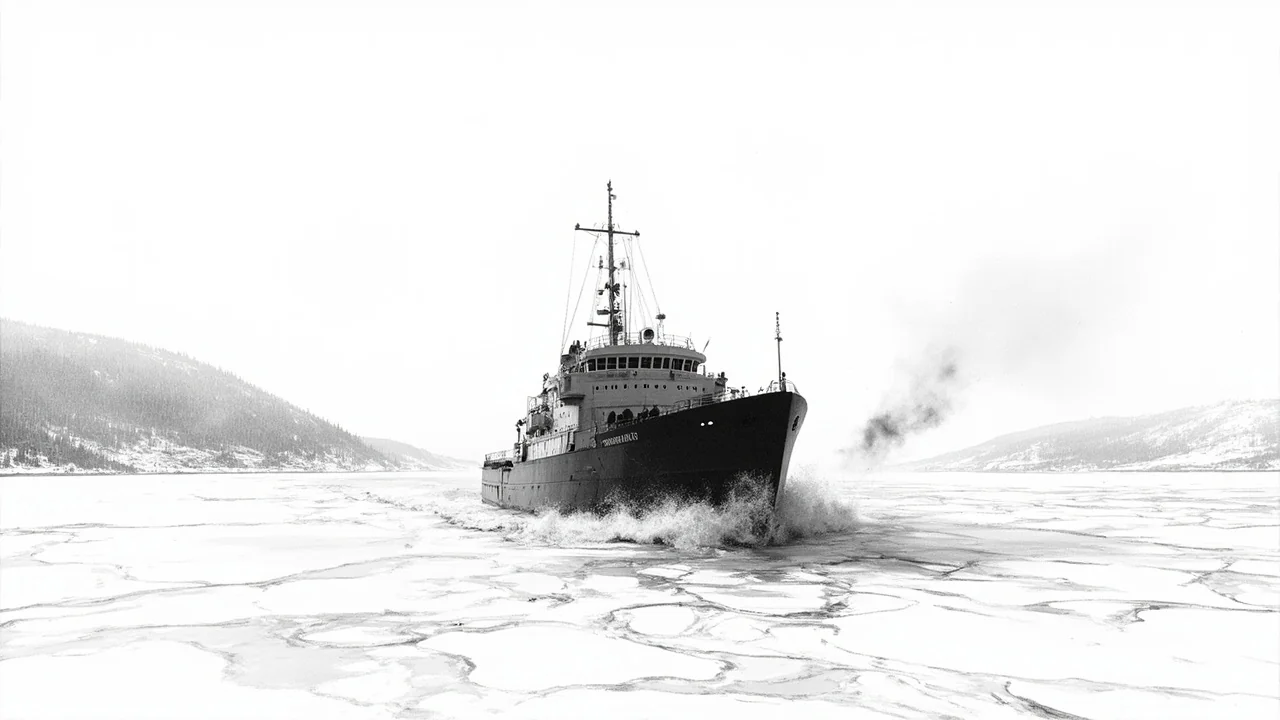
Denmark's north Jutland fjords have significant ice cover this winter, yet naval authorities confirm no immediate need for icebreaking services in key waterways. Orlogskaptajn Jens Hulgaard from the Søværnskommandoen stated that despite ice presence in Limfjorden and Mariager Fjord, icebreaking is not currently required. This assessment comes as the State Ice Service has activated preparedness in Smålandsfarvandet between Zealand, Lolland, Falster, and Møn, underscoring a regional disparity in maritime needs.
Current Ice Conditions and Assessment
Naval Captain Jens Hulgaard emphasized that while ice formations are notable in north Jutland's fjords, conditions do not warrant icebreaking interventions. He pointed to natural factors like weather patterns and water currents that may mitigate ice hazards without mechanical assistance. His evaluation is based on continuous monitoring by maritime officials, who prioritize safety for commercial and recreational vessels. This proactive stance aims to prevent disruptions to local shipping lanes and port operations.
The absence of icebreaking in north Jutland contrasts with actions in Smålandsfarvandet, where the State Ice Service has mobilized resources. This divergence highlights how Denmark's maritime strategies adapt to varying environmental threats across regions. Authorities rely on real-time data and historical trends to make these decisions, ensuring resources are allocated efficiently where risks are highest.
Historical Shift in Icebreaking Policy
Denmark's approach to icebreaking underwent a major transformation in 2012 when the Folketinget decided to abolish the state ice service. This parliamentary move led to the sale of government-owned icebreakers Elbjørn, Isbjørn, Danbjørn, and Thorbjørn. Since then, icebreaking has been managed by a civil preparedness system, shifting responsibility to private operators. This policy change was driven by cost-cutting measures and a belief that commercial entities could handle icebreaking needs effectively.
The privatization of icebreaking services means that the state no longer maintains its own fleet, relying instead on contracted companies. This system is designed to be flexible, with private providers activating services based on demand from municipalities and shipping industries. The transition has sparked debates about readiness and long-term sustainability, especially during harsh winters.
Private Sector Roles and Responsibilities
In the western part of Limfjorden, from Jernbanebroen to Lemvig, the company Tambour Towage holds responsibility for icebreaking. They use tugboats to keep sailing channels and harbors ice-free. Similarly, in the eastern Limfjorden, from Jernbanebroen to Hals Barre, Svitzer manages icebreaking operations. These contracts ensure that specific regions have dedicated support, though activation depends on official requests and severity assessments.
Private operators like Tambour Towage and Svitzer bring specialized expertise and equipment to handle ice conditions. Their involvement allows for localized responses, but it also ties icebreaking availability to commercial agreements and economic factors. This setup requires coordination with Danish municipalities and maritime authorities to ensure seamless operations during winter months.
Recent Icebreaking Needs and Trends
The last recorded need for icebreaking in the western Limfjorden occurred during the winter of 2020-2021. That instance demonstrated how private services can be mobilized when necessary, preventing major disruptions to transportation and trade. Historical data shows that icebreaking demands in north Jutland are infrequent but can spike during severe cold spells, prompting calls for robust contingency plans.
Comparing past winters, ice coverage in Danish fjords varies annually, influenced by climate patterns and temperature fluctuations. The 2020-2021 event serves as a benchmark for current preparedness, reminding stakeholders of potential future challenges. Authorities monitor these trends to refine response strategies and ensure that private contracts remain adequate for evolving needs.