
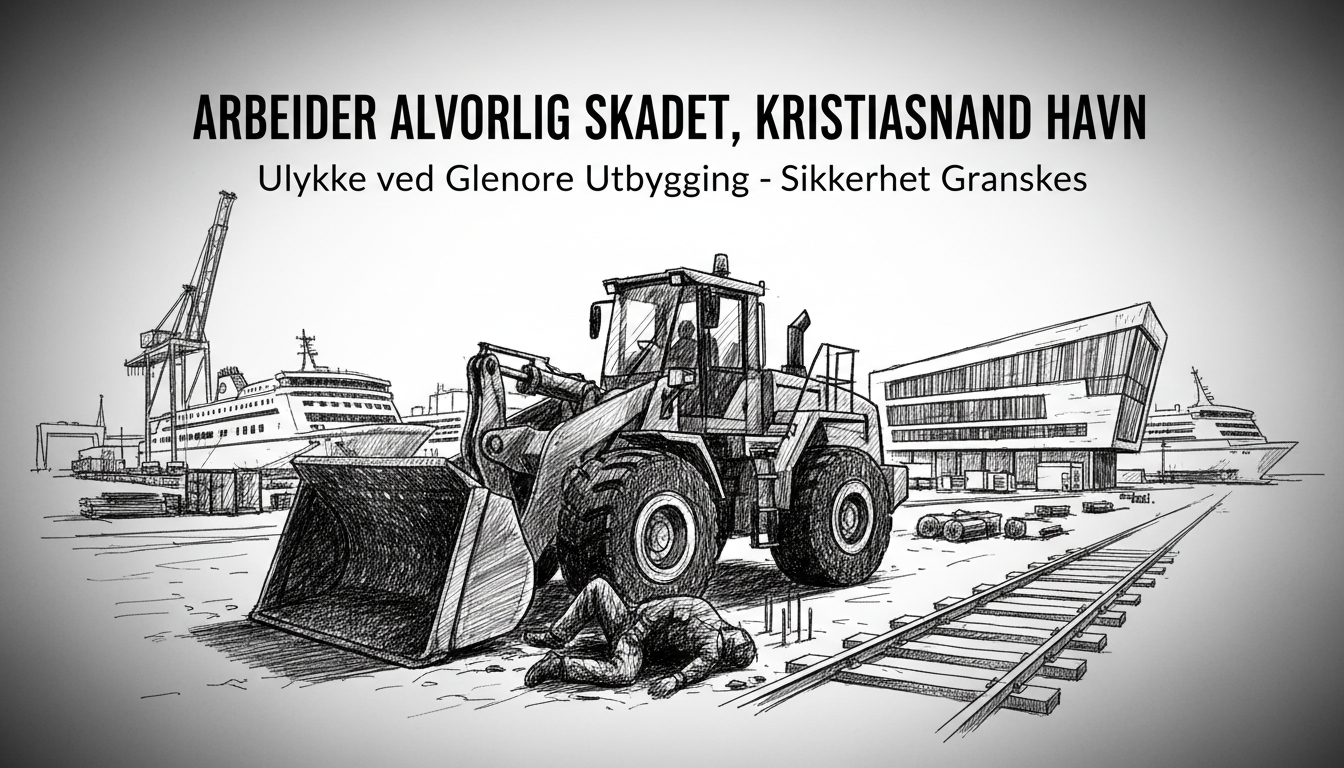
A serious workplace accident occurred at the ferry terminal entrance on Havneveien in Kristiansand. A construction worker was struck by a wheel loader during infrastructure work. The injured person was conscious but sustained significant injuries. Emergency services transported the worker to a local hospital for further examination and treatment.
The incident happened at the Gartnerløkka construction site. This site is part of a major state-led project to complete railway tracks for the Glencore Nickel Works facility. Project leader Jan Helge Egeland from the Norwegian Public Roads Administration confirmed the victim was a road worker employed on the project. He stated the loader was operating on the road at the site when the collision occurred.
Egeland noted approximately fifty people were working at the location at the time. The police have not released detailed information about the extent of the worker's injuries. The Agder Police District's operations manager, André Mørch, described the accident as serious. Authorities are awaiting a full medical assessment before commenting on the specific circumstances.
The Public Roads Administration has initiated a standard internal review process. Egeland said the agency will analyze the event thoroughly. The goal is to determine if different safety procedures could have prevented the accident. This analysis is a mandatory part of Norway's strict workplace safety protocols following any serious incident.
This accident highlights the inherent risks in Norway's ongoing national infrastructure and industrial expansion projects. The southern region, particularly around Kristiansand and its port, is a hub for maritime and industrial activity. Major projects like the railway expansion for the nickel plant involve complex logistics with heavy machinery operating near workers.
Norway maintains some of the world's most stringent workplace safety regulations, governed by the Working Environment Act. The Norwegian Labour Inspection Authority will likely conduct its own investigation alongside the police. Serious accidents on state-contracted projects typically trigger heightened scrutiny of all contractors' safety practices.
For international observers, this incident underscores a tension within the Norwegian economic model. The nation balances a robust welfare state and strong worker protections with a resource-intensive industrial and energy sector. The oil and gas industry, maritime operations, and related construction are pillars of the economy. They also present persistent safety challenges, despite continuous improvements in safety records over decades.
What happens next? The immediate focus is on the worker's recovery. The police investigation will establish the factual sequence of events. The Roads Administration's internal review and any potential inspection authority audit will focus on systemic safety measures. Project delays are possible if the investigation identifies critical safety shortcomings. The outcome may influence safety briefings and protocols on similar large-scale infrastructure projects across the country, including those in the Arctic region where industrial activity is increasing.
Such accidents, while relatively rare, serve as a stark reminder. They show that even in a country with a profound cultural and legal commitment to worker safety, the physical reality of heavy industry carries risk. The response and lessons learned will be closely watched by industry stakeholders and unions alike.