
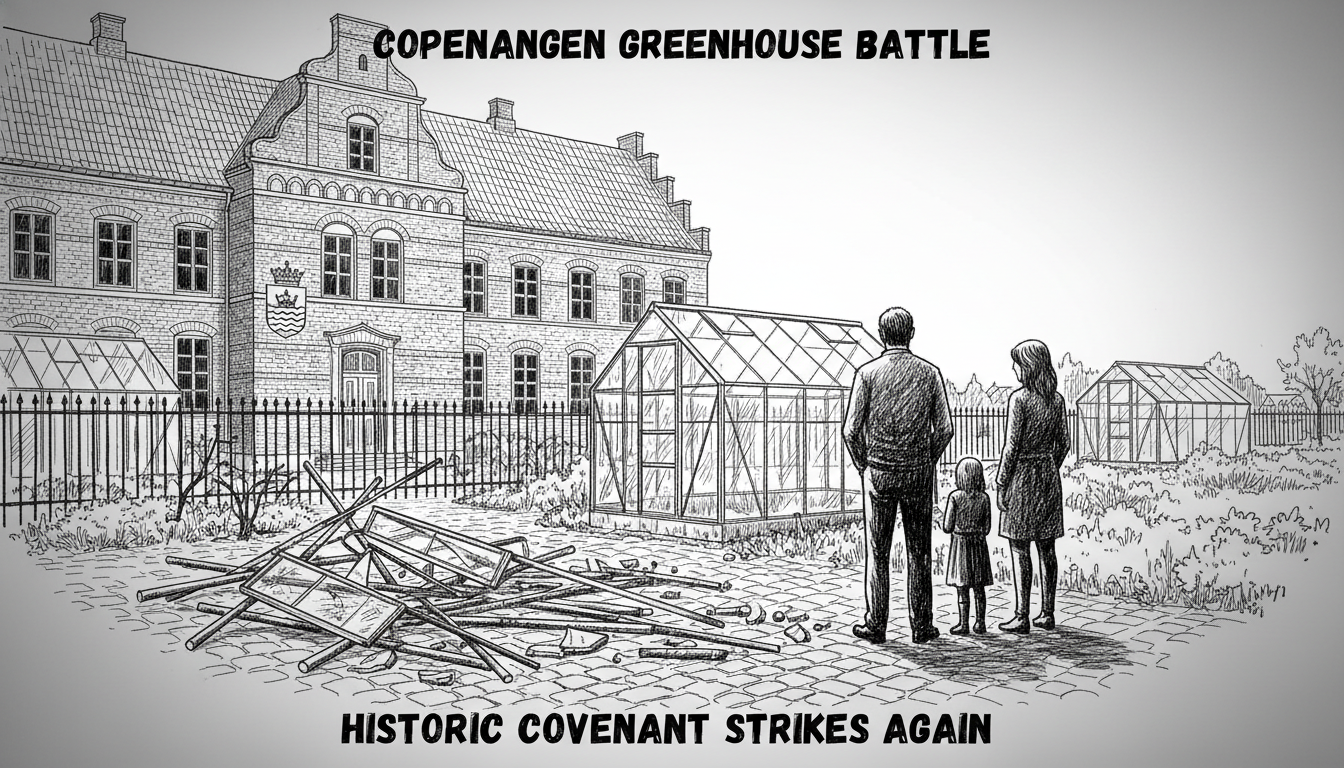
A Copenhagen family has removed their greenhouse after a lengthy dispute with city authorities. Andreas Søndergaard took out the windows and loosened the frame from the ground, making the structure unusable.
The conflict ended when Denmark's Parliamentary Ombudsman declined to hear the case. This decision forced Søndergaard to comply with the removal order.
City officials demanded the greenhouse's removal due to a century-old land covenant from 1920. The covenant prohibits small buildings within 9.6 meters from the center of the road in this residential area.
"We're disappointed the case ended this way," Søndergaard said. "The city specifically targeted our property and demanded removal of a greenhouse that bothers no one."
The covenant originally allowed space for potential road widening. This seems unlikely in the now fully-developed residential neighborhood.
"I've always said we would remove the greenhouse if the city suddenly decided to build a four-lane highway," Søndergaard noted.
City officials discovered the greenhouse during the family's application to add another floor to their home. They initially made greenhouse removal a condition for granting the building permit.
An expert later called the administration's actions an abuse of power. The city's technical and environment mayor apologized, and the building permit was granted. But the demand to remove the greenhouse remained.
Appeals to both the Planning Appeals Board and Ombudsman proved unsuccessful. Søndergaard removed the greenhouse to avoid daily fines. A small shed was also removed from his property.
He considers the matter principled. Many neighbors have similar structures along the property line. The city also grants exemptions for carports.
"If this was enforced against all homeowners, I would understand," he said. "But this seems arbitrary."
The case highlights how century-old regulations can conflict with modern urban living. Copenhagen's villa districts still operate under restrictions designed for a different era.
City politicians decided in Third Quarter to investigate replacing old covenants with local plans for villa areas. This decision doesn't affect Søndergaard's case.
"The political decision doesn't mean the administration should extend deadlines for physical compliance," the Technical and Environmental Administration stated.
The administration must continue handling cases according to current practice until new political decisions are made about covenant administration.
Why did Copenhagen demand greenhouse removal?
The city enforced a 1920 land covenant prohibiting structures within 9.6 meters from the road center, originally intended for potential road widening.
What happens to similar structures in the neighborhood?
Many neighbors have small buildings along property lines, but the city only enforces covenants when violations are reported or discovered during building applications.