
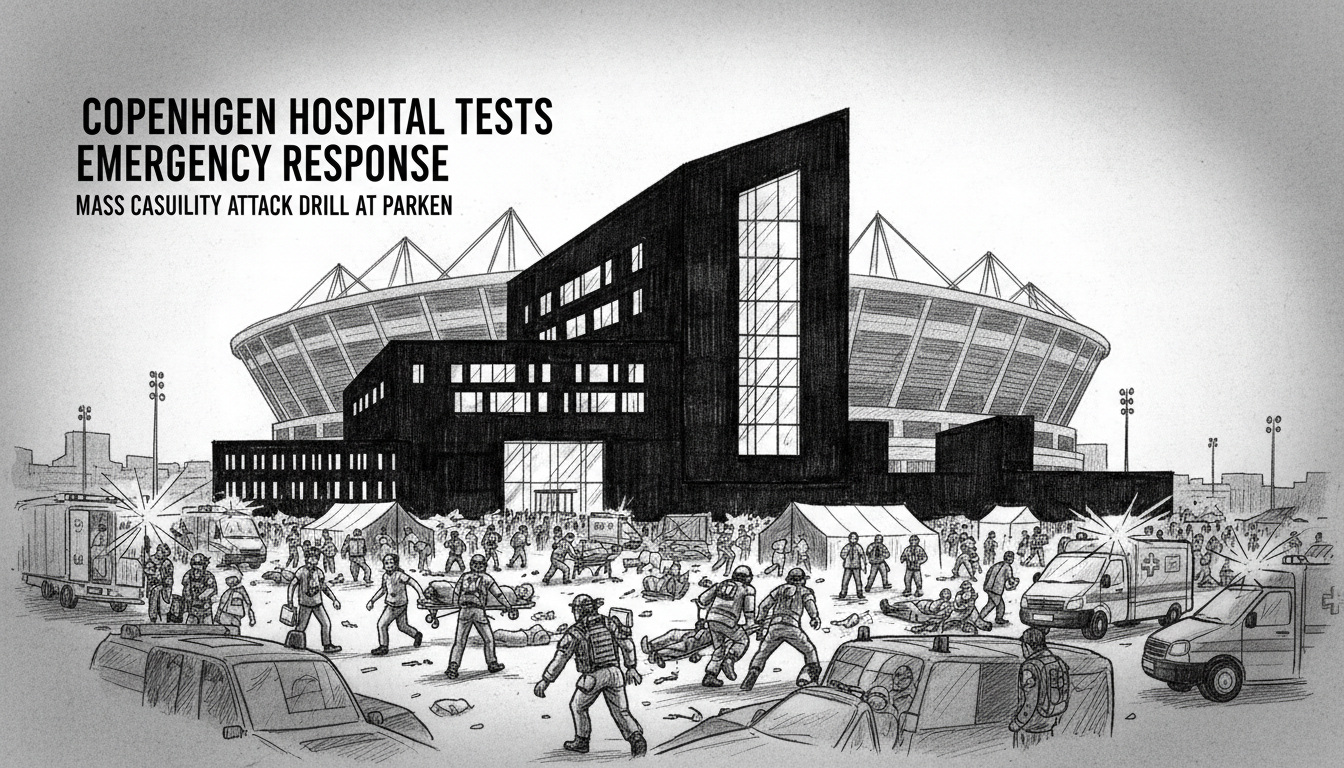
Copenhagen's Rigshospitalet conducted a major emergency drill simulating a terrorist attack during a concert at Parken Stadium. The exercise involved two attackers driving into a crowd followed by a third assailant stabbing victims. Nearly 600 medical staff, police officers, firefighters, and ambulance crews participated in the comprehensive training.
Dr. Kristian J. Andersen, clinical emergency preparedness lead at the hospital's Trauma Center, explained the drill's purpose. He said the biannual exercise prepares the hospital for crisis situations with multiple patients. This marked the first time all emergency services participated together in such a large-scale simulation.
The drill followed patients from the initial incident scene through to intensive care units and operating theaters. Medical teams practiced transitioning from normal operations to disaster response mode. Dr. Andersen expressed satisfaction with the exercise, noting the importance of testing emergency protocols under pressure.
Hospital officials named the exercise "RHagnarok" - a reference to the hospital's initials and Norse mythology, though the goal was preventing apocalyptic outcomes. The name reflects the serious nature of mass casualty preparedness while maintaining that proper planning can mitigate disaster impacts.
Denmark maintains rigorous emergency response standards following Europe's heightened security concerns. The country has invested substantially in hospital preparedness since the 2015 Copenhagen shootings and 2022 Field's shopping center attack. These incidents demonstrated the need for coordinated response between medical facilities and emergency services.
Rigshospitalet regularly tests different crisis scenarios. Their previous major drill in 2023 simulated a hospital fire with multiple burn victims and pediatric cases. Such exercises help identify gaps in emergency protocols before real crises occur.
Mass casualty preparedness represents a critical component of Denmark's public safety strategy. The country's centralized healthcare system enables coordinated disaster response across regions. International observers often study Nordic emergency protocols for their systematic approach to crisis management.
For Copenhagen residents and visitors, these drills provide reassurance about emergency response capabilities. The city hosts numerous large events annually, including concerts, sporting events, and cultural festivals requiring robust security and medical preparedness.
The exercise comes as European nations enhance cooperation on counterterrorism and emergency response. Nordic countries frequently share best practices in disaster medicine and crisis management. Denmark's approach emphasizes realistic simulation and interagency coordination.
Hospital officials will now analyze the drill's outcomes to identify improvement areas. They plan to share findings with other Nordic medical centers to strengthen regional emergency response capabilities. The lessons learned could influence emergency preparedness standards across Scandinavia.